The Quiet Balance of the Prairie
A Robber Fly Drinking Nectar on Vervain Signals a System Coming Alive
By Josh Singleton | Founder, serving as Lead Cultivator, The Neighborhood Garden Project
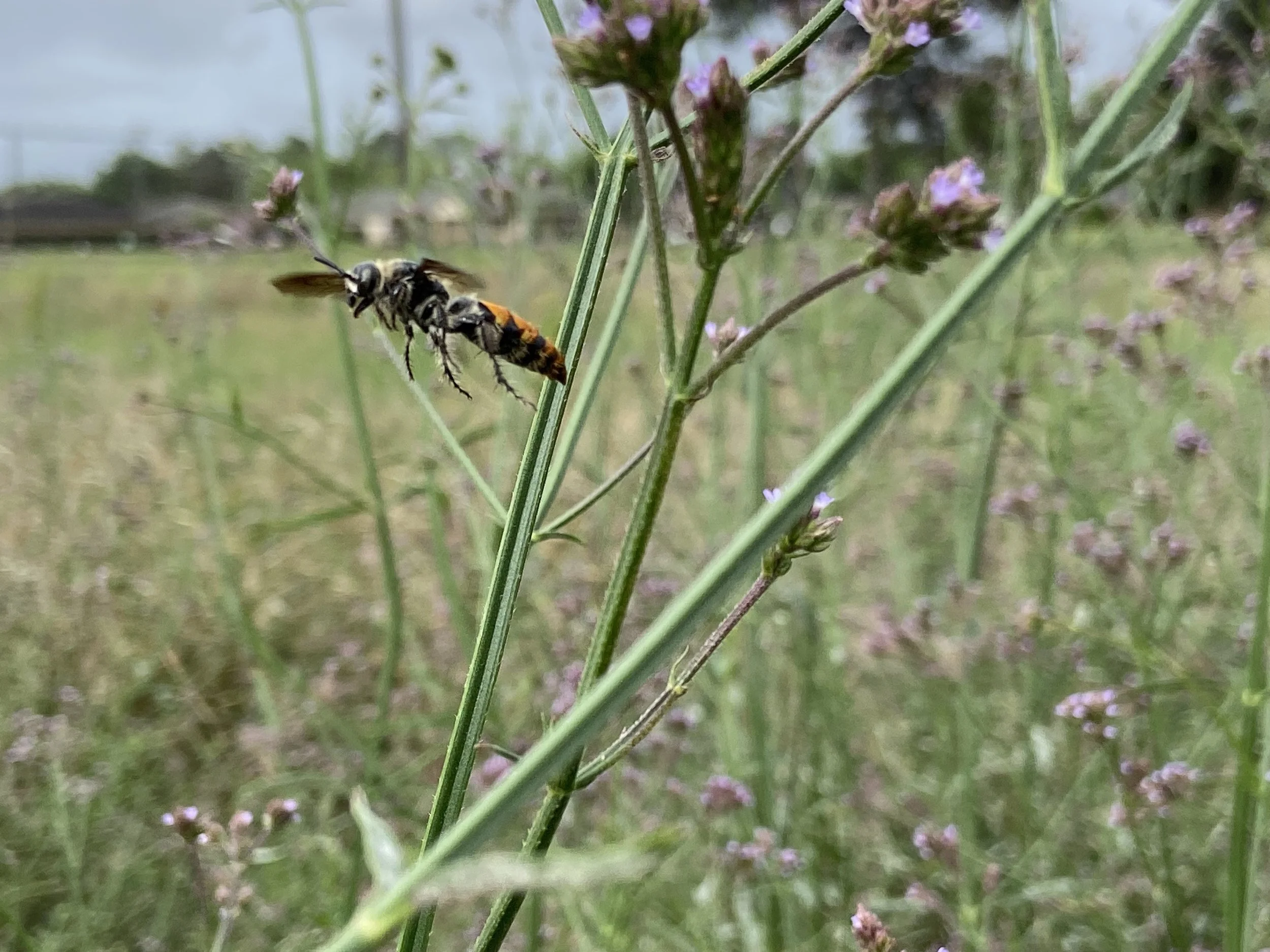
It was perched quietly on vervain.
Tall, slender stems rose above the prairie, dotted with small purple blooms. The robber fly gripped the narrow stem, balanced in the breeze, and instead of hunting, leaned forward to drink nectar.
A predator… drinking from flowers.
Robber flies, members of the Asilidae family, are known primarily as aerial hunters. They sit on elevated stems like this vervain, scanning for movement. When prey passes, they launch into flight, capture insects mid-air, and inject enzymes that immobilize and digest them. Their spiny legs hold prey tightly. Their needle-like mouthparts function like a syringe. Their large compound eyes detect movement with remarkable precision.
Everything about them is built for the hunt.
Yet many robber flies also drink nectar.
Nectar provides quick energy, primarily sugars that fuel rapid flight. Hunting requires explosive bursts of movement and constant vigilance. Nectar becomes fuel, allowing predators to remain active and ready. This is why they are often seen perched on flowering plants, not just hunting from them, but feeding from them.
In this moment, the vervain was doing more than blooming.
It was fueling a predator.
Vervain plays a quiet but important role in prairie ecosystems. Its tall, slender stems provide perches. Its clustered flowers attract insects. Its nectar feeds both pollinators and predators. What appears to be a simple wildflower becomes structure, energy, and connection.
Vervain feeds insects.
Insects attract predators.
Predators regulate the system.
Each layer builds upon the next.
Seeing a robber fly drinking nectar reveals something deeper about how living systems function. Predators are not separate from flowers. Hunters depend on plants. Pollinators and predators share the same space. Energy flows through the system in ways that are easy to overlook unless we slow down.
Robber flies also tend to appear in diverse, functioning landscapes. They need tall stems for perching, open air for hunting, and insect diversity for food. Frequently mowed spaces or simplified environments often lack these conditions. Their presence signals that the prairie is becoming complex enough to support higher-level relationships.
This robber fly wasn’t just resting.
It was participating.
The prairie was not just growing.
It was functioning.
And sometimes, the clearest sign that a landscape is becoming alive is not just flowers blooming, but a hunter pausing on vervain, drinking nectar, while the system quietly balances itself around him.