From Prairie to Table
Sweet and sour, thorns and joy, and fruit born from a living edge
By Josh Singleton | Founder, serving as Lead Cultivator, The Neighborhood Garden Project
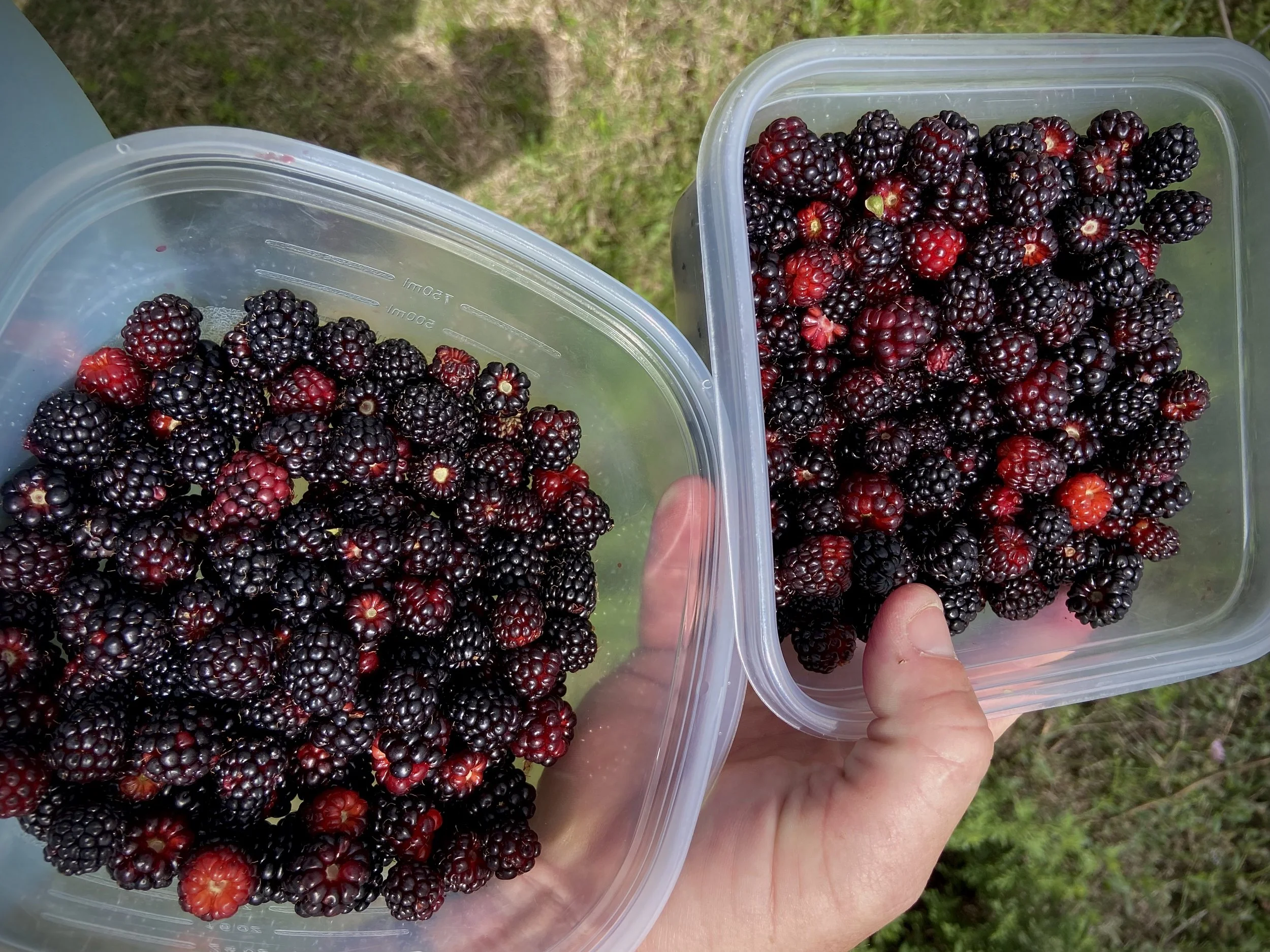
These didn’t come from a row.
They came from the extended prairie at the second garden, the place that wasn’t planted but revealed. The place that only showed itself when mowing stopped and the land was given back its voice.
What looked like emptiness was never empty.
It was waiting.
And blackberries were among the first to answer.
Not gently. Not neatly. But with thorns, reach, and an unwillingness to stay hidden. They moved into the open ground and held it. Protected it. Began restoring something most of us wouldn’t recognize unless we slowed down long enough to see it.
You don’t walk into a blackberry patch casually.
You enter it.
The fruit draws you in, but it doesn’t separate itself from the cost. Sweetness and sourness hang side by side. Some berries fall into your hand without effort. Others resist. Some deceive. You learn quickly that readiness isn’t always visible at first glance.
So you adjust.
You start paying attention.
And then the thorns make themselves known.
At first, you work around them. Then something changes. The scratches come, and instead of pulling back, you lean in. Not recklessly, but willingly. Because you’ve already tasted what’s on the other side.
And it’s worth it.
The prairie doesn’t rush anything, but it also doesn’t hesitate.
Blackberries have been doing this long before we arrived. They thrive in disturbance. Where land has been cut, turned, or cleared, they move in first. Holding soil. Covering exposure. Creating a kind of protection that prepares the way for what’s next.
Cut them back, they return.
Try to contain them, they move around you.
Ignore them, they still produce.
Their strength isn’t in perfection. It’s in persistence.
And then my boys stepped into it.
Not for the first time. Year after year, we’ve anticipated the berries. We’ve known the rhythm, watched the color shift, waited for that window when the fruit begins to give itself.
But this was the first time those berries came from this prairie.
From ground that had been quiet, and is now speaking again.
They’re 8 and 5.
Old enough to move fast. Young enough not to hesitate.
At first, they moved the way they always have, quick, eager, grabbing what they could see. But then it happened again. The slowing. The noticing. The shift from grabbing to seeing.
They got scratched. They didn’t care.
They hit the sour ones. They laughed.
They found the deep ones, the ones hidden behind the thorns, and kept reaching.
And then they couldn’t get enough.
No one told them to persist.
No one explained discernment.
No one structured the moment.
The prairie did all of it.
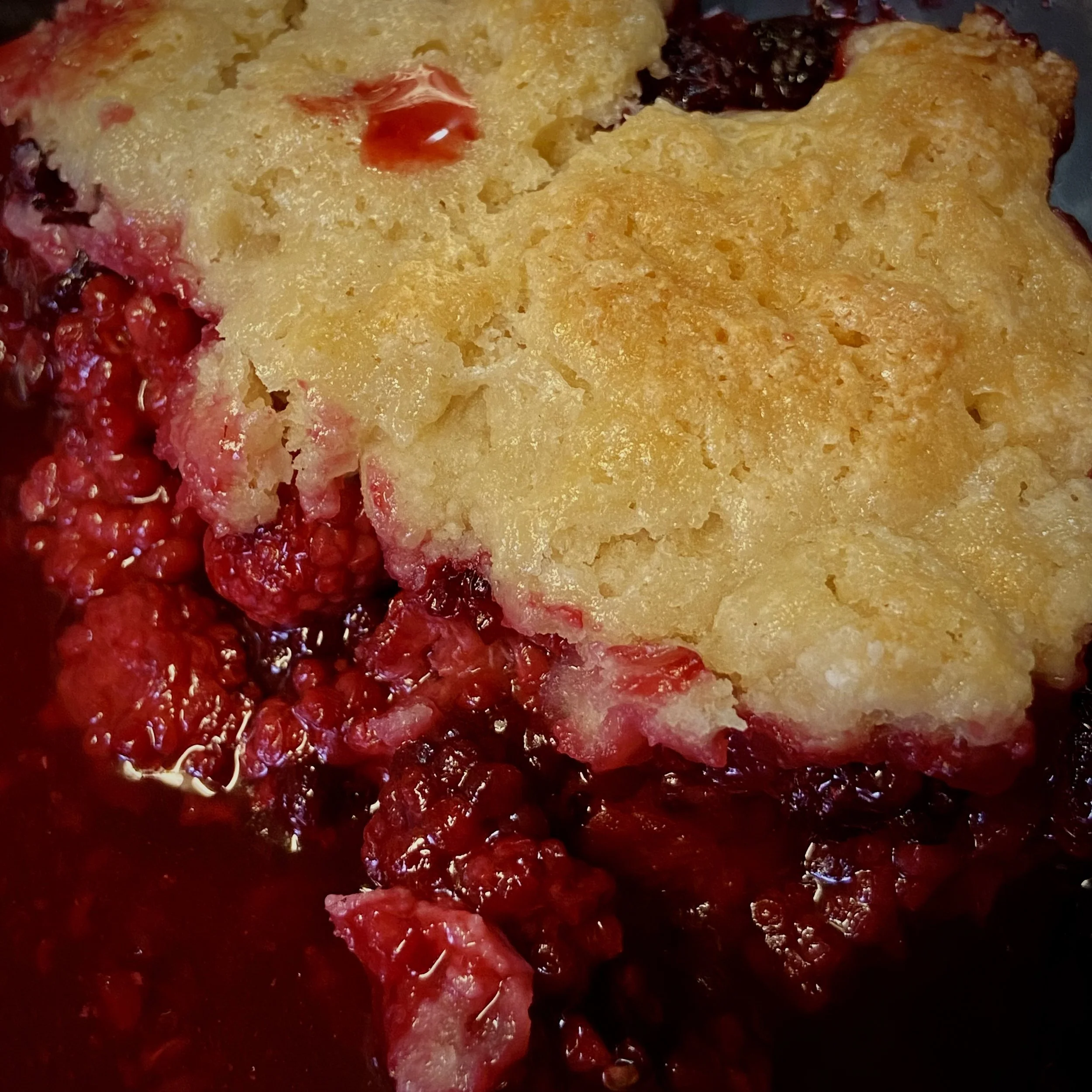
Later, the prairie shows up again.
Not as a place, but as a taste.
What was gathered becomes something shared, but nothing is stripped away in the process. The variation remains. The sweetness, the sharpness, the depth that only comes from fruit that wasn’t forced into uniformity.
Even the ones that weren’t perfect still belong.
Heat doesn’t erase their story. It reveals it differently.
There’s something honest here that’s easy to miss.
We tend to want clean outcomes. Consistent results. A version of fruit without thorns, sweetness without sourness, reward without resistance.
But the prairie doesn’t offer that.
It offers something better.
A system that produces without striving.
A fruit that forms without control.
A process that includes everything, not just what’s convenient.
And watching them out there, reaching into something that will scratch them without apology, you realize:
They’re not being taught a lesson.
They’re learning how to live.
From prairie to table isn’t about getting food.
It’s about stepping into something that was already working.
A living system that doesn’t need to be managed into life, only recognized.
A kind of abundance that doesn’t remove resistance, but grows through it.
A rhythm where nothing is wasted, not even the sour, not even the scratches.
And now, not just year after year…
But here.
In this prairie.
On this ground that came back to life.
The fruit is telling the truth, if we’re willing to reach for it.