The Living System Was Always the Teacher
Are We Building Stronger Institutions or More Capable People?
By Josh Singleton | Founder, serving as Lead Cultivator, The Neighborhood Garden Project
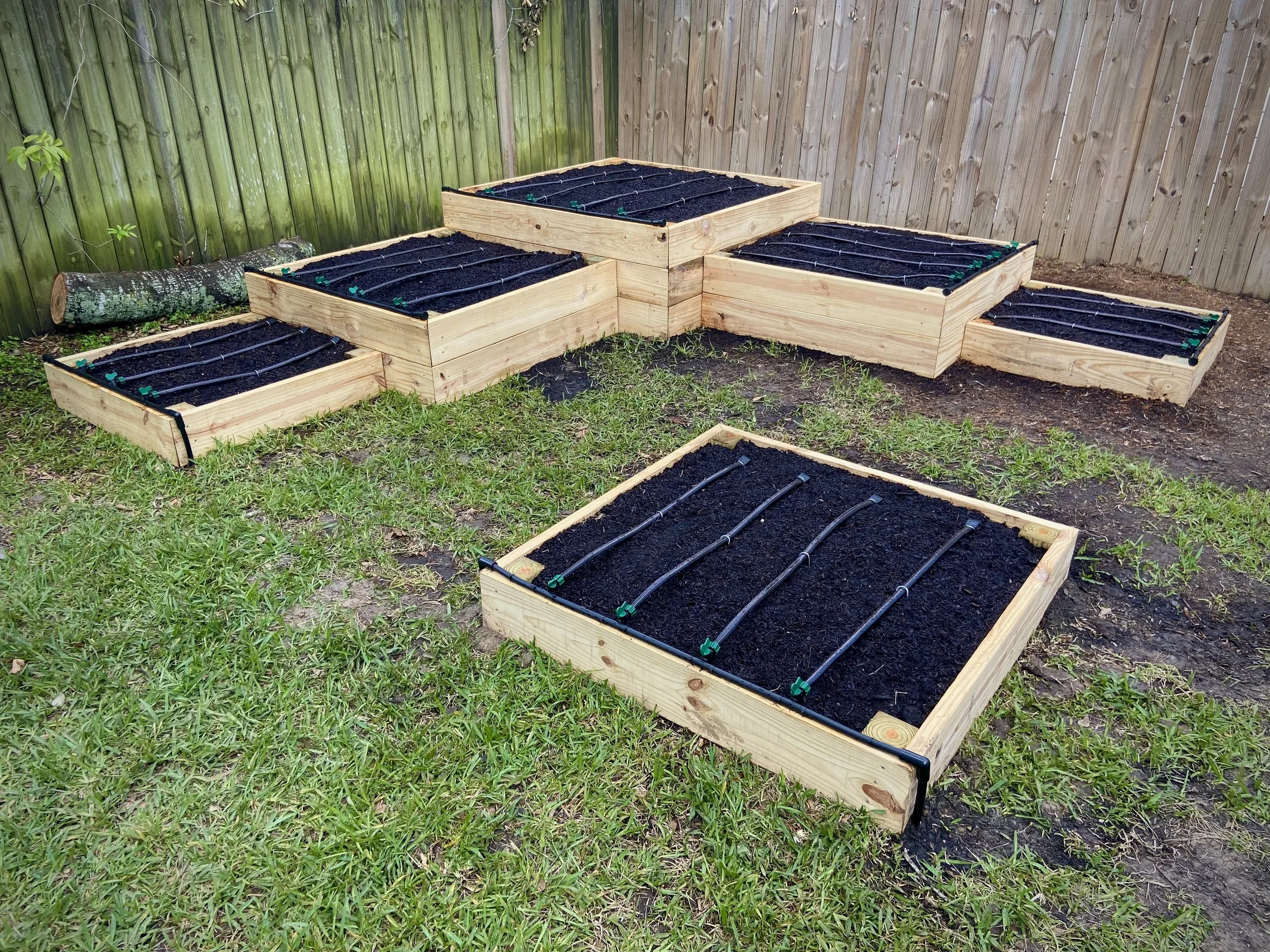
For the past four years, The Neighborhood Garden Project has been known primarily for community gardens. Looking back, I am not sure we were ever building community gardens. I think we were uncovering something much deeper.
What initially appeared to be a mission focused on gardens has slowly revealed itself to be a mission focused on stewardship. More specifically, helping people reconnect with the living systems that sustain life itself. The gardens were simply the first classroom. They gave people a place to gather, learn, work with their hands, and experience something real. But the garden was never the destination. It simply made visible what had always been there. The living system was always the teacher.
Over the years, we watched people arrive believing they were coming to learn how to garden. Some wanted fresh vegetables. Some wanted to spend time outdoors. Some wanted to meet neighbors. Some simply wanted something meaningful to do. Yet what we repeatedly observed was that the deepest transformation rarely came from the harvest itself. It came through participation. It came through showing up. It came through responsibility. It came through becoming connected to something larger than themselves.
The Transition That Revealed Everything
This realization became impossible to ignore over the past year.
Across two church properties, twenty-four families were actively stewarding gardens. They had invested years of labor, observation, learning, relationships, and responsibility into those spaces. The gardens had become part of their weekly rhythms and, for many, part of their personal growth. Then organizational paths diverged. The churches made decisions regarding the future of their properties, and they had every right to do so. The land belonged to them. The buildings belonged to them. The responsibility of stewarding those institutions belonged to them.
Yet the transition exposed something we had not fully seen before. The people doing the stewardship had no meaningful voice in the continuity of the systems they were helping sustain. The gardeners could steward the soil, but they could not steward the container. They could invest years of work, build relationships, and contribute to the health of the space, yet ultimately the future of that space rested elsewhere.
What initially felt like a setback became a revelation. We began asking a simple question: why are we trying to centralize something that naturally wants to decentralize?
Stewarding Soil vs. Stewarding Containers
The more we reflected, the more we realized that many of our systems are built around containers. Organizations become containers. Churches become containers. Programs become containers. Funding streams become containers. The focus often shifts toward sustaining the container itself.
Living systems operate differently. Living systems are not sustained because a container exists. They are sustained because participation exists. Life continues because countless individuals participate in the system. Remove participation, and the system begins to decline regardless of how impressive the container may be.
This realization forced us to ask uncomfortable questions. What happens when the people closest to the stewardship are furthest from the decision-making? What happens when responsibility is concentrated rather than distributed? What happens when continuity depends upon the survival of an institution? Most importantly, what happens when the container becomes more important than the capacity being developed within it?
The answers became increasingly difficult to ignore.
We Don't Build Gardens
One of the biggest misconceptions about our work is that we build gardens. While we certainly help establish garden spaces, that has never been our primary value. We build raised beds. We install irrigation. We prepare soil. We help families and organizations get started. Yet none of those things are the deepest part of the work.
Our value is walking alongside people long enough for the living system itself to become visible.
The garden simply creates the conditions for learning. As people participate, they begin noticing patterns they never noticed before. They begin observing cause and effect. They begin understanding stewardship. They begin recognizing that healthy systems produce healthy outcomes. They begin seeing that life responds to conditions.
Over time, the garden becomes less important. The living system becomes more important. The guide becomes less important. Participation becomes more important. The organization becomes less important. Stewardship becomes more important.
The goal has never been to create gardeners.
The goal has been to create stewards.
The Capacity Opportunity
Interestingly, this realization aligns with what we have been observing for years.
The Neighborhood Garden Project never intentionally targeted a particular economic class. We simply paid attention to who continued showing up. What gradually emerged surprised us. Many of the people returning were not experiencing acute poverty. They were middle-class families. Families with jobs, homes, responsibilities, and enough margin to function. Yet beneath the surface, many carried a quiet exhaustion.
They were not looking for another service. They were not looking for another program. They were not looking for another thing to consume. They were looking for participation. They were looking for responsibility. They were looking for meaning. They were looking for something real.
Many still possessed enough margin to steward something. A backyard. A few hundred dollars. A patch of sunlight. A willingness to learn. A desire for greater depth. What we observed was not primarily a food problem. It was a capacity opportunity.
These households still possessed enough margin to build, participate, and become multipliers. When participation occurs, confidence grows. Practical skills develop. Family rhythms begin to change. Children become involved. Relationships deepen. Stewardship takes root. The garden is rarely the greatest outcome. The capacity developed through participation is.
Why Decentralization Matters
This is why our work is increasingly moving away from centralized garden sites and toward decentralized stewardship.
This is not because centralized gardens are bad. They taught us invaluable lessons. They revealed what was possible. They brought people together. They helped us see patterns that would have been difficult to see otherwise. But they also revealed their limitations.
A family garden embedded in a backyard cannot be removed through a leadership transition at a distant institution. A garden integrated into a household rhythm cannot be voted out by a future board. A living system rooted within a family continues regardless of what happens to the organization that helped establish it.
This is not merely about gardening. It is about resilience. It is about continuity. It is about stewardship becoming embedded within the places people actually inhabit. Homes. Schools. Organizations. Churches. Neighborhoods. Communities.
The healthiest living systems are not concentrated.
They are distributed.
The Question Every Organization Must Face
This transition has also forced us to confront a question that many organizations rarely ask.
Are we creating conditions that increase life, or are we creating conditions that increase our importance?
The question is uncomfortable because every leader is susceptible to it. Executive directors. Pastors. Teachers. Doctors. Consultants. Parents. There is a tremendous amount of affirmation hidden inside being needed. There is a tremendous amount of security hidden inside remaining central. There is a tremendous amount of ego hidden inside dependency.
Living systems expose all of it.
Healthy living systems do not exist to sustain themselves. They exist to multiply life. The healthiest teacher eventually becomes less necessary. The healthiest mentor eventually becomes less necessary. The healthiest parent gradually becomes less necessary.
Perhaps the healthiest organizations do too.
Beyond The Neighborhood Garden Project
One day The Neighborhood Garden Project may not exist. That is not pessimism. It is reality. Every nonprofit is temporary. Every church is temporary. Every board is temporary. Every executive director is temporary. Every institution is temporary.
The question is not whether the container survives.
The question is whether stewardship survives.
If the work depends upon The Neighborhood Garden Project forever, then we have failed. If stewardship remains after we are gone, then the work has succeeded.
That realization has changed everything.
We are no longer primarily creating places where people come to us. We are helping people embed stewardship into the places they already live. Into homes. Into schools. Into organizations. Into churches. Into neighborhoods. Into daily life.
The goal is not to bring more people into our system. The goal is to help people rediscover the living system that already sustains them.
The living system was always the teacher.
We are simply learning to get out of the way.