Conditions → Trust → Participation → Transformation
The Pattern Hidden in Every Living System
By Josh Singleton | Founder, serving as Lead Cultivator, The Neighborhood Garden Project
After twenty-five years of working in gardens, I have become convinced that life is far simpler than we often make it.
The garden has a way of exposing our assumptions. It does not respond to our urgency, our strategic plans, our timelines, or our desire for immediate results. It simply responds to conditions.
When the conditions support life, life tends to flourish. When the conditions work against life, growth tends to struggle. There are exceptions, of course. Nature is full of complexity and surprise. Yet the pattern remains remarkably consistent. The gardener's responsibility is not to force growth. The gardener's responsibility is to steward the conditions from which growth emerges.
For decades, I thought I was learning how to grow vegetables.
What I eventually realized is that the garden was teaching me how life works.
The longer I have worked in gardens, the more I have noticed the same pattern appearing far beyond the garden gate. I have seen it in families, churches, schools, organizations, friendships, and communities. The settings change, but the pattern remains remarkably similar.
If I had to summarize what twenty-five years of observation have taught me, it would be this:
Conditions → Trust → Participation → Transformation
The more I pay attention, the more I see this sequence unfolding throughout creation.
Healthy conditions create opportunities for trust. Trust creates opportunities for participation. Participation creates opportunities for transformation.
The pattern is simple, but it is often overlooked because most of us have been trained to focus on the opposite end of the process. We want transformation. We want results. We want impact. We want visible evidence that something is working.
The garden suggests that we often begin in the wrong place.
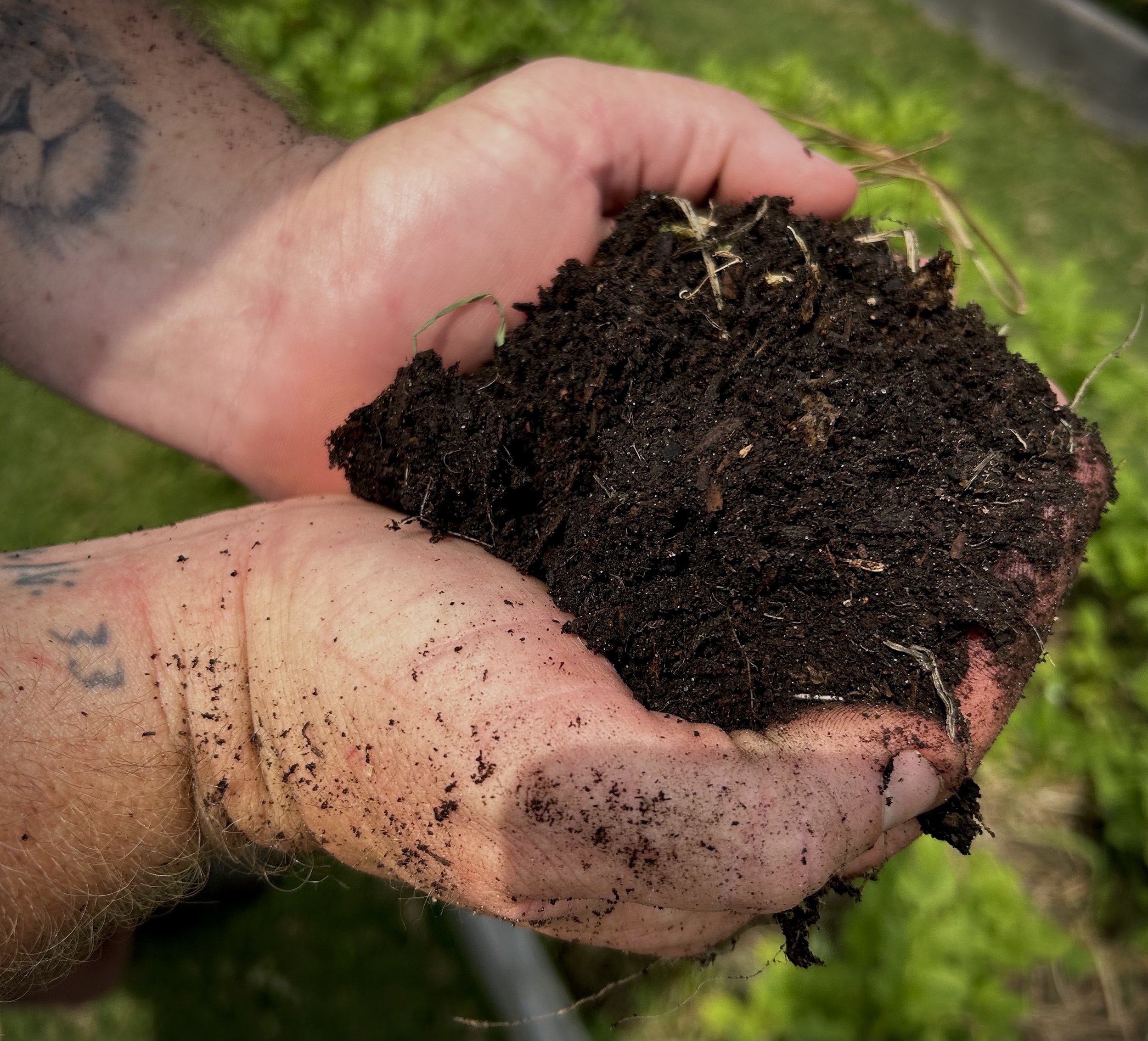
A gardener does not start with fruit. A gardener starts with soil.
Before there is fruit, there must be roots. Before there are roots, there must be conditions capable of supporting life. The harvest is simply the visible expression of a process that began long before anyone could see it. What eventually appears above the surface is often determined by what has been happening beneath it all along.
The same appears to be true with people.
Trust rarely develops because someone asks for it. Trust develops when conditions allow it to grow. It grows through honesty, consistency, patience, presence, and care. It grows when people discover they are not being manipulated, managed, or treated as a means to an end. It grows when words and actions align over time.
Like healthy soil, trust often goes unnoticed until it is missing.
When trust begins to grow, participation changes. People become willing to engage more fully. They begin asking deeper questions. They begin contributing rather than simply consuming. They begin taking ownership of their own growth and development.
This is where an important distinction emerges. Participation is not the same thing as compliance.
Compliance can be required. Participation must be chosen.
Compliance often emerges from pressure. Participation emerges from trust.
A person can comply without ever truly engaging. They can follow instructions, attend meetings, complete assignments, and check boxes while remaining disconnected from the process itself. Participation is different. Participation involves ownership. It involves investment. It involves a willingness to bring something of ourselves into the work.
Transformation rarely occurs without that kind of participation.
Like roots developing beneath the soil, transformation is often happening long before it becomes visible. Some of the most important changes in a person's life cannot be measured in real time. They unfold through relationships, experiences, failures, discoveries, conversations, and countless moments that rarely appear in a report, a survey, or a spreadsheet.
This is where many of our assumptions begin to collide with reality.
We increasingly expect living systems to operate like machines. We expect trust to develop quickly. We expect participation to happen immediately. We expect transformation to fit neatly within a reporting period, a strategic plan, a grant cycle, or a fiscal year.
When those expectations are not met, our instinct is often to apply more pressure. We create new programs, new measurements, new initiatives, and new strategies. We work harder to produce the outcomes we want.
Rarely do we stop to ask whether life itself might be moving at a different pace.
Healthy soil takes time to develop. Trees take time to mature. Relationships take time to deepen. Trust takes time to establish. Formation takes time to unfold.
Life seems far more interested in depth than speed.
This observation has also changed how I think about crisis and long-term change.
This is not an argument against responding to immediate needs. Hunger matters. Homelessness matters. Illness matters. Crisis deserves compassion and action. Organizations that respond to urgent needs perform essential work, and the stability they provide often becomes the foundation for everything that follows.
When someone is overwhelmed by immediate needs, survival naturally becomes the priority. Stability creates breathing room. It creates space for reflection, responsibility, relationship, stewardship, and growth. It creates the margin necessary for deeper work to begin.
In this way, crisis response and condition stewardship are not competing ideas. They are complementary functions within a healthy ecosystem. One responds to urgent needs. The other pays attention to the conditions that may be contributing to those needs in the first place.
Both matter.
The challenge is that needs are often easier to see than conditions.
A crisis demands attention. Conditions require observation.
A symptom demands action. Conditions require patience.
The visible naturally captures our focus, while the foundational often remains hidden beneath the surface.
As a result, many of our systems become highly effective at managing symptoms while remaining disconnected from the environments, assumptions, relationships, and patterns that continue producing those symptoms.
Perhaps this is why the earliest signs of transformation are so easy to miss.
A gardener does not wait until harvest to evaluate the health of a garden. Long before fruit appears, the gardener is paying attention to the soil, the moisture, the roots, the insects, and countless other indicators that reveal what is happening beneath the surface.
The same is true with people.
Long before transformation becomes visible, trust may be growing. Ownership may be emerging. Participation may be deepening. Someone may be beginning to see themselves differently. Someone may be taking responsibility for their own growth. Someone may be discovering gifts, capacities, and possibilities they had not previously recognized.
These changes often happen quietly, long before they become visible outcomes.
Perhaps this is what the garden has been teaching me all along.
Life does not begin with transformation.
Life begins with conditions.
Healthy conditions create opportunities for trust. Trust creates opportunities for participation. Participation creates opportunities for transformation.
The gardener cannot manufacture fruit.
The gardener can only steward conditions.
The same appears to be true in much of life.
Perhaps our responsibility is not to force transformation but to faithfully steward the conditions where transformation becomes possible. Perhaps our responsibility is not to control outcomes but to participate in creating environments where life can flourish.
Because wherever conditions support life, life has a remarkable tendency to respond.
Not because it was demanded.
Not because it was engineered.
Not because it was accelerated.
But because life has always tended to flourish when the conditions support life.