The Grammar of Reality
Why Jesus Spoke from Seed, Soil, and Work
By Josh Singleton | Founder, serving as Lead Cultivator, The Neighborhood Garden Project
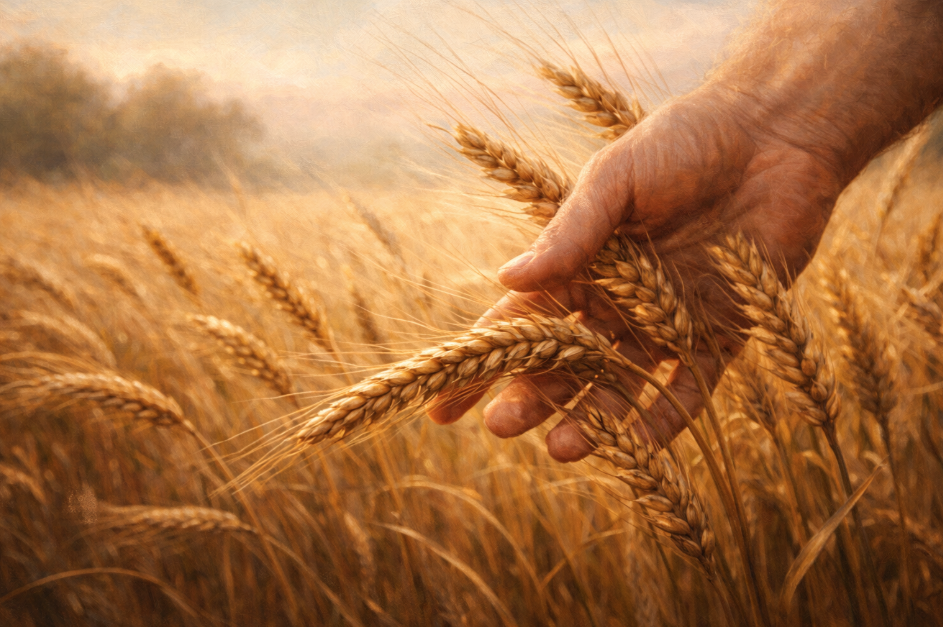
Seeds, soil, birds, lilies, weather, vineyards, sheep, fig trees, bread, water, fire, pruning, harvest.
None of these were illustrations added for effect.
They were the grammar of reality.
Jesus did not borrow from nature to make spiritual ideas easier to understand. He spoke from within a world where these things were already understood as teachers. His words assumed attention, not imagination. He was not asking people to picture something abstract. He was pointing at what they had already seen with their own eyes.
Seeds really do fall on different kinds of ground. Some soil cannot receive life, no matter how good the seed. Birds really do remove what sits exposed. Roots really do fail when depth is missing. Weather really does determine whether growth endures. None of this is symbolic first. It is observable.
Lilies really do grow without striving. They are not careless. They are aligned. They grow where they are planted, drawing what they need, opening when it is time. Anxiety does not improve their color or structure. It only exists in observers who have forgotten how provision actually works.
Vineyards really do require pruning. Not because the vine is bad, but because growth without discernment weakens fruit. Anyone who has avoided pruning knows the result. More branches, smaller harvest. Less clarity, more exhaustion. This is not a lesson invented for the soul. It is how plants function.
Sheep really do wander. They do not self-correct through information. They require presence. Guidance is not a lecture. It is proximity, voice, and trust developed over time. The danger is not ignorance. It is isolation.
Fig trees really do reveal their condition through fruit. Leaves can appear healthy while the system underneath is compromised. Fruit exposes truth slowly but honestly. No amount of explanation replaces a season of observation.
Bread really does come from grain that was buried, grown, cut down, ground, mixed, and baked. Daily provision requires a chain of faithfulness, not a moment of inspiration. Water really does sustain life, but too much drowns it. Fire really does refine and destroy, depending on how it is stewarded.
Harvest really does arrive after patience. It cannot be scheduled by desire. It comes when conditions align. Anyone who has harvested too early or too late understands this in their body, not just their mind.
This is why the teaching landed. It was not clever. It was accurate.
The problem came later, when we separated words from land, truth from practice, belief from participation. We turned reality into metaphor, then argued about interpretation while ignoring observation. We discussed seeds without touching soil. We talked about fruit without tending roots. We spoke about pruning without ever cutting anything back.
The teachings were never meant to float. They were anchored in creation because creation is honest. It does not flatter, hurry, or negotiate. It reveals cause and effect patiently, for anyone willing to stay long enough to see.
This is still true.
You do not need new language. You need return.
Return to watching what actually grows.
Return to noticing what withers.
Return to seeing how life responds to care, neglect, rhythm, and restraint.
The grammar has not changed.
Only our attention has.
And the invitation remains the same.
Look. Stay. Learn.