When Food Stays
Why Keeping the Harvest in the Garden Changes How We Learn to Live
By Josh Singleton | Founder, serving as Lead Cultivator, The Neighborhood Garden Project
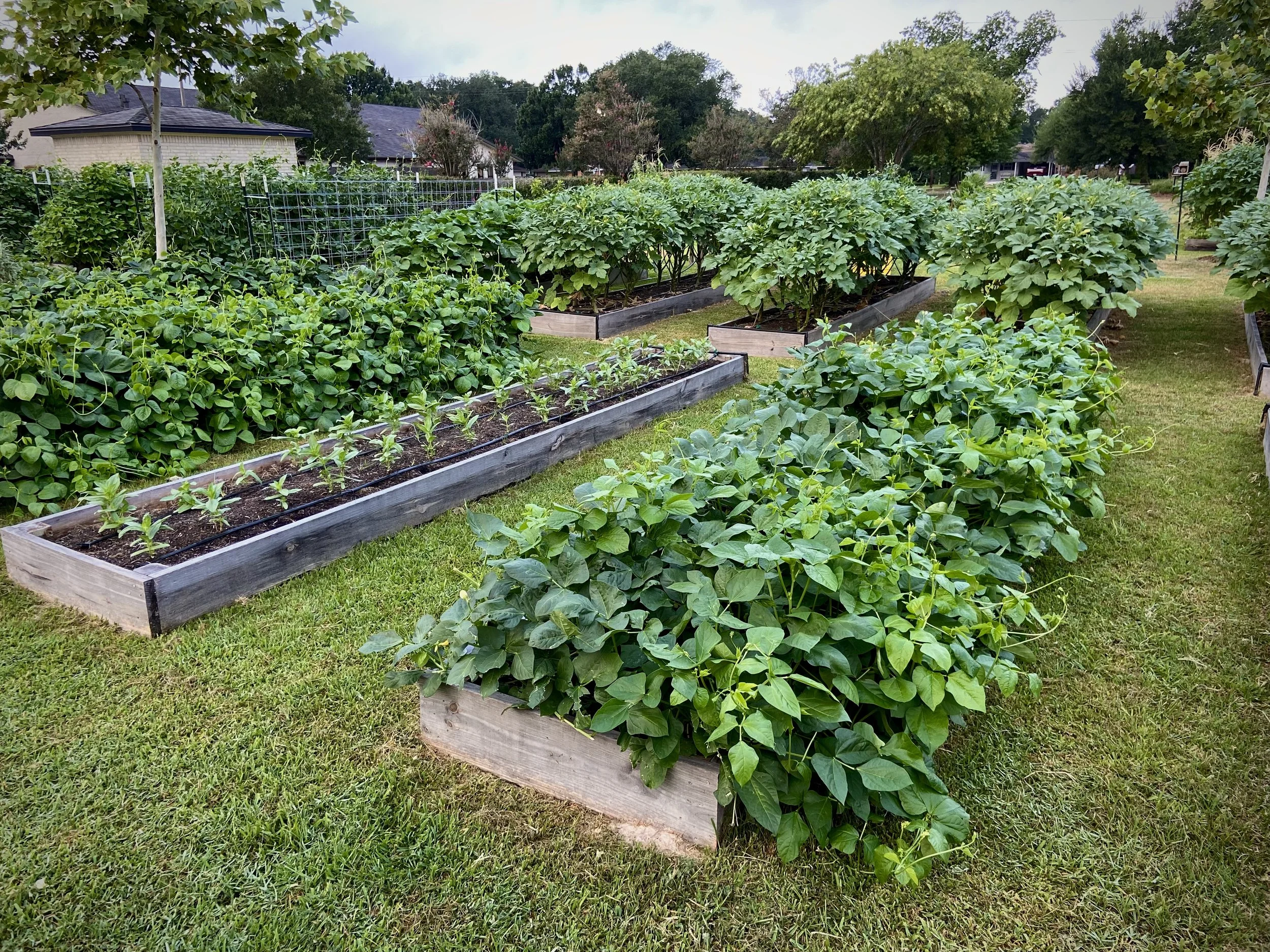
“We realized that when food leaves the garden, it often turns into a product. When it stays, it remains part of shared life, and that changes everything.”
We did not arrive at this understanding through theory or planning. It came through attention. Through staying long enough to notice what actually happens when food is separated from the place and rhythms that bring it into being, and what happens when it is not.
At first, the difference was subtle.
Food leaving the garden felt generous. Helpful. Efficient. It seemed like the obvious next step. But over time, we noticed a quiet shift in posture. When food left the garden, it became something to manage. Something to count, package, coordinate, and explain. It began to live in containers and schedules rather than soil.
Distance did the work.
The soil disappeared from view. The weather disappeared. The patience disappeared. The hands that showed up week after week disappeared. Food became an outcome rather than a relationship, a result rather than a process. Without intending to, the garden began to function as a supply source.
When food stays in the garden, that flattening cannot happen.
People do not just receive it. They encounter it. They see what struggled and what thrived. They notice beds that surprised us and beds that failed. They ask questions. They linger longer than planned. Food becomes part of shared life rather than a solved problem.
This is not a statement against generosity. It is an observation about formation.
When produce was placed elsewhere, the garden lost its invitation. It was no longer a place you entered, but something that served you from a distance. The food was consumed, but the life that grew it remained untouched.
When food stayed in the garden, it stayed connected to its story.
It carried early mornings and missed waterings. Failed plantings and patient returns. Conversations that happened while harvesting. Quiet weeks when no one noticed anything happening at all. Receiving food in that space did not create obligation. It created awareness. People stood inside the reality of how nourishment actually comes to be.
That matters.
Because the garden was never meant to be a distribution point. It was meant to be a place where agency could slowly reawaken. Where people could see that provision is not abstract. It responds to attention. It grows through relationship.
As we stayed with this, another pattern kept surfacing.
We hear this often.
“I planted too much. When I planted it, I couldn’t believe it would actually produce.”
That single sentence holds two mindsets at once. Scarcity at the beginning, and fear of waste at the end.
At planting time, many people do not actually expect abundance. They hedge against disappointment. They assume loss. They plant cautiously, quietly believing that most of what they put in the ground will not make it. Planting becomes an act of doubt rather than expectation.
Then growth happens.
The garden responds. Life does what life does when it is given even a small amount of faithfulness. Seeds germinate. Leaves unfurl. Fruit sets. And suddenly the internal narrative has to change.
Now there is more than expected.
And the anxiety shifts.
“I don’t want to waste it.”
This is where abundance confronts formation. Where belief lags behind reality. Abundance arrives faster than trust can keep up, and it feels destabilizing. The impulse becomes to resolve it quickly. Move it. Give it away. Get it out of sight. What looks like generosity is often an attempt to escape the discomfort of having more than expected.
This is where generosity quietly collapses into management.
But the garden does not share that anxiety.
It does not panic when it produces.
It does not apologize for being fruitful.
It does not rush its harvest out of sight.
It keeps growing.
When food remains in the garden, it gives people time. Time to let belief catch up to provision. Time to stay present with abundance long enough to be formed by it. Time to learn that abundance is not something to fix or manage away, but something to dwell within.
And as people remain, another layer reveals itself.
Some gardeners begin to compare their plots to the garden managers’ plots. Leaf size. Yield. Speed. Color. The comparison almost always happens at the level of outcome, as if the end result is the only thing that matters.
Why does yours look like that and mine does not?
What is rarely named are the conditions that shaped each plot.
Microclimates.
Moisture levels.
Soil structure.
Nutrient availability.
Seed versus transplant.
Presence over time.
Attention given when no one was watching.
Two beds can sit ten feet apart and live entirely different lives. One holds water longer. One dries out quickly. One catches afternoon shade. One bakes in the sun. One was planted from seed and asked to become. One was transplanted and expected to perform.
Comparison collapses all of that.
It flattens process into appearance. It assumes sameness where there is none. It quietly teaches that results matter more than relationship, and that difference must mean error.
This is often when the question shifts.
“What did I do wrong?”
That question carries assumptions. It assumes there was a correct method that should have produced a predictable outcome. It assumes growth is standardized. It assumes deviation signals failure.
But the garden never asked that question.
The garden does not frame growth in terms of right and wrong. It responds to conditions. It responds to timing. It responds to presence. Two people can do everything “correctly” and end up with very different results, not because one failed, but because their plots are telling different stories.
When comments drift toward self-blame, what we are often hearing is not humility, but disorientation. A person looking for certainty in a living system. Wanting reassurance that they are not behind, not missing something, not failing an invisible standard.
The garden does not offer that kind of reassurance.
Instead, it asks for alignment.
And it asks silently.
Alignment is not about copying methods or matching outcomes. It is about listening to what this piece of ground is asking for. It is slower. More curious. Less comparative. It asks, “What is happening here?” instead of “What did I do wrong?”
That shift matters.
Because the moment growth is framed as error-correction, observation gives way to anxiety. Technique replaces relationship. The garden becomes a scoreboard instead of a teacher.
The garden managers’ plots are not better. They are simply further along in relationship. They have been listened to longer. Observed more closely. Adjusted patiently over time. They carry the memory of failure, correction, return, and continued presence.
When food stays in the garden, these differences become harder to ignore. You can walk the beds. You can feel where water pools and where it runs off. You can see why one plant thrives and another struggles. The garden makes visible what comparison tries to bypass.
This clarifies the role of the garden manager.
Not to fix the question.
Not to defend the outcome.
Not to offer formulas where formation is needed.
Sometimes the most faithful response is presence. Standing with someone long enough for the assumptions underneath the question to surface and soften on their own. Trusting that alignment cannot be rushed, explained, or enforced.
The garden reveals that growth is not a moral outcome. It is a relational one.
This is why we trust curiosity. We do not promote. We do not announce. The gate stays open. The beds keep growing. Those who are drawn come close enough to notice. Those who are not keep moving, and that is fine.
Not every good thing needs to be scaled.
Not every harvest needs to be moved.
Not every abundance needs to be resolved.
Some things do their deepest work when they stay rooted.
When food stays in the garden, it resists becoming a product. It remains a teacher. It stays woven into shared life. And in a world trained to consume outcomes without encountering process, that quiet choice continues to change everything.