Nothing Is Lost
Margin, Balance, and the Freedom to Begin Again
By Josh Singleton | Founder, serving as Lead Cultivator, The Neighborhood Garden Project
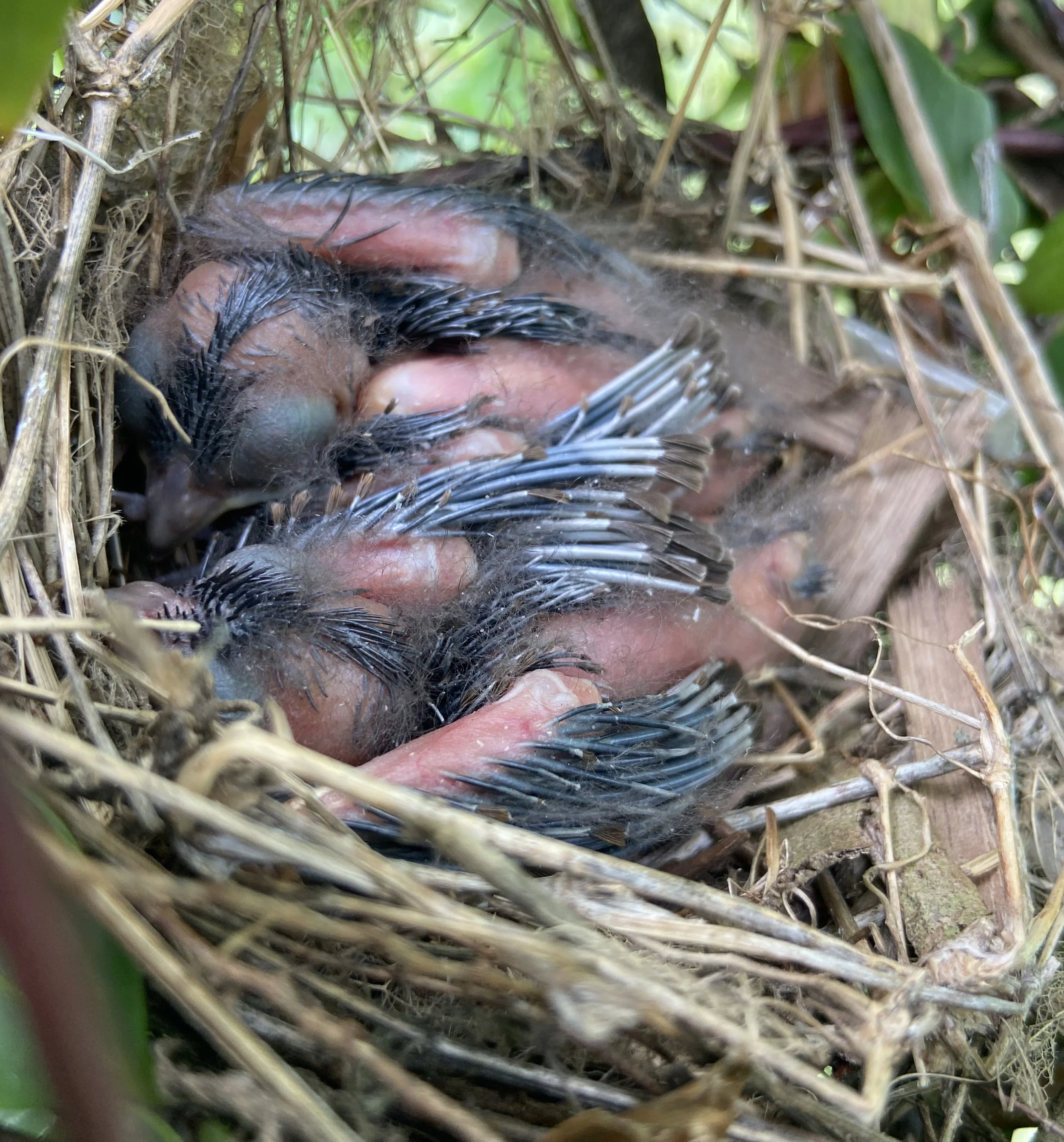
At the Katy Garden, near the top of one of our arched trellises, a pair of Northern Cardinal built a nest within the dense evergreen vines of Carolina Jessamine, commonly called yellow jasmine. The vine wrapped over the arch and created a sheltered pocket where new life could begin. On April 27, the nest was full of rapidly growing chicks, nearly ready to leave the nest.
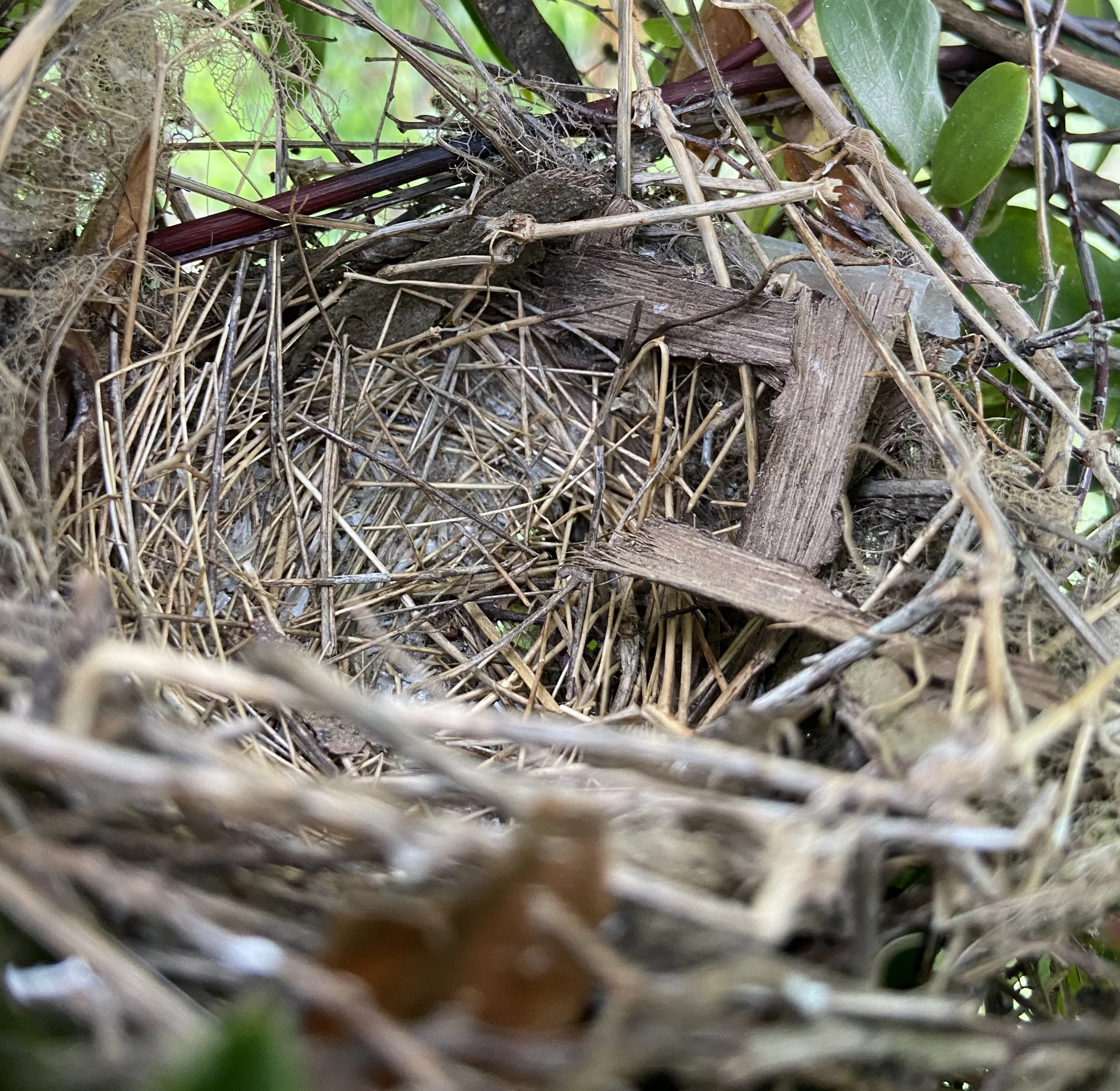
Three days later, the nest was completely empty. There were no feathers, no signs of struggle, and no evidence that the nest had been torn apart. The most likely explanation was a Western Rat Snake, which quietly climbed the arch, consumed the nestlings, and slipped away without disturbing the woven structure.
At first glance, this feels catastrophic. We can see what those chicks were about to become, and we instinctively mourn the apparent loss of their future. But part of the intensity comes from something deeper within us. Many of us carry our own regrets, unrealized potential, and lingering questions about whether we have fully lived out the purpose for which we were created. When we witness life being cut short, it stirs the tension of our own unfinished story.
Our response is also shaped by our limited experience within truly living systems. Most of us have been formed in environments built around control, predictability, and singular outcomes. We are taught to believe that every opportunity must succeed, that every prospect carries enormous significance, and that one disappointing outcome can jeopardize the whole story. As a result, events like this feel far more devastating than they are.
Creation reveals a very different reality.
In living systems, what appears to be loss is often one of the mechanisms that maintains balance. The nestlings became nourishment for the snake, strengthening a predator that helps regulate rodents and participates in the broader food web. The energy gathered by the parent birds through hundreds of feeding trips was not destroyed. It was transferred.
Nothing was wasted.
What is especially striking is that the parent birds do not attempt to control the outcome at all costs. Cardinals may sound alarm calls or briefly harass a predator, but they do not possess the strength to overpower a snake. They respond within the limits of what they were designed to do, and when the event is over, they begin again.
This response is consistent with the broader reality of songbird reproduction. For many small songbirds, only about 20–40% of nesting attempts successfully produce fledglings, meaning that 60–80% of nests do not reach fledging because of predation, weather, parasites, and other natural causes. Yet these species remain abundant because they are designed to try repeatedly.
At the same time, the cardinals were not ruined by this event. Northern Cardinal commonly raise multiple broods each season, investing fully in each nest while retaining the capacity to begin again. Their future does not depend on one nesting attempt. The apparent loss contributes to the health of the whole while preserving their ability to rebuild.
This is how resilient systems function.
They are not sustained by controlling every outcome. They are sustained by abundance, redundancy, regeneration, and continuity. No single event carries the full weight of the future.
Human beings are often trained to live in the opposite way. We treat every grant, partnership, conversation, and decision as though our lives depend on it. We delay obedience, overanalyze possibilities, and cling tightly to what God has placed within us because we fear that one misstep could undo everything.
This helps explain why the grave receives so much of what God intended to be released into the world.
Every human being carries something that God intended to be planted. Ideas. Assignments. Acts of love. Insights. Relationships. Courage. Healing. Expressions of life that were meant to take root beyond the boundaries of our own experience. Yet much of what has been entrusted to us remains dormant because we believe the conditions must be perfect, the risks must be eliminated, and the outcomes must be guaranteed.
Creation tells a different story.
The cardinal does not wait for certainty before building. It invests fully, knowing that many nests in the natural world will not reach the finish line we imagine. It does what it was designed to do, and when one nesting attempt is lost, it begins again. The prairie sends roots deep into the soil, even though drought, fire, and grazing are inevitable. Trees produce thousands of seeds, most of which will never become mature trees. Living systems move forward because they are designed with margin.
Perhaps one of the most important moments in life is when we finally acknowledge that we are being held, that all of life does not hinge on singular outcomes.
We are not responsible for holding the entire story together.
We are participants within a design that has already accounted for both gain and loss.
When this truth takes root, fear begins to loosen its grip. We become free to sow generously, invest wholeheartedly, and release what God has entrusted to us, trusting that our assignment is sustained by Him rather than by our ability to control every result.
The Katy Garden continues to teach this truth through the soil, the yellow jasmine, the cardinals, and even the unseen snake.
The vine offered shelter.
The parent birds invested completely.
The snake received nourishment.
The ecosystem moved toward greater balance.
And the cardinals remain free to build again.
What looked like an ending was simply one movement within a much larger story.
Nothing was wasted.
Nothing was lost.
And all along, we were being held.