It Is Not a Green Thumb They Lack
The Garden Reveals the Posture Required for Life to Grow
By Josh Singleton | Founder and Lead Cultivator, The Neighborhood Garden Project
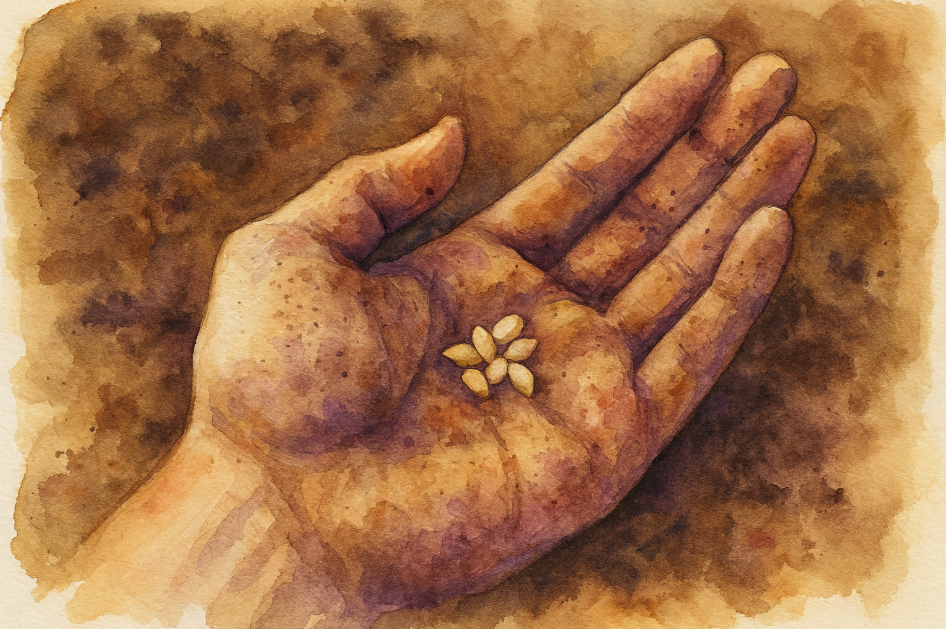
People walk into the garden and apologize before they begin. They say they do not have a green thumb, or that everything they touch dies, assuming their struggle is skill. But after twenty years in the soil, I know the truth. It is not a green thumb they lack. It is surrender, patience, and presence. Without these three postures, nothing grows well—not plants, not children, not communities, not souls. The garden reveals this long before life does. Gardening begins with surrender because plants do not grow on our timeline or bow to our urgency. A seed opens only when it is ready, and roots form in the unseen long before anything breaks the surface. People think they struggle with gardening, but the real struggle is with control. They want fruit without formation and outcomes without process. The soil refuses this. It teaches us to release our grip, to trust what we cannot see, and to partner with life instead of commanding it.
Gardening also requires patience, the kind that rewrites your internal rhythm. Most people who say they have a black thumb simply have a pace that is too fast for anything real to grow. Roots take time. Formation takes time. Everything worth keeping develops slowly. The garden restores the natural tempo of creation, slowing us to the speed of heaven rather than the speed of pressure.
Then comes presence. Plants rarely die from dramatic events. They die from absence, from days of not noticing, from a life lived too fast to register the subtle signs of stress or thirst. People who say they cannot keep anything alive are rarely incapable; they are overwhelmed. Presence is the posture the world never trained us for, yet the garden insists on it.
This is why only a few discover the Kingdom through gardening. The garden is open to all, but its meaning reveals itself only to those who slow down. Jesus often said, “To those who have ears to hear.” The soil speaks in that same tone. Some see chores while others hear revelation. The difference is posture. And here is the deeper connection most people miss: if we cannot cultivate plants, we will struggle to cultivate the people in our lives. Plants are the simplest form of life we are asked to tend. They show us how formation works without the complication of human will. A plant never rebels, never questions motives, never hides. It simply responds to its environment, and if the conditions are wrong, the feedback is immediate. Children are different. They absorb misalignment quietly and slowly. They bend themselves to survive what they were never meant to carry, learning patterns that work against their God-given design.
I know this personally. I know what it is like to bend and adapt against my design as a child. I know what it feels like to reshape myself just to survive. Kids do this without thinking. We internalize expectations, absorb atmospheres, interpret silence, and adjust ourselves to fit environments that were never meant to define us. Later in life, we call these adaptations personality. We say, “This is who I am.” But the truth is simpler and more painful: it is who we had to be. I know what it is like to look back and recognize rhythms that were never mine—old patterns of pleasing, performing, shrinking, adapting, and absorbing weight that did not belong to me. They carried me through childhood, but they could not carry me into becoming. And the garden helped me see the difference. The soil does not ask you to bend. It invites you to become. It does not force adaptation. It cultivates alignment. It reveals the places where you are still living from survival instead of design.
Children bend because they must, but every adaptation has a cost, and that cost usually shows up in the teenage years. What looks like rebellion is often exhaustion. It is the moment the child can no longer carry the weight of who they had to be. Plants reveal misalignment immediately. Children reveal it eventually. And my heart aches at the assumptions people carry about raising kids. They believe providing food, shelter, and clothing is enough to sustain life. Those things keep a body alive, but they do not cultivate who a person becomes. A child can be fed and still be starving inside. A child can have a house and still not have a home. A child can be clothed and still feel exposed. A child can be protected physically and still be unprotected spiritually.
The world reinforces this mindset because it knows how to measure survival, not thriving. Systems know how to count meals but cannot measure identity. They know how to track services but cannot trace formation. Culture praises parents who provide the basics, even if no one in the household is truly alive. Meanwhile, the garden exposes a truth that discomforts people: you cannot thrive by meeting only basic needs. Plants need more than nutrients; they need atmosphere, timing, protection, consistency, and care. Children need far more. And this is where the disconnect becomes painfully obvious. Some people grow plants beautifully yet remain completely disconnected from how the garden applies to their own lives. They treat gardening as a task instead of a mirror. They slow down for tomatoes but not for their children. They notice a plant wilting but overlook their own soul wilting. They cultivate outwardly while remaining untouched inwardly.
It is entirely possible to grow healthy plants while living an unhealthy life, to nurture soil while neglecting your spirit. But the moment a person allows the garden to speak personally, everything changes. The soil stops being something they work and becomes something that works on them. And here is the paradox the world cannot grasp: cultivation can happen without food, shelter, and clothing. Material provision has never guaranteed formation, and the lack of material provision has never prevented it. Some of the most deeply rooted, wise, courageous people were raised in poverty because someone saw them, knew them, loved them, and walked with them. Presence becomes nourishment. Attention becomes shelter. Love becomes the clothing that protects identity. What forms a soul is not what you can buy; it is who you become while you raise them.
This is why the garden must not be seen as something for others but not for yourself. People often say they want to learn gardening so they can give back to their community, but that mindset reveals a misunderstanding. The garden was never meant to bypass you on its way to others. You cannot give what you have not lived. You cannot cultivate others in a posture you have not embodied. The soil shapes you before it ever works through you. When someone believes the garden is not for them, they are usually the one who needs the garden most. Formation precedes impact. Transformation makes service real. Without being cultivated first, everything you offer becomes thin, hurried, or pressured because it lacks the depth only personal formation can create. Communities do not need more projects. They need more gardeners whose lives have been shaped by the soil they tend.
Most people do not lack a green thumb. They lack the posture that makes life thrive. The garden offers this posture to anyone willing to slow down long enough to be formed by it. And the moment this posture takes root in a person, everything they touch begins to change. Soil changes. Homes change. Children change. Communities change. Because cultivation always begins in the heart of the one who tends.