The Pattern Beneath Everything
How Jesus, Creation, and the Soil Reveal the Assignment That Preceded Our Bodies
By Josh Singleton | Founder and Lead Cultivator, The Neighborhood Garden Project
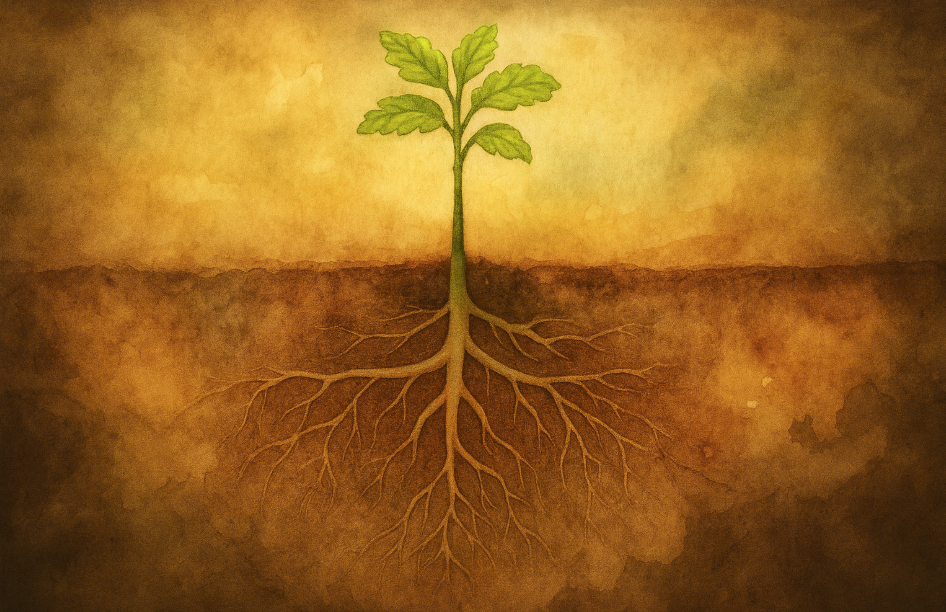
When I stand in the garden, there is no audience. There is no stage, no applause, no pressure to impress. Seeds break open in hidden soil. Roots move quietly through darkness. Stems reach toward light with no one watching. The garden does not grow for visitors. It grows because it is responding to the design placed within it by the Father. Creation is not performing. Creation is obeying.
One of the most overlooked realities today about Jesus is how He moved through the New Testament, how He carried Himself, what guided His steps, and what shaped every moment of His life. His movement was not random. It was the visible expression of an obedience that began before creation. Scripture reveals that the Lamb was slain before the foundation of the world, which means His yes existed before His body, before shepherds and wise men, before miracles, betrayal, and crucifixion. His earthly life was simply the unfolding of an eternal obedience to His Father. We often say, “Jesus died for you.” There is truth in that, but if we stop there, we place ourselves at the center of a story that has always been about the Father and the Son. Jesus did not shape His life to please us. He did not go to the cross because we were His audience. He lived and died in perfect obedience to His Father, saying, “I only do what I see the Father doing. I only say what I hear the Father saying.” That is not the posture of a performer. That is the posture of a Son.
In the garden, this becomes easy to understand. Tomatoes do not grow for compliments. Oaks do not deepen their roots because someone might admire their shade. Plants grow because they are obeying the patterns woven into them from the beginning. Their flourishing blesses us, but their first allegiance is to the One who designed them. Jesus lived the same way. His obedience blessed us, but we were not the ones He was obeying.
Where the Drift Began
Somewhere along the way, the church shifted the center. We started saying that Jesus did everything for us, and then we built ministries that tried to do everything for people. We measured success by who responded, who stayed, who left, and who returned. Ministry became a stage. People became an audience. Pressure replaced presence. And in the process, we carried a weight we were never designed to carry. I grew up in this system, where church life was measured through numbers—attendance, salvations, how many children raised their hands at VBS, how big the next building campaign would be. Sermons often began with “you are a sinner” and ended with behavior management: try harder, do better, stop this, start that. I do not doubt the sincerity of many who led, but the structure formed us to value immediate visible responses over slow, hidden transformation. We learned how to perform repentance rather than grow roots.
It took something as disruptive as Covid and the closing of church buildings for God to finally get my full attention. Without events, schedules, or tasks, I could no longer hide behind ministry activity. In that quiet, God showed me that I had prioritized every church effort and checklist while neglecting our relationship. I knew how to work for Him, but I did not know how to be with Him. That realization changed everything. I have not returned to church in the same way since, and honestly, many parts of the church did not awaken the way I hoped they would. They rebuilt what they had before. I knew I could not.
When I tried to go back, I felt the dryness. The pace and design of church did not make space for depth. There was endless language about building community, but relationships felt scattered and thin. Over time, I realized the people I am meant to walk with are attached to the realm God entrusted to me, not to my attempts to plug into every church program. They keep showing up in the garden, at picnic tables, on weekday mornings when nothing is scheduled. God was not asking me to chase community. He was asking me to tend the realm He established and trust Him to bring the right people into it.
Even the way we hear Jesus say “pick up your cross and follow Me” has drifted. We often treat it as a formula for spiritual self-denial to gain blessing later. That still places us in the center. It turns the cross into a transaction. Jesus was not inviting us into self-punishment or religious ambition. He was inviting us into the same surrendered obedience that defined Him. Taking up the cross is not about proving our seriousness. It is about letting the Father be the only audience of our lives, even when that posture costs us.
This Eternal Pattern Belongs to Us Too
This reality is not only true of Jesus. In a different way, it is true of us. We were not accidents who arrived in time and then tried to invent meaning. Scripture reveals that our assignment existed in the heart of God before we ever received a body. “Before I formed you in the womb, I knew you. Before you were born, I set you apart.” Paul writes that God chose us in Christ before the foundation of the world. The Psalmist says the days ordained for us were written before one of them came to be. These are not poetic exaggerations. They are glimpses into how God works. Purpose precedes embodiment. Assignment precedes arrival. Your body is the place where an eternal yes is walked out in time. This is why obedience often feels like remembering rather than performing. The Spirit testifies with our spirit because our spirit came from God.
Why Gardening Became the Bridge
For more than two decades, gardening was woven into every part of my life. It was my passion, my hobby, and sometimes even my job. Season after season, I returned to the soil. I learned patience and timing. I learned to trust what I could not see. I learned to honor slow work. I learned to let the ground speak. I did not realize it then, but I was learning the language of my assignment long before I understood the assignment itself. Gardening was not random for me. It was the formation that shaped the very instincts my calling would later require. God placed me in the soil before He placed people in my care. The garden formed the gardener so the gardener could one day help form people.
Over the years, the soil taught me the rhythms and patterns of the Kingdom—slow work, hidden work, faithful presence, rooting down, tending what God brings, stewarding instead of controlling, honoring seasons, surrendering outcomes, trusting the unseen, and letting fruit come in its time. These are not gardening virtues. They are Kingdom virtues. The garden and the Kingdom share the same DNA. That is why the soil felt familiar. It matched my eternal assignment before I understood its name. Eventually the Father said, with unmistakable clarity, “Stop growing food and start cultivating people.” That moment was not a new direction. It was the revealing of an old one. I recognized the voice because it was the same voice that had taught me to garden.
The Assignment Continues
God was not rejecting food. He was realigning my focus. People are the soil He is after. The garden is simply the environment where He does His deepest work. Plants do not grow for applause. They grow because the Father placed a design within them. In the same way, I am not here to perform for volunteers, partners, or funders. I am here to respond to the Father. As I stay tethered to Him, people step into the garden and sense something they cannot name. They think they are coming for vegetables, but they are actually walking into cultivation.
In the garden, the deepest work happens underground. The same is true in the Kingdom. God is not impressed with visible output if roots are not anchored in Him. He is not asking us to perform. He is inviting us to be tethered.
Living From the Father Toward the World
The garden does not need an audience to grow. It is ordered by a deeper word. You and I were meant to live the same way—from the Father, unto the Father, in the presence of the Father. When we live like this, people are fed, healed, restored, and awakened. But the fruit comes from His life in us, not from our effort to perform. Jesus did not hand us a pressure-filled assignment. He handed us an invitation to abide. To live as He lived. To move as He moved. To obey as He obeyed. To root ourselves where the Father places us and allow fruit to come in its time.
The garden reminds us every day that growth is not a performance. It is a response to design. Our design is to be sons and daughters who live from an eternal assignment and cultivate the world God entrusts to us with the same obedience Jesus lived toward the Father.
The Son Unto the Father: A Biblical Thread
“I have come down from heaven not to do My will but the will of Him who sent Me” (John 6:38).
“I do nothing on My own authority… I always do the things that are pleasing to Him” (John 8:28–29).
“No one takes My life from Me… This command I received from My Father” (John 10:17–18).
“I have come to do Your will, O God… We have been made holy through the offering of Jesus Christ once for all” (Hebrews 10:7–10).
“He humbled Himself by becoming obedient to the point of death, even death on a cross” (Philippians 2:8).
These passages reveal the entire pattern. Jesus lived unto the Father, and the life that reaches us is the overflow of that obedience.
Jesus did not live from the crowd toward the Father. He lived from the Father toward the world, and that is the life we have been invited into.