Preparing The Field
How Misplacement Forms Generations, How Alignment Restores Them, and Why Your Field Is the Promised Land
By Josh Singleton | Founder and Lead Cultivator, The Neighborhood Garden Project
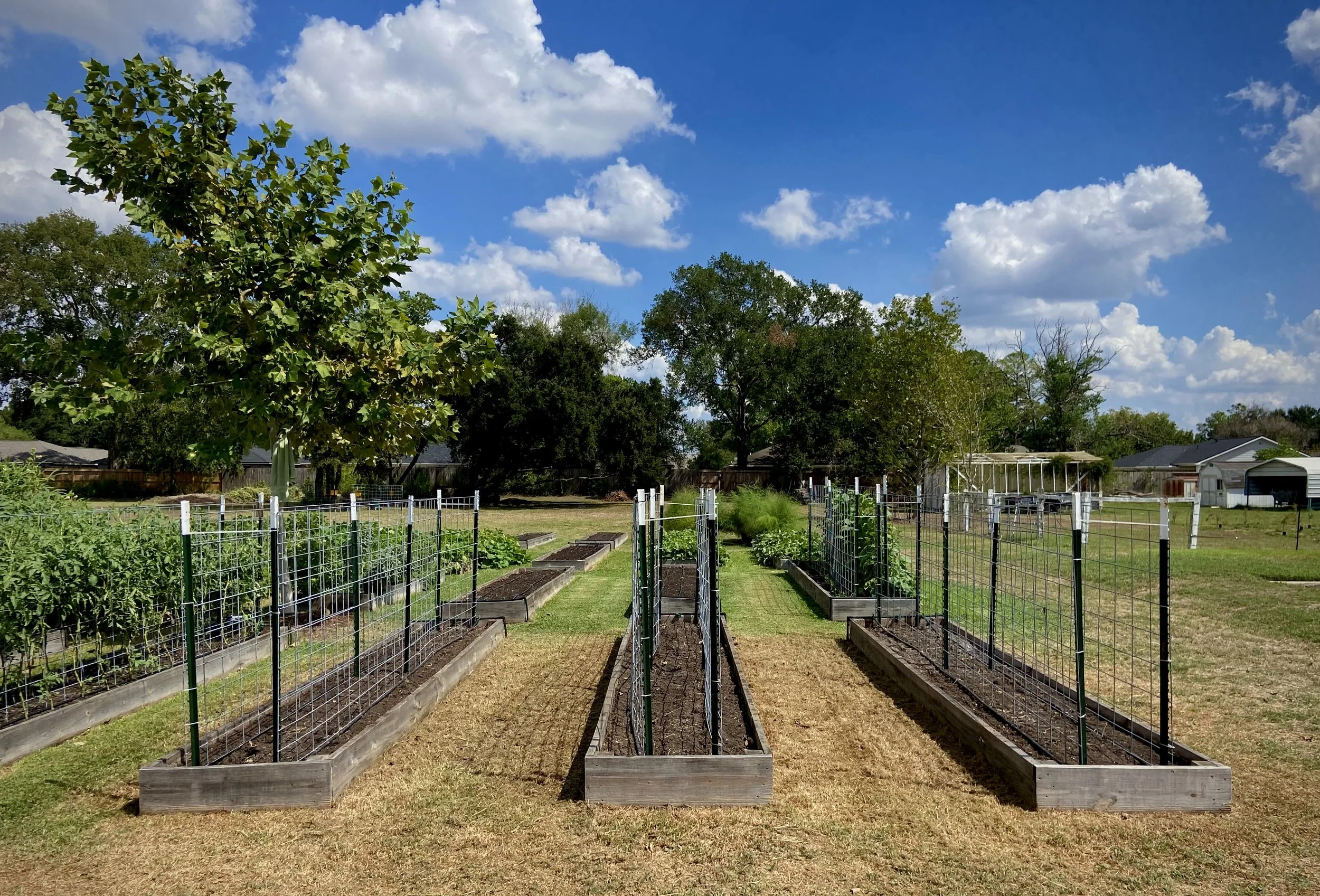
Every garden begins long before a seed ever touches the soil. A fruitful raised bed is never the result of planting alone. It is the result of preparation. Before any seed enters the ground, the gardener loosens the soil, clears the weeds, builds structure, sets boundaries, and creates space. The gardener makes sure the bed is ready so that when the seed arrives, it does not spend its early strength fighting for survival against conditions it never asked for. A seed can grow in poor soil, but it will always carry the marks of what it had to overcome. When the gardener prepares the bed, the seed grows in alignment with how it was designed. When preparation is missing, the seed grows with burdens it did not choose.
This same dynamic plays out inside families. Children grow in whatever environment we cultivate long before they arrive. They inherit our level of preparation—or our lack of preparation. When a parent tends their own inner field—removing emotional weeds, confronting patterns, aligning with God, distinguishing what is theirs to carry and what is not—children inherit clarity, freedom, and room to flourish. But when a parent never cultivates their interior life and never distinguishes their actual assignment, the child assumes everything they see belongs to them. Children pick up adult burdens by instinct, not by instruction. They step into unprepared fields and begin carrying weeds that do not belong to them simply because no one showed them what their field actually was.
This is how most generational patterns begin. A child who grew up carrying adult burdens becomes an adult who believes burden-carrying is their identity. They pass the same confusion to their children, who now carry not only their parents’ unresolved fields but their grandparents’ as well. Two generations of misplacement become three. Three become four. And because everyone in the family has adapted to a field full of weeds, no one calls it abnormal. They call it “life.” And they soften it with statements like, “My parents did the best they could,” or, “At least I’m doing better than my parents,” as if either phrase is the standard God gave us. These statements may be well-intentioned, but they are rooted in comparison, not alignment. God stands outside both. God offers something entirely different—a life rooted in cultivation, preparation, and clarity that breaks generational confusion and restores generational wholeness.
The most misunderstood piece of this is honor. We often elevate our earthly parents so highly that we normalize God out of the equation. We inherit every emotional pattern in the name of loyalty and call it “honor,” even when it keeps us in misplacement. But biblical honor never meant inheriting the weeds of those who came before us. It meant recognizing the vessel God used to bring us here while ultimately submitting to the One who formed us. Honor does not require internalizing dysfunction. Honor restores order when it puts God in His rightful place and frees us from carrying fields that were never ours.
Without that clarity, most healing becomes relief-driven rather than assignment-driven. Relief-driven healing is the dominant model today. It focuses on comfort, naming pain, soothing symptoms, and validating experiences. Relief feels good, and sometimes relief is needed. But relief alone does not restore assignment. Relief does not distinguish fields. Relief does not prepare the soil for the generations downstream. Relief-driven healing often stops at identifying trauma, as though naming it is enough. But trauma is not an identity—it is a signal. Trauma reveals where a field has not been cultivated. Trauma points to misalignment. Trauma exposes where boundaries were never taught. Trauma was never meant to be the destination; it was always meant to direct us back to the field God actually entrusted to us. When trauma becomes a home instead of a signal, people spend their entire lives wandering in emotional landscapes that were supposed to lead them into wholeness.
I know this intimately because I spent the first thirty years of my life cultivating a field that was never mine. I picked up weights that belonged to my parents. I tried to bring order to soil they had never tended. I carried emotional realities they never resolved. I planted myself in a land that did not belong to me, thinking it was my responsibility, thinking this was what faithfulness looked like. And while I nurtured soil God never assigned, the field He entrusted to me remained uncultivated. Misplacement creates a double deficit: the field you are tending does not heal, and the field that is yours never grows.
Forgiveness became the doorway back to alignment. Forgiveness returned their field to them and returned my identity to me. Forgiveness was not a return to relationship as it once was; it was the release of misplaced responsibilities that never belonged to me. Through forgiveness, God drew a clear boundary line between what was theirs and what was mine. And once I stepped back into my assigned field, everything changed.
It was there that I finally understood the narrow way. The narrow way is not narrow because God restricts us; it is narrow because most of what we carry simply will not fit. The wide road is wide because it accommodates everything: inherited burdens, emotional clutter, generational roles, survival patterns, trauma bonds, and all the accumulated “stuff” we picked up trying to be faithful in misplacement. The narrow road makes space only for what aligns with God. Everything else falls off because it cannot pass through.
Israel lived this pattern in the wilderness. What should have been a forty-day walk became a forty-year wandering because they clung to the familiarity of oppression more tightly than the future God promised them. Egypt lived inside them long after they left Egypt. They trusted the predictable constraints of slavery more than the uncertainty of a promise. They preferred the structure of bondage to the surrender required for freedom. And out of hundreds of thousands of adults—over two million people including families—only two entered the Promised Land. Joshua and Caleb were the only ones willing to release what could not fit through the narrow way. The rest died in a field that was never theirs because they refused alignment. This is not just a biblical pattern—it is a present reality. Few today walk in alignment. Few break generational cycles. Few truly enter the field God entrusted them because few release the burdens they were never meant to carry.
This clarity has reshaped the way I see family relationships today. As I aligned with the field God gave me, my parents could not come downstream. Their field remains uncultivated. Their need for validation, their survival narratives, and their unhealed patterns keep them upstream. People often ask, “But shouldn’t your boys know their grandparents?” as though the title “grandparent” automatically grants access. But in the Kingdom, access is determined by alignment, not biology. A role without cultivation is not a safe landing place for the next generation. And where biological grandparents are unwilling or unable, God faithfully raises up Kingdom grandparents—elders who carry cultivated soil, steady roots, and spiritual alignment capable of nourishing the generations downstream.
This is why the field God entrusts to us matters so much. Your field—the space God has assigned you, the realm He has prepared for you—is not metaphorical. It is your present-day Promised Land. It is where Heaven meets Earth in your life. It is where identity becomes assignment. It is where your children will grow without fighting giants they were never meant to face. And your field can only flourish when you stop tending fields that do not belong to you. When you cultivate your soil with intention, when you prepare it with clarity, when you refuse to bring generational clutter into the land God prepared, everything downstream changes. You are not just healing your life; you are preparing the soil for a thousand generations.
This is the heart of Kingdom cultivation. It is the choice to prepare the land before the seed arrives. It is the willingness to remove the weeds that would rob your children of their early strength. It is the courage to distinguish between the burdens passed down to you and the assignment given to you. It is the maturity to forgive without re-entering misplacement. And it is the faith to believe that God entrusts a field to every person, a realm to cultivate, a space where His life can multiply through us, if we will let go of what cannot fit through the narrow way.
When we cultivate our own field, our children inherit clarity instead of confusion. They grow in soil prepared for them rather than in the leftovers of someone else’s pain. And as they grow, they will learn by observation—just as children always do—that alignment is normal, that boundaries are holy, that identity is rooted in God, and that their field belongs to them and no one else.
This is how generational restoration begins. This is how wandering ends. This is how the Promised Land becomes a present reality rather than a distant hope. When the field is prepared, children bloom. When the parent aligns, generations flourish. When misplacement ends, destiny begins.
This is cultivation.
This is alignment.
This is the Kingdom.