Fundraising, Relearned from the Garden
In conversation with Henri Nouwen’s, The Spirituality of Fundraising
By Josh Singleton | Founder, serving as Lead Cultivator, The Neighborhood Garden Project
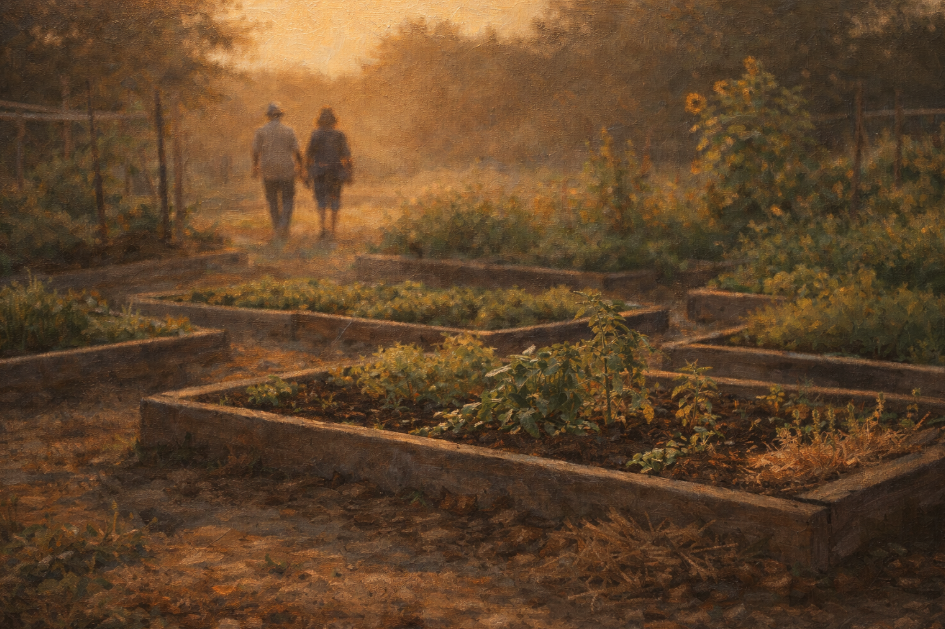
Henri Nouwen opens The Spirituality of Fundraising with a simple but unsettling observation. Fundraising is a subject we seldom think about from a spiritual perspective. When we do think about it, it is often framed as a necessary but unpleasant activity, something required to support spiritual work but somehow separate from it.
Too often, fundraising enters the picture through crisis. A deficit appears in the budget. Outreach programs multiply without ever being questioned. Activity expands because it is expected to, not because it is rooted in discernment. Over time, outward movement begins to outpace inward formation.
When this happens, anxiety follows.
The question shifts from calling to coverage. How are we going to fund all of this? How do we maintain what people now expect from us? How do we preserve the perception of vitality?
Outward expectation begins to drive inward panic.
Fundraising, in this posture, becomes an attempt to maintain appearance rather than steward life. Money is sought not to nourish what is growing, but to sustain what has already overextended itself. Asking feels awkward because it is disconnected from truth. The discomfort is not about money. It is about misalignment.
At its core, this posture asks people to maintain what they have not chosen to love, and what has not nourished them in return. It asks them to carry programs they did not help discern, sustain outreach they have not been fed by, and preserve activity whose primary function has shifted from life to legitimacy. Giving becomes compensatory rather than relational, a means of keeping externally pressured initiatives alive so the institution can save face. Both sides feel the fracture. Those being asked sense the lack of belonging, responsibility without relationship. Those asking feel the weight of defending work they are no longer free to question. This is why the ask feels wrong. It is not ministry. It is maintenance.
Nouwen names this not to shame it, but to reveal it. The problem is not asking. The problem is the posture behind the asking.
The garden offers a different starting point.
A garden never asks for funding. It does not announce its needs. It does not panic when resources feel thin. It simply grows according to its design, and in doing so, it reveals what is required to sustain life.
Soil responds to attention. Seeds respond to timing. Life responds to alignment.
Those who tend a garden are nourished by it. And over time, those who are nourished often choose to nourish it in return. Not because they were persuaded. Not because they were pressured. But because they were fed.
This is mutuality.
Nouwen reframes fundraising as proclamation, an invitation to participate in life that is already unfolding. He insists that fundraising is not a response to crisis, but an extension of vocation. It is not about rescuing something broken. It is about inviting others into something alive.
The garden makes this visible.
In the garden, nothing grows through pressure. Soil does not respond to anxiety. Seeds do not accelerate because of urgency. Life unfolds through timing, relationship, and exchange. Any other posture feels wrong because it is wrong. It works against the Creator’s design.
Extraction creates depletion. Urgency distorts discernment. Asking without relationship fractures trust. These postures feel unnatural because they are unnatural.
The garden reveals a truer economy.
The garden does not rank its support. It depends on it.
Life is sustained not by one dominant input, but by the faithful presence of many. No single element carries the burden alone. Growth happens through cooperation, timing, and restraint. Some forms of nourishment are obvious. Others are nearly invisible. Some arrive daily. Others arrive once a season. Some are predictable. Others cannot be scheduled at all. Yet each plays a role that cannot be replaced.
Remove water and the system collapses. Remove soil health and roots fail. Remove sunlight and photosynthesis stops. Remove time and nothing matures. Remove care and attention and the whole system degrades, even if every other input remains present.
The garden teaches that life does not survive through optimization. It survives through interdependence.
Financial support matters. Soil amendments matter. Water matters. Hands that tend with care matter. Sun and rain matter. Human laughter matters. Tears matter too, tears of joy and tears of frustration, each carrying life in different ways.
The garden receives all of this without hierarchy or comparison. Each element gives what it was designed to give. None are asked to become something else. None are diminished because their contribution is less visible or less measurable.
This is not sentiment. It is observable reality.
You can see it in depleted soil that received money but no care. You can see it in well funded projects that lack attention and wither. You can see it in modest gardens that flourish because the conditions are right, even when resources are limited. Life does not respond to scale. It responds to alignment.
And this is where the garden quietly dismantles hierarchy.
In most funding models, value is assigned vertically. Those who give more money are placed higher. Their voice carries more weight. Their presence is treated as more essential. Over time, this creates a subtle but powerful distortion. Financial capacity becomes confused with authority. Contribution becomes confused with importance.
The garden will not cooperate with this logic.
In the garden, no single input controls the system. Money cannot replace water. Water cannot replace sunlight. Sunlight cannot replace time. Hands cannot replace soil health. Each form of nourishment is necessary, but none are sufficient on their own. Remove any one, and the system begins to fail.
This reality makes hierarchy impossible.
The garden does not elevate one contributor over another because life itself does not respond that way. Growth does not accelerate because one element is louder, larger, or more visible. It responds only when conditions are aligned.
This reframes generosity entirely.
Those who give financially are not patrons standing above the work. They are participants standing within it. Their gift is meaningful because it joins an ecosystem, not because it commands it. Likewise, those who give time, care, presence, or patience are not secondary contributors. They are co stewards, sustaining life through forms of nourishment money cannot provide.
The garden exposes the danger of donor centered models. When funding is elevated above formation, systems begin to bend around the preferences of those with resources. Decisions are shaped to maintain comfort. Expansion happens without discernment. Activity multiplies to justify investment. Life becomes secondary to appearance.
The garden resists this by refusing to grow for approval.
It grows only when conditions are right.
This creates a different posture for everyone involved. Financial supporters are freed from the burden of control. They are invited into trust. Those who cannot give money are freed from invisibility. Their presence is no longer measured against a deficit. Everyone belongs because everyone is necessary.
The garden also teaches restraint.
Too little nourishment starves growth. Too much overwhelms it. A million dollars given all at once would not sustain the garden. It would overwhelm it. Not because of fear or mismanagement, but because formation has a pace. Money carries pressure, even when no pressure is intended. Expectations accelerate. Expansion is assumed. The system is asked to carry weight it has not yet been formed to hold.
We would not impose that pressure. But it would arrive nonetheless.
This is why walking by revelation matters. Revelation keeps money, which often carries the most pressure, in its proper place. It allows provision to arrive in proportion to formation. It keeps discernment ahead of opportunity. It ensures that funding joins the rhythm of life rather than redefining it.
The garden teaches this without apology. Growth happens when conditions are right. Not when pressure is applied.
So the question changes.
Not, how do we get the money we need?
But, what kind of life are we cultivating, and who is being nourished deeply enough to want to help it continue?
This is not fundraising as technique.
It is fundraising as ministry.
Quietly taught, faithfully practiced, and consistently confirmed by the garden itself.