Stewardship, Not Power
Rethinking how we relate to resources, responsibility, and each other in systems meant to serve life
By Josh Singleton | Founder, serving as Lead Cultivator, The Neighborhood Garden Project
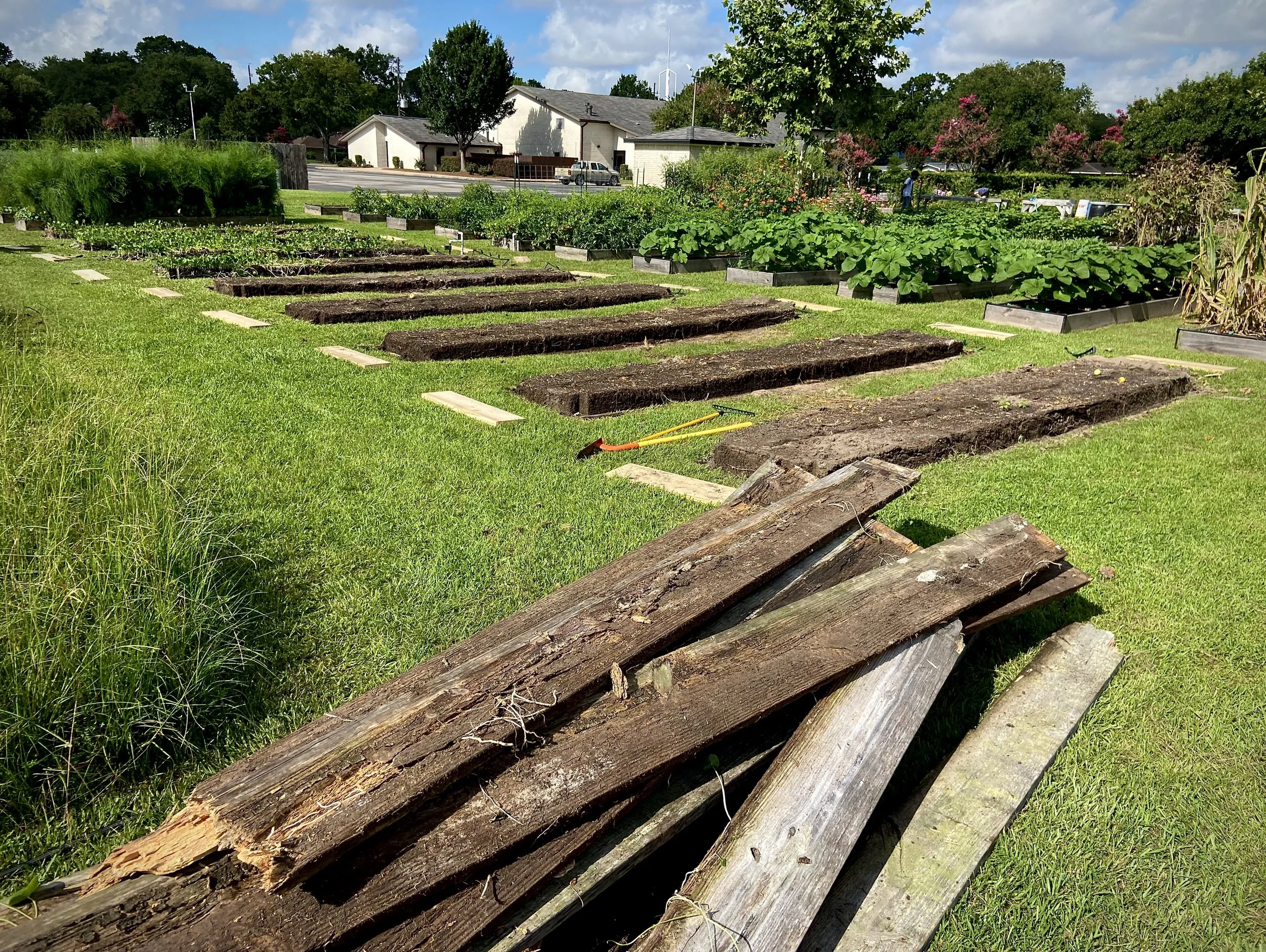
We’ve learned how to grow.
Now we have to rebuild what holds the work together.
At the bottom of my heart, I just want to be human with humans.
That feels simple. It feels obvious. But recently, I found myself in a moment that made me question how possible that really is—especially in the spaces where decisions are made and resources are shared.
I’ve been part of a months-long cohort focused on understanding how to evaluate work within the living system of the Garden Project. Throughout the months, I’ve learned that real growth is not linear. It requires attention, honesty, and the ability to respond to what is actually happening—not just what we planned for.
In a recent conversation, I suggested something that felt natural:
What if someone connected to funding joined part of the cohort—not to evaluate, but to listen?
What if they could hear directly from us, unfiltered?
The response was immediate and honest.
People wouldn’t be themselves.
The space would change.
Honesty might be compromised.
And just like that, something deeper surfaced.
Because beneath the surface, there’s a truth we don’t often name:
We want the resources that make this work possible.
But we don’t fully trust the relationship that comes with them.
And it’s not one-sided.
Even those connected to funding often hesitate to enter these spaces—aware of the pressure their presence carries, aware that it can shift the room in ways they may not intend.
So both sides adjust.
People doing the work filter themselves.
People holding resources hold back.
And somewhere in between, something essential gets lost.
Over time, this becomes normalized.
We prepare what to say.
We refine how we say it.
We present what feels acceptable, rather than what is fully true.
Not because anyone explicitly requires it—but because the system quietly teaches us to.
And when that happens, we have to ask a harder question:
What kind of work are we actually doing if the people leading it cannot show up fully as themselves?
Is it alive?
—
Because the cost is not abstract.
When honesty is filtered, the system receives incomplete truth.
When the system receives incomplete truth, it responds incompletely.
And the people most affected by that gap are often the ones the work is meant to support.
Not intentionally.
But structurally.
And if we’re honest, there’s another layer to this.
Sometimes, when we’re not fully confident in what we’re building—when the foundation of our work doesn’t feel completely secure—we compensate.
We shape the narrative.
We smooth what’s unfinished.
We present something more certain than what we actually know.
Not as deception—but as protection.
But over time, that creates distance between what is real and what is shared.
And distance, in a living system, matters.
Because it limits what the system can actually learn from.
It limits what it can become.
So maybe this isn’t just about who is in the room.
Maybe it’s about how we understand power in the first place.
Because the person connected to funding is not the source of the resources.
They are a steward of them.
And when we begin to treat people as the source—when we assign power to individuals rather than recognizing the responsibility they carry—we create dynamics that make it harder for everyone to show up honestly.
That’s something we’ve learned.
And it’s something we can unlearn.
Which leads to a real opportunity.
What would it look like to design spaces where:
presence does not equal pressure
resources do not silence honesty
and relationships are shaped by intention, not assumption
What would it look like for those who steward resources to step into that design—not as evaluators, but as participants in building something more human?
Not perfectly. Not all at once.
But intentionally.
Because here’s the contradiction I can’t ignore:
We’re all doing work that’s supposed to improve the quality of people’s lives.
And yet, in the very spaces where that work is shaped and resourced, we often struggle to be fully human with one another.
That contradiction is not small.
If even one foundation were willing to lead differently—to hold both resources and relationship with humility—it could begin to shift more than just one room.
It could begin to shift the system itself.
This is not about blame.
It’s about recognition.
And a question about whether the way we’ve learned to operate is actually aligned with the work we say we’re here to do.
For me, it comes back to something simple:
At the bottom of my heart, I just want to be human with humans.
And I’m beginning to believe that real leadership is not just protecting that instinct—
but rebuilding systems that can finally hold it.