Tilled Every Season
What Soil Is Teaching Me About Grant Cycles, Fragmentation, and the Hidden Cost of Constant Disruption
By Josh Singleton | Founder, serving as Lead Cultivator, The Neighborhood Garden Project
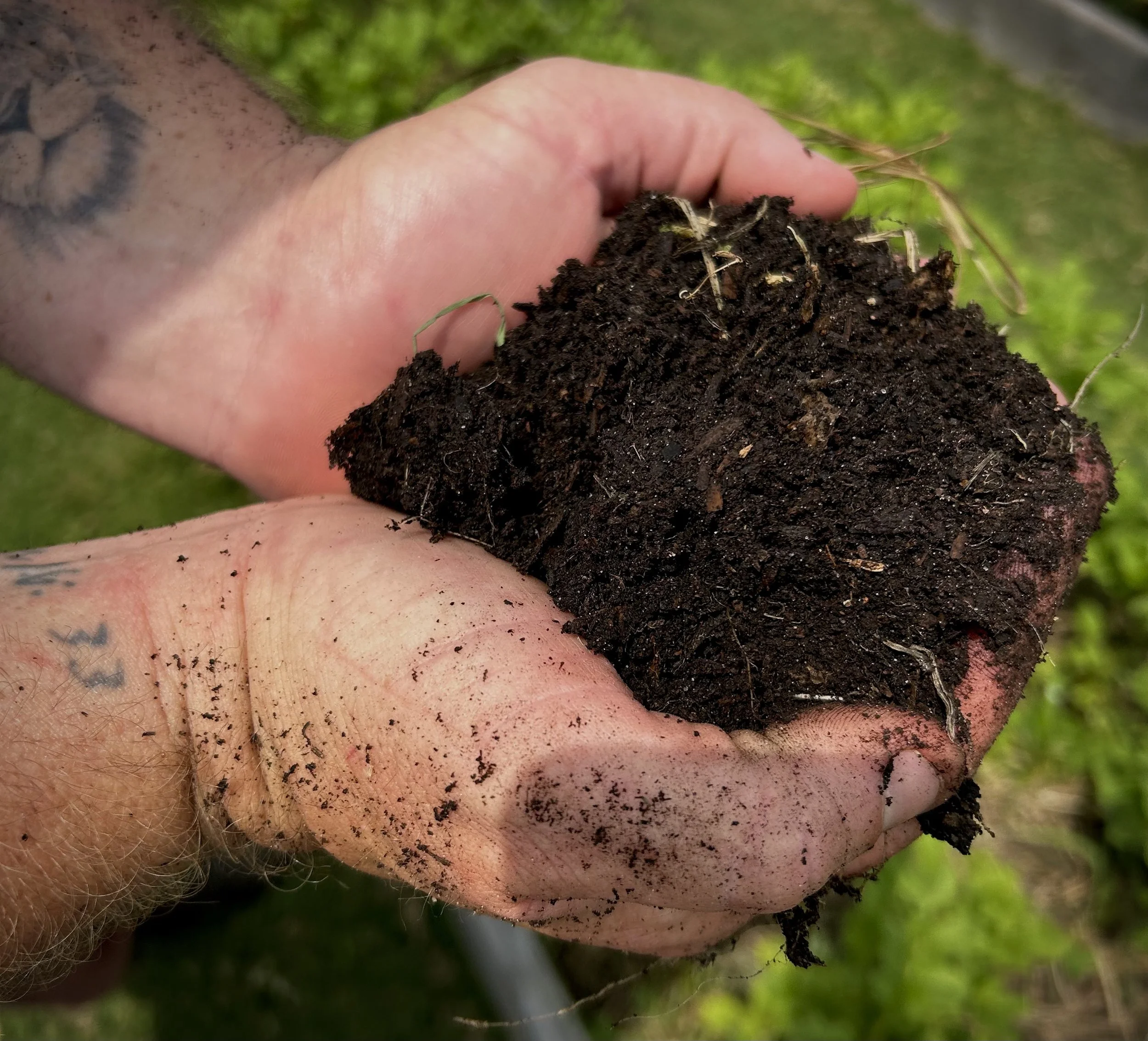
For twenty years of my life growing food, tilling was simply considered good stewardship.
Clear the bed.
Flip the soil.
Break everything apart.
Start fresh.
It looked clean.
It looked productive.
It looked responsible.
And honestly, for a while, it worked.
Freshly tilled soil often produces a visible flush of growth. Nutrients become rapidly available. Crops respond quickly. The bed appears renewed and ready for another season.
But over time, especially after years of observing prairie systems and reducing disturbance in our own garden beds, I began realizing something deeper:
Disturbed systems can appear productive while becoming less resilient underneath.
That realization changed how I see agriculture, nonprofits, institutions, and even people.
Because tillage does not simply “prepare soil.”
It fragments relationships.
When living soil is repeatedly disturbed, countless hidden systems are interrupted simultaneously:
fungal networks are severed
microbial colonies are exposed
earthworm tunnels collapse
moisture pathways are disrupted
carbon rapidly oxidizes into the atmosphere
dormant weed seeds are brought to the surface
root channels are destroyed
aggregate stability weakens
biological continuity is interrupted
The tragedy is that much of this damage is invisible at first.
In fact, freshly disturbed soil often looks impressive for a season.
That may be one of the most important lessons soil has taught me:
visible activity is not always evidence of long-term health.
Because fragmentation can temporarily release energy while weakening the system underneath.
And once I saw that in soil, I could no longer ignore the same pattern inside modern organizational culture, especially within the nonprofit world.
Many grant cycles unintentionally function like tillage.
Not because funders are evil.
Not because accountability is wrong.
Not because impact should not matter.
But because the structure itself often interrupts continuity before living systems fully mature.
An organization slowly spends years developing:
trust
local relationships
team cohesion
internal culture
pattern recognition
wisdom
stability
discernment
presence
rootedness
Then the cycle begins:
reporting requirements
compressed timelines
shifting priorities
measurable outcomes
strategic pivots
visibility pressure
restructured language
institutional alignment
fundraising urgency
proving value repeatedly
And before the underground system matures, the soil gets turned over again.
The organization survives.
Sometimes it even grows numerically.
But survival and maturity are not the same thing.
That distinction matters deeply.
Because fragmented systems often become increasingly dependent on external inputs simply to maintain previous levels of function.
This is true in agriculture.
It is also true organizationally.
A heavily disturbed field eventually requires:
more fertilizer
more irrigation
more herbicides
more pest intervention
more mechanical correction
more erosion management
Why?
Because the living infrastructure that once handled those functions internally has been weakened.
The soil loses its ability to self-regulate.
The fungal networks never mature deeply enough to stabilize the system.
Carbon burns away faster than it accumulates.
Water retention weakens.
Biological buffering decreases.
The field becomes increasingly reactive and dependent.
Many organizations quietly experience the same thing.
When continuity is repeatedly interrupted:
trust erodes
institutional memory weakens
teams burn out
leadership fragments
local wisdom disappears
relational depth thins
identity becomes unstable
Then more external inputs become necessary just to keep the system functioning:
more meetings
more consultants
more reporting
more strategic plans
more rebranding
more management layers
more productivity systems
more fundraising pressure
more oversight structures
more intervention
Not necessarily because people are failing.
But because fragmentation increases dependency.
The living system loses its internal resilience.
This may be one of the hidden realities underneath modern institutional exhaustion:
many systems are spending enormous energy compensating for the damage caused by chronic interruption.
And perhaps most dangerously, disturbance itself can begin looking like progress.
Freshly tilled soil looks active.
Constant organizational restructuring looks innovative.
Rapid pivots look strategic.
Continuous expansion looks healthy.
But underneath, deeper systems may be weakening.
The prairie exposes this illusion.
Because prairies do not become powerful through constant disruption.
They become powerful through layered continuity.
Roots upon roots.
Species upon species.
Fungal highways developing over decades.
Disturbance followed by recovery instead of perpetual resetting.
Organic matter accumulating slowly.
Relationships deepening invisibly underground.
Prairies develop memory.
That phrase has become incredibly important to me:
healthy living systems develop memory.
The prairie remembers drought.
It remembers fire.
It remembers grazing pressure.
It adapts through continuity rather than endless restart.
And the longer continuity remains intact, the more intelligence the system develops.
That realization became tangible recently while planting second crops into beds we intentionally chose not to flip after our winter cover crop.
Instead of tilling everything under, we left the root systems intact:
rye
wheat
clover
vetch
peas
Then we planted directly into the residue and continuity of the previous season.
What emerged underneath shocked me.
The soil became:
darker
softer
more aggregated
more porous
more moisture-retentive
more biologically active
more stable
more alive
The bed was no longer behaving like a container.
It was beginning to function like an ecosystem.
And the most disruptive part of all was this:
The improvement did not come from adding more control.
It came from interrupting less.
That sentence continues unfolding in me spiritually, organizationally, and personally.
What if many systems are not failing because they lack intervention?
What if they are exhausted from constant fragmentation?
What if some organizations do not need another strategic pivot?
What if they need continuity long enough for deeper intelligence to emerge?
What if some people are the same way?
What if the endless pressure to prove worth, demonstrate value, optimize performance, and constantly restart is functioning like chronic tillage on the human soul?
Always exposed.
Always reorganized.
Always producing.
Always adapting.
Always proving.
Never rooting deeply enough to stabilize.
The prairie has confronted me with a difficult truth:
living systems become resilient through continuity, not perpetual disruption.
And perhaps this is why truly alive systems often appear less impressive at first glance.
A prairie can look messy to someone trained to value sterile rows.
A deeply relational organization can appear inefficient to systems trained only to measure throughput.
A faithful work may appear “small” because it is spending energy developing roots instead of constantly producing visible foliage.
But roots are not inactivity.
Roots are infrastructure.
And infrastructure formed slowly often carries more life than rapid visible expansion ever could.
At The Neighborhood Garden Project, this realization is changing how we think about:
stewardship
staffing
mentorship
evaluation
funding
leadership
expansion
partnership
formation
land itself
We are becoming less interested in rapid multiplication and more interested in mature ecology.
Because maturity cannot be microwaved.
A healthy ecosystem takes time.
A healthy organization takes time.
A healthy community takes time.
A healthy person takes time.
Living systems require continuity long enough for intelligence to emerge.
Perhaps the deeper question is no longer:
“How do we produce more?”
Perhaps the better question is:
“What hidden resilience might emerge if we stopped tilling everything every season?”