From Isolated Crops to Living Systems
What twenty years of gardening and the prairie taught me about continuity, resilience, and relationship
By Josh Singleton | Founder, serving as Lead Cultivator, The Neighborhood Garden Project
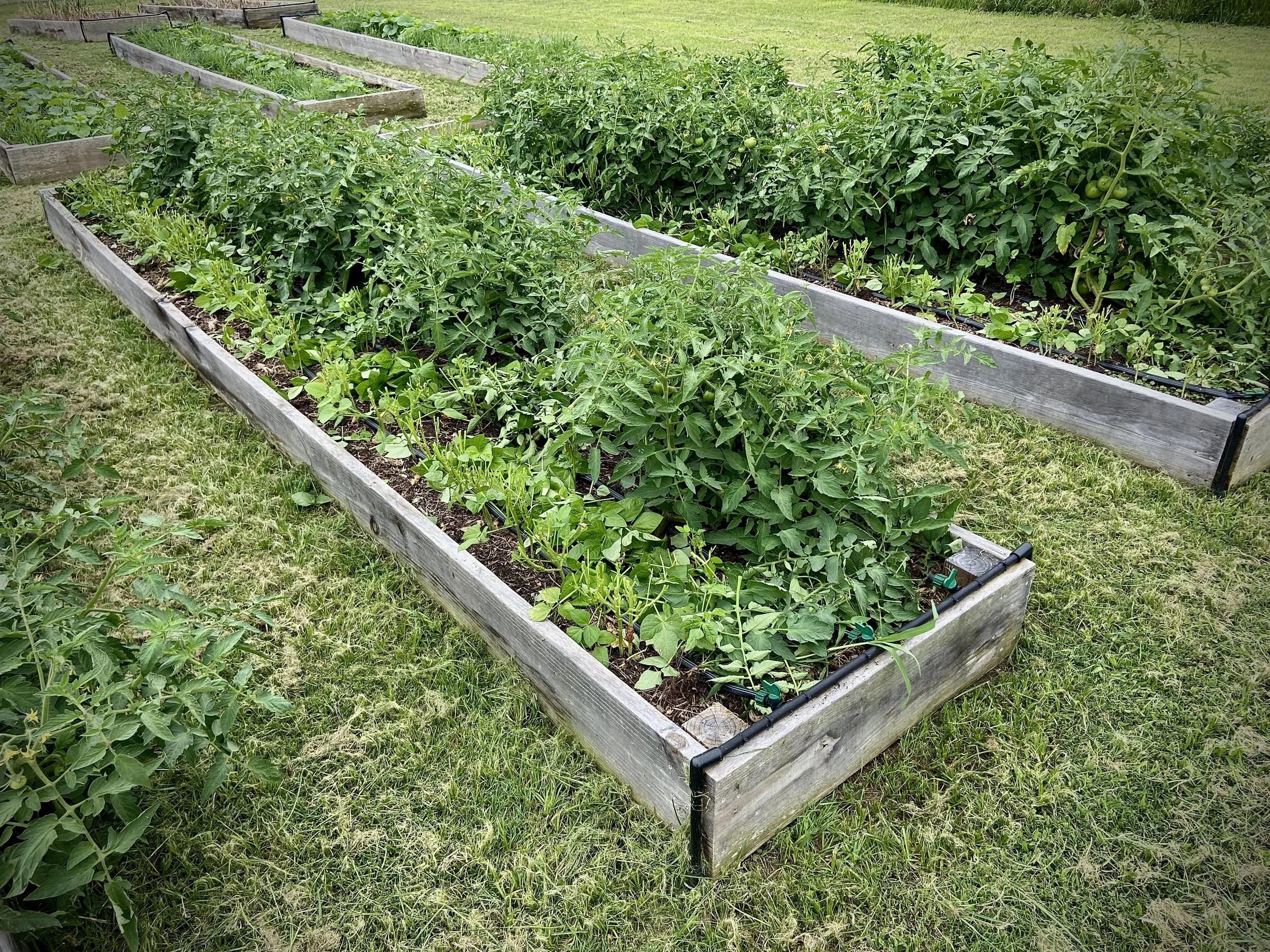
For nearly twenty years, I grew food through a fairly isolated lens. Even when I was successful, the framework underneath the work was still largely built around control, separation, and production. Beds were cleared between crops. Residue was removed. Soil was exposed. Fertility was added externally. Crops were treated mostly as individual units to be managed toward productivity.
And honestly, that approach can work. You can grow a tremendous amount of food that way.
But over the last few years, something shifted in me while stewarding land through the Garden Project, especially after spending significant time walking and observing the prairie spaces surrounding both garden sites. I did not realize at first that the prairie was slowly changing how I understood nearly everything.
At first, I simply noticed how quickly life returned when disturbance stopped. Areas that had been repeatedly mowed and held in short grass began responding almost immediately when given margin. Native grasses emerged. Pollinators returned. Birds began hunting along the edges. Soil softened. Pathways created movement. The land was not dead. It was waiting.
That challenged me deeply because I realized how much of modern growing, and honestly modern institutional thinking, is built around interruption instead of continuity.
The prairie operates through continuity.
Something is always alive. Something is always decomposing. Something is always feeding the soil. Something is always rooting deeper, cycling nutrients, shading the ground, responding to disturbance, or preparing the next succession of life.
Nothing is isolated.
The more time I spent observing that reality, the harder it became to return to the mindset of growing vegetables in ecological emptiness.
At both of our garden sites, we slowly began experimenting more intentionally with living continuity inside the raised beds themselves. Instead of clearing beds completely between crops, we started terminating crops at ground level and leaving roots in place. A cauliflower crop was cut down while the roots and residue remained to decompose directly in the bed. Then peppers and tomatoes were grown alongside cowpeas functioning as a living understory.
Over time, the cowpeas were trimmed repeatedly throughout the season rather than removed entirely. Each trimming became another layer of biological cycling. The roots continued feeding soil life below ground while the cut material became mulch above ground. What initially looked like simple companion planting slowly began behaving more like a small managed prairie system embedded within vegetable production.
At first glance, it might appear messy or inefficient to someone trained in conventional growing systems. But underneath the surface, something entirely different was happening.
The cowpeas were fixing nitrogen while alive. Their roots were feeding microbes continuously. Every trimming stimulated root dieback underground, which triggered nutrient cycling and microbial activity. The residue became mulch. The soil remained shaded during intense Texas heat. Moisture was retained. Biology remained fed.
And over time, the vegetables themselves stopped feeling like isolated crops and started feeling more like participants within a living field.
That realization changed me.
For years, I viewed vegetables primarily through the lens of production. But functioning ecosystems do not operate through isolation. Plants exist within relationships. Tomatoes influence humidity and shade. Cowpeas influence soil temperature and nutrient cycling. Decomposing brassica roots continue feeding biology long after harvest. Fungi, bacteria, insects, moisture, residue, airflow, disturbance, and decomposition are all participating simultaneously.
The field itself becomes relationally alive.
And honestly, this began revealing something much larger to me about the tension between institutional systems and living systems.
Institutional systems often operate by isolating variables:
simplify
standardize
control
separate
optimize visible outputs
remove unpredictability
reset constantly
That logic shows up everywhere:
bare soil
monocropping
heavy dependence on external inputs
removing all residue
valuing cleanliness over continuity
prioritizing measurable output above relational health
Living systems function differently.
Living systems:
maintain continuity
build through relationship
allow decomposition to become provision
use disturbance as renewal
create resilience through diversity
adapt through feedback
strengthen through interaction over time
The prairie does not fear overlap. It does not fear decomposition. It does not fear complexity.
And neither should we.
What changed me most was realizing that resilience often comes not through tighter control, but through deeper participation within living relationships.
That is true ecologically.
And I increasingly believe it is true organizationally, spiritually, and relationally as well.
The Neighborhood Garden Project has slowly become less about “running gardens” and more about stewarding living systems. Not only ecological systems, but human ones too.
Because people are not isolated units any more than vegetables are.
Humans also require:
continuity
rootedness
relationship
healthy disturbance
room for succession and growth
environments that remain alive
the decomposition of old patterns so new growth can emerge
What the prairie revealed to me is that life does not emerge from sterility. It emerges from living interaction.
And once I saw that clearly, I could no longer unsee it.