Flourishing by Design
Why human alignment reveals the wisdom, provision, and care of the One who created us
By Josh Singleton | Founder, serving as Lead Cultivator, The Neighborhood Garden Project
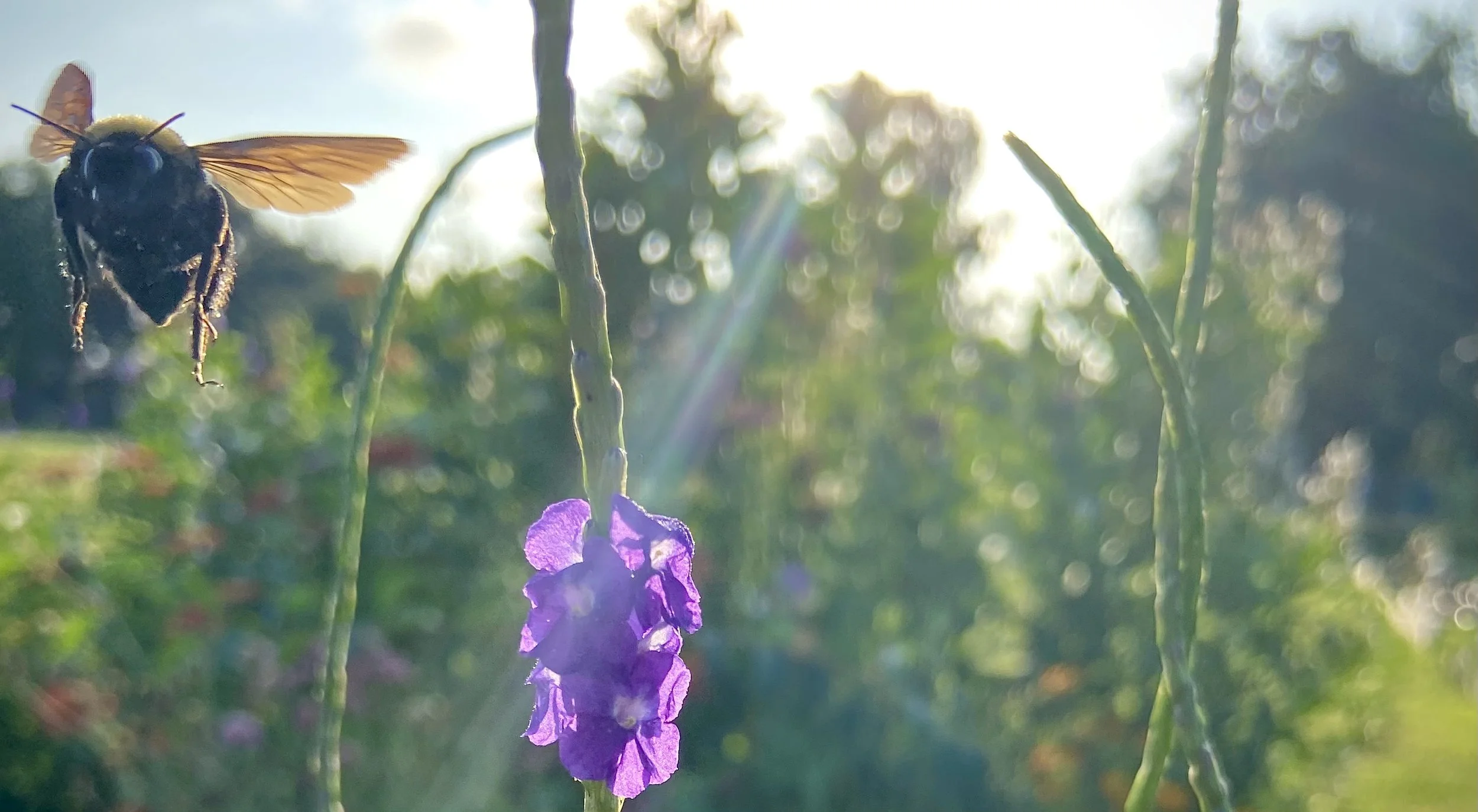
There is a moment in the garden when a plant reaches its stride.
The leaves deepen in color. The stems thicken. Fruit begins to appear where only flowers once were. Anyone who has worked soil long enough recognizes that moment. The plant is no longer struggling to establish itself. It is functioning as it was designed to function.
And when that happens, people rarely praise the plant.
They start asking about the gardener.
What soil was used?
How often was it watered?
What kind of care produced this kind of growth?
The thriving of the plant quietly points back to the wisdom of the cultivator.
The same principle exists within the Kingdom of God. Human flourishing does not exist merely for personal satisfaction. When a human life begins functioning the way it was designed to function, it reflects something about the One who designed it.
When design operates in alignment, the Designer is honored.
The garden shows us this every day.
But when we look more closely, we realize the garden is not just a metaphor for life. It reveals several layers of how the Kingdom actually operates.
Layer One: Flourishing reflects the cultivator
In the simplest sense, the relationship between a plant and a gardener mirrors something deeply true about the relationship between people and God.
A healthy plant reflects attentive cultivation.
The gardener prepares the soil.
The gardener manages water.
The gardener protects young growth and prunes mature branches.
When the plant thrives, the gardener’s wisdom becomes visible.
Jesus used this imagery directly in the Gospel of John when He said:
“I am the vine, and my Father is the gardener.”
The picture is straightforward. Life flows from the source. The gardener prepares the conditions where growth is possible. The branch does not strain to manufacture fruit. It remains connected to the source of life.
When that connection is aligned, fruit appears naturally.
And when fruit appears, it reflects the skill of the gardener.
This is why Jesus says that bearing fruit brings glory to the Father. The fruit itself becomes evidence that the gardener understands life.
Human flourishing reveals the wisdom of the Designer.
But it reveals something else as well.
When a life begins functioning within its design, it also reveals how deeply the Designer understands the one He created. The provisions begin appearing in ways that guide the path forward. The right relationships surface. The right opportunities emerge. The resources needed for the next step arrive at the right time.
Just as a gardener understands what each plant requires before it even begins to grow, the Designer knows what each life will need along the way.
Gardeners do not scatter seeds randomly and hope for the best. They understand seasons. They understand soil temperature, daylight length, spacing, water, and the pace at which life develops underground before it ever appears above the soil.
When the conditions are aligned, the growth pattern is remarkably predictable.
The seed germinates.
Roots establish.
Leaves expand.
Fruit eventually forms.
The gardener does not force the growth. The gardener simply creates the environment where growth is able to unfold.
Provision is built into the design.
The seed contains what it needs to begin.
The soil provides what the roots will require.
The sun supplies energy.
The season provides timing.
In the same way, when a human life begins aligning with its design, the provisions that sustain that life often appear with surprising precision.
Not randomly.
Not accidentally.
But in ways that suggest the Designer understood the journey long before the traveler began walking it.
The provisions do more than sustain the path.
They quietly reveal how deeply we are known.
Layer Two: Storms are part of the environment
Every gardener also knows something else.
Storms will come.
Wind will bend stems.
Rain will flatten beds.
Heat will stress leaves.
Cold will slow growth.
No garden is exempt from weather.
A strong storm does not mean the gardener has failed. It means the garden exists in the real world.
The same is true for human life.
Following God does not remove storms from life. Even Jesus experienced them. In the Gospel of Mark, Jesus and his disciples were caught in a violent storm while crossing the sea.
The wind was real.
The waves were real.
The fear of the disciples was real.
The presence of the storm did not mean the absence of God.
Storms reveal something different.
They reveal the depth of roots.
In the garden, shallow-rooted plants collapse first. Plants with deeper root systems may bend, but they remain anchored.
Storms do not create the roots. They reveal whether the roots are aligned deeply enough to hold.
Storms are not evidence of failure. They are moments that reveal structure.
Layer Three: Humans are not plants
Even here the metaphor has limits.
A plant has no will.
A tomato plant cannot reject sunlight. It cannot decide to grow somewhere else. It cannot refuse the soil that feeds it. It simply responds to the environment it is given.
Humans are different.
From the beginning of the Book of Genesis, humanity is given agency. People can move toward alignment with God’s design or move away from it.
The Kingdom does not operate mechanically.
It operates relationally.
Alignment is invited, not forced.
This is why environments like gardens can be so revealing for people. When someone steps into a slower, patient, life-giving space, their internal structure becomes visible. Some people settle into the rhythm quickly. Some feel disoriented and leave. Others return slowly, learning how to live within a different pattern.
The soil does not force transformation.
But it reveals whether someone is willing to realign.
Layer Four: We are both the field and the workers
The Kingdom picture becomes even more interesting when the apostle Paul describes believers in the First Epistle to the Corinthians:
“You are God’s field… we are co-workers with God.”
That statement holds two realities at the same time.
We are the field being cultivated.
But we are also workers within the field.
Humans are not only recipients of cultivation. We participate in cultivation.
We learn to steward soil.
We learn to nurture life.
We learn to create environments where alignment becomes possible.
Anyone who spends enough time in a healthy garden eventually notices this shift. At first you come to learn how to grow plants. Over time you begin to see something deeper. You are not simply growing vegetables. You are learning how life responds to alignment.
That understanding eventually changes how you see people.
You stop trying to force outcomes.
You begin cultivating conditions where growth can emerge.
Layer Five: The Kingdom is ultimately a family
Even the agricultural metaphor is not the deepest layer.
The deepest layer of the Kingdom is not gardener and plants. It is Father and children.
Jesus makes this clear in the Gospel of Matthew when He teaches people to pray:
“Our Father…”
Plants reveal dependence.
Children reveal inheritance.
A plant will never become a gardener. But a son can learn his father’s work. A daughter can inherit the responsibility of the household.
This is where the Kingdom moves beyond simple cultivation. God does not only grow people. He raises sons and daughters who learn how to steward the earth alongside Him.
The goal is not simply thriving plants.
The goal is mature cultivators.
The garden makes these layers visible
This is one reason gardens become such powerful places of transformation.
Someone may arrive thinking they simply want to grow vegetables. But over time something deeper begins to happen.
Their breathing slows.
Their attention settles.
Their hands learn patience.
Their mind reconnects with the rhythms of life.
They begin to see how soil works. How roots develop. How life responds to care. Without anyone announcing it, they start recognizing patterns that apply far beyond the garden bed.
They begin to understand cultivation.
And once someone understands cultivation, they start seeing people differently.
They stop trying to force growth.
They begin creating environments where alignment can return.
That is when the garden stops being a hobby and becomes a teacher.
When the Designer is revealed
This is why flourishing matters.
Not because success makes people impressive.
But because flourishing reveals that the original design works.
Storms will still come.
Seasons will still shift.
Growth will still require patience.
But when a life remains rooted, steady, and fruitful through changing conditions, it raises a quiet question in the minds of others.
What kind of Designer creates people like this?
The fruit points back to the source.
The plant reveals the gardener.
And sometimes, if the plant grows long enough and learns the rhythms of cultivation, it eventually becomes something more.
Not just a thriving plant.
A cultivator who helps the next field come back into alignment.