The Garden Is Not a Metaphor
Why Some Things Must Be Lived, Not Explained
By Josh Singleton | Founder, serving as Lead Cultivator, The Neighborhood Garden Project
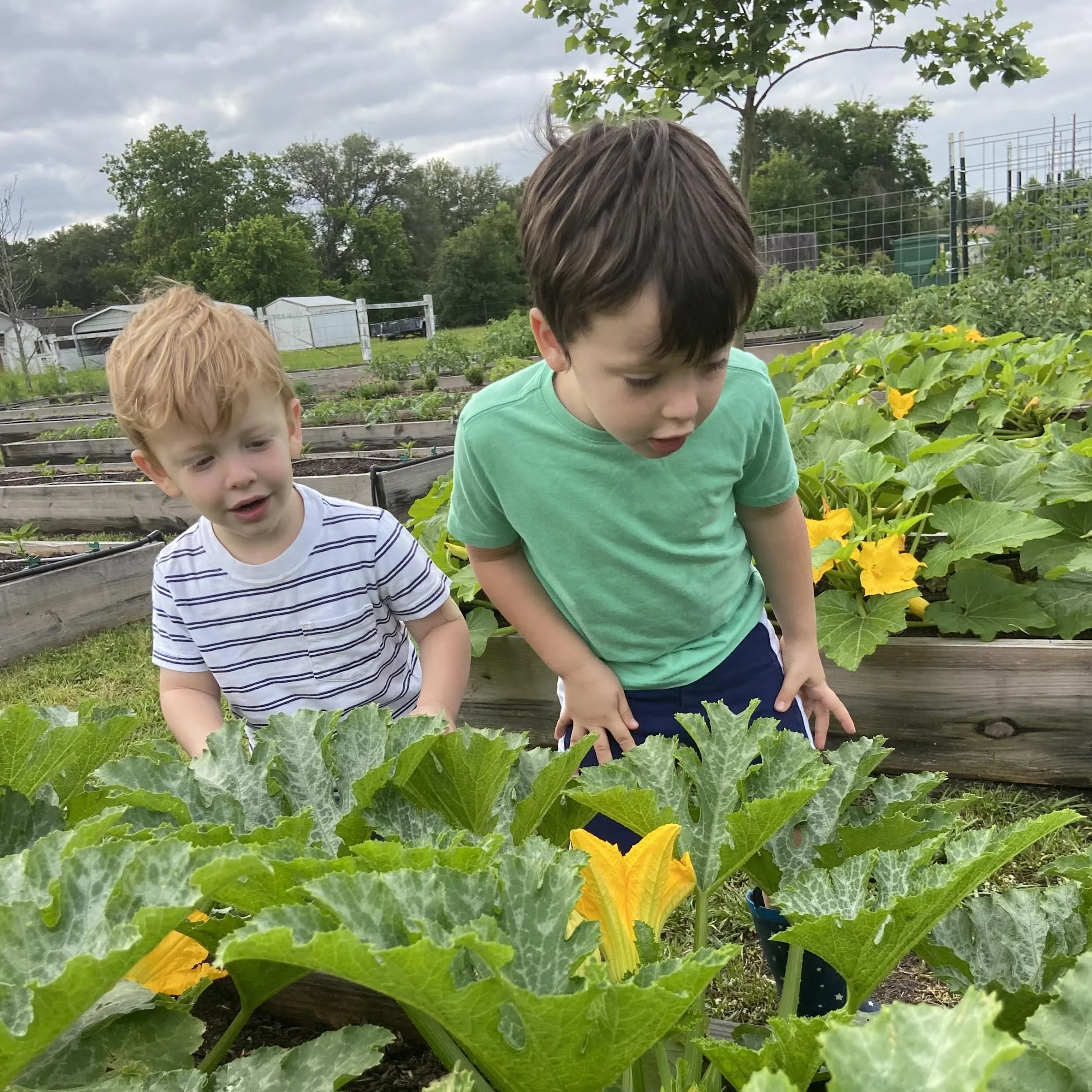
In recent years, there has been a growing interest in the language of cultivation.
People speak about cultivating leaders, cultivating communities, cultivating spiritual growth. The imagery of gardening appears in books, sermons, leadership conversations, and podcasts because it captures something people intuitively recognize: real growth takes time, attention, and care.
The language resonates because it reflects something true about how life works.
But there is an important difference between talking about cultivation and actually working in a garden.
One can be explained.
The other has to be experienced.
Anyone who spends time tending soil eventually begins to notice this difference. A garden does not simply illustrate growth. It creates the conditions where growth must happen. It places people inside an environment where patience becomes necessary, attention becomes natural, and responsibility becomes visible.
Over time, the realization slowly settles in.
The garden is not only producing plants.
It is quietly forming the people who tend it.
And that kind of formation is becoming harder to find in the modern world.
There are many things that can be explained inside an air-conditioned building.
Ideas travel well in comfortable rooms. Frameworks can be written on whiteboards. Concepts can be organized into slides and delivered through microphones. Conversations about growth, leadership, stewardship, patience, and formation can fill entire conferences.
But the conditions that actually form a human being are rarely present in those environments.
Extraction can be explained indoors.
Embodiment usually cannot.
The difference becomes clear the moment someone steps into a garden.
A garden immediately places a person inside a system they do not control. Heat presses against the body. Wind moves across the beds. Insects are present whether they are welcome or not. Soil works its way under fingernails. Plants move at a pace that cannot be rushed.
Failure happens. Recovery happens. Rain either comes or it does not.
None of these things are background conditions.
They are the curriculum.
Inside a building, patience can be described. In the garden, patience becomes necessary. Seeds will not grow faster because someone wishes they would.
Inside a building, stewardship can be discussed. In the garden, neglect reveals itself quickly. Miss a week of attention and the weeds begin telling the story.
Inside a building, provision can be talked about in theory. In the garden, provision becomes visible in the relationship between soil, sun, water, and time.
The environment itself begins to teach.
This is where the difference between extraction and embodiment becomes clear.
Extraction takes something that was formed inside a living system and turns it into information that can travel without that system. The insight is removed from the environment that produced it, so it can be explained, taught, and repeated elsewhere.
But formation rarely survives that process intact.
Agriculture becomes agricultural theory. Craft becomes instruction manuals. Discipleship becomes curriculum. Stewardship becomes programming.
The language survives.
The conditions that produced the wisdom disappear.
The garden quietly exposes this gap.
Someone can read about cultivation for years, but a single afternoon working soil teaches things that cannot be communicated through explanation alone. The body begins to understand what the mind only heard about before.
Plants respond to care. Neglect becomes visible. Growth unfolds slowly and steadily, often below the surface long before it appears above ground.
These lessons cannot be downloaded.
They have to be lived.
Part of what makes the garden so powerful is the environment it creates for human beings. A garden sits in a unique place between wilderness and control.
The wilderness is overwhelming. It does not ask for human participation. It simply exists. Forests grow without us. Rivers move without our permission. Entire ecosystems function whether we are present or not.
The wilderness reminds us how small we really are.
Modern life often moves to the opposite extreme. Offices, schools, institutions, and even many homes attempt to control nearly every variable. Temperature is regulated. Lighting is artificial. Schedules are fixed. Outcomes are planned and measured.
These environments are designed to minimize uncertainty.
But something important happens when uncertainty disappears.
Human beings lose the experience of participating in life itself.
The garden sits right in the middle.
It is not wilderness, and it is not total control.
A garden requires human presence. Soil must be prepared. Seeds must be planted. Plants must be watered and cared for. Without attention, the system begins to unravel.
But at the same time, the gardener quickly learns something humbling.
Control is limited.
Seeds germinate on their own timetable. Weather shifts the outcome of careful plans. Insects arrive without invitation. Some plants thrive unexpectedly while others struggle despite every effort.
The gardener participates, but the gardener is never in charge.
This balance is incredibly important.
Too much wilderness and people feel powerless.
Too much control and people become disconnected from reality.
The garden holds the tension between the two.
In a garden, human beings rediscover what it means to cooperate with life rather than dominate it.
We prepare the conditions.
Life responds.
We care for what grows.
But we do not command the process.
Once this realization clicks for someone, it changes the way they see almost everything.
Growth cannot be forced.
Life cannot be controlled.
Participation matters more than control.
The garden quietly teaches a truth that modern systems often forget:
Human beings were never designed to control life.
We were designed to tend it.
Interestingly, this mirrors the very first environment humanity was placed into.
According to the opening chapters of Genesis, human beings did not begin in a city, an institution, or a classroom. Humanity began in a garden. The first assignment given to people was not to build systems or manage organizations, but to tend and keep a living landscape.
Before there were sermons about stewardship, there was soil.
Before there were teachings about patience, there were seeds.
Before there were leadership models, there was a garden that required attention, care, humility, and trust in processes humans could not control.
In many ways the garden remains one of the closest environments we have to that original design.
The garden restores something else many systems hide: cause and effect.
In much of modern society the systems that sustain life are invisible. Food appears at grocery stores. Water appears from taps. Electricity appears from outlets.
The processes that make life possible are hidden behind infrastructure.
But in a garden the feedback loop is honest.
If soil lacks fertility, plants struggle. If plants are neglected, weeds take over. If care is consistent, life responds.
The soil tells the truth without accusation.
Failure becomes information rather than shame.
Perhaps most importantly, the garden forces time back into the human experience.
Modern life compresses time. Information moves instantly. Messages travel across the world in seconds. Expectations rise for everything to happen quickly.
The garden refuses speed.
Seeds germinate when conditions are right. Roots develop slowly underground. Fruit only appears after cycles of growth that cannot be rushed.
The garden quietly reintroduces something human beings desperately need.
Waiting without anxiety.
At the same time, the garden engages the whole person.
Many environments train only one part of a human being. Schools train the intellect. Gyms train the body. Offices train productivity.
Gardens engage the entire human experience at once.
The body kneels, lifts, and digs. The senses awaken to smell, texture, color, and sound. The mind observes patterns and solves problems. The emotions experience care, hope, and disappointment. The spirit encounters wonder and humility.
Very few environments activate all of these dimensions together.
This is why people often leave a garden feeling calmer, clearer, and more grounded. Something in the human system has returned to alignment.
The garden also restores participation.
Most modern environments place people in the role of observer or consumer. We watch screens, purchase goods, and interact with systems designed by others.
But in a garden people become participants again.
A seed is planted. Care is given. Growth is observed. Harvest is shared.
This arc of participation mirrors the original human assignment.
The garden is not simply a place where plants grow. It is one of the few environments where people rediscover what it feels like to participate in creation itself.
And perhaps this is why gardens feel so accessible.
They do not require advanced education. They do not demand institutional permission. They do not require expensive equipment or specialized credentials.
A small piece of soil is enough.
Children can participate. Elders can participate. Beginners can participate.
The garden teaches through presence rather than expertise.
Over time something begins to happen inside a person who continues to show up.
Patience grows. Attention deepens. Responsibility becomes natural rather than forced. Humility settles in quietly as people realize how little control they actually have over the processes that sustain life.
None of this happens because someone explained it well.
It happens because the environment itself forms the person.
In a world that increasingly extracts knowledge from living systems and converts it into information, the garden remains one of the few places where formation still requires presence.
You cannot outsource it.
You cannot automate it.
You cannot speed it up.
You can only enter it.
And the beautiful thing is this.
The garden is not offended when people talk about it from a distance. The soil does not argue when someone turns its lessons into ideas.
The earth simply continues doing what it has always done.
Seeds germinate. Roots grow downward. Life unfolds slowly in quiet places.
Since the garden is not offended, I will not be either.
The garden simply keeps forming the people who are willing to step into it.
And over time, the difference between extraction and embodiment becomes unmistakable.