April 2026
The Steward in the Garden…
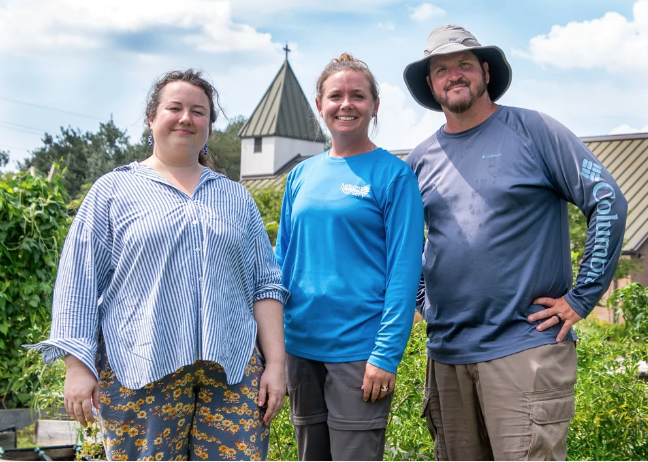
Over the years, one question comes up again and again: “Why don’t you use volunteers?” It is a fair question. Many gardens operate that way, gathering groups to weed beds, spread mulch, and move the work forward as people are available. There is nothing wrong with that model. But from the beginning, these gardens were never designed to operate that way. Each garden has a Garden Steward, a real human being who remains present. Not coordinating projects or managing volunteers, but someone who knows the soil, recognizes the plants, and notices the people who return. That posture did not come from strategy. It grew out of years of formation in the garden, where the rhythms of planting, waiting, pruning, and harvesting reveal how life actually grows.
Over time, something became unmistakably clear. Gardens flourish when someone remains consistently present. A steward develops a relationship with the land, noticing subtle changes, understanding seasons, and holding the space in a way that allows others to step in with very little friction. People are not summoned. They are drawn. When they arrive, the garden is already being faithfully tended, and they can immediately enter into the life of the space. Without that steady presence, many gardens follow a familiar pattern. Early excitement carries the work forward, but over time participation fades, responsibility narrows to a few shoulders, and eventually the garden struggles. Not because people lacked desire, but because cultivation lives in the middle ground between control and neglect, and that middle ground does not hold itself.
This pattern is not new. From the beginning, the story of Genesis places a human in a garden with a simple instruction: work it and keep it. Cultivation was never meant to be forced, and it was never meant to be left alone. It requires a returning human presence. That is what the Garden Steward represents, someone who quietly holds the middle ground between wilderness and control, allowing life to grow naturally while still being guided and cared for.
This is also why the role of Garden Steward is a paid position. Not because the garden needs a job, but because cultivation requires consistency. A garden changes when someone returns again and again. So do people. Presence cannot rotate. It cannot be scheduled occasionally. It grows through relationship over time. And when someone faithfully holds that middle ground, life begins to grow, both in the soil and in the people who return to it.
The Middle Ground
One of the quiet things a garden reveals is that life does not flourish at the extremes. On one side is wilderness, where everything is left alone and the strongest forces dominate. On the other side is control, where every imbalance is corrected, every insect is treated as a threat, and constant intervention attempts to force perfection. Both approaches remove the human being from their rightful role. Wilderness removes responsibility, while control replaces stewardship with domination. A garden lives somewhere else, in the middle ground, and that is where cultivation begins.
At The Neighborhood Garden Project, we hold that middle ground intentionally. While food certainly grows here, the deeper work of the garden is cultivation. The garden becomes a place where people rediscover responsibility as a gift rather than a burden. When someone tends even a small piece of living ground, they move from spectator to participant, and participation begins restoring identity. But that restoration only happens when the environment remains balanced. Too much control and people become consumers of a managed space. Too little attention and the garden becomes inaccessible. Stewardship lives in between.
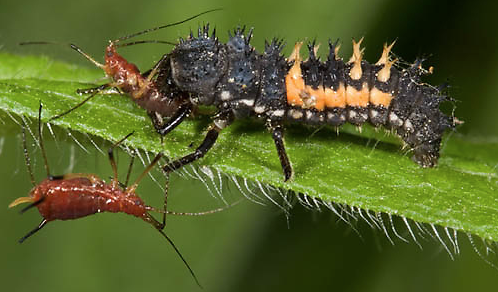
This is why we carry margin and practice what we call attentive restraint. We are not driven by production quotas or harvest targets. Instead of reacting to every imbalance, we observe, notice patterns, and allow the living system time to respond. Often the garden begins correcting itself. Aphids appear, and rather than immediately spraying, we wait. Soon ladybug larvae arrive and balance returns. We still intervene when necessary, but margin allows us to see that life is often already responding.
Practicing attentive restraint begins to shift something deeper. People start to see that not every tension requires immediate control. Sometimes balance is already forming beneath the surface. As they learn to cultivate the soil this way, they begin to approach their own lives differently. The garden becomes more than a place where plants grow. It becomes a place where people remember their role, participate with living systems, and rediscover that cultivation changes both the land and the human being tending it.
Where Three Worlds Meet
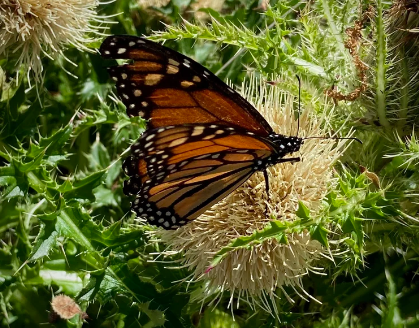
A monarch butterfly landed on a thistle bloom along the prairie edge beside the garden. The thistle was not planted. The butterfly was not invited. Yet in that small moment, three worlds that rarely intersect were meeting in the same place, ecological restoration, food cultivation, and human formation. Most of the time these worlds operate separately. Restoration happens in preserves, food production happens on farms, and human formation happens in classrooms or programs. But in the garden, they begin to converge.
Two years ago, mowing stopped along the prairie edge, and plants began emerging from seeds long resting in the soil. Lyreleaf sage, wood sorrel, dewberries, and eventually thistle began to rise. What looked chaotic was actually succession, the land remembering itself. Just beyond that edge, vegetables grow in cultivated beds, supported by living soil filled with fungi, bacteria, and earthworms. Over time, the prairie began supporting the garden. Pollinators drawn to wildflowers now visit vegetable crops. Bees move between thistle and tomatoes, between prairie and garden. Wild and cultivated systems begin supporting each other.
As people spend time in this living landscape, a third layer begins to form. The garden shapes the people who participate in it. Seeds require patience. Soil requires attention. Seasons refuse to accelerate. Over time, people begin loosening control and practicing attentive restraint, paying attention without rushing to dominate what is unfolding. In a culture shaped by speed and control, the garden quietly teaches another way.
That monarch butterfly landing on the thistle becomes more than a beautiful moment. It becomes a glimpse of what happens when restoration, food cultivation, and human formation function together. Life supports life. People begin to recognize they belong within the system, not outside of it. And the garden becomes more than a place to grow food. It becomes a place where the land wakes up, food grows from living soil, and people rediscover their place within creation.
April in the Garden
April in Zone 9A is a season of transition. The soil is warming, daylight is stretching, and warm-season vegetables begin moving from slow survival into active growth. This is one of the most important windows of the entire growing year. What happens now often determines how well the garden performs heading into the long heat of summer.
This year, mid-March reminded us how fragile that transition can be. Two nights dipped to 34 degrees. Not a hard freeze, but enough to knock back our warm-season crops. Tomatoes, peppers, and eggplant, all members of the nightshade family, took the hit. Foliage darkened, growth stalled, and the plants struggled to regain momentum. Potatoes showed some foliar damage as well, but because they store energy underground, they were able to recover and push new growth. Within days, they were back in rhythm.
The nightshades, however, told a different story.
There is always a tendency to wait it out. To hope the plants will recover. To give them more time. We often project our emotions onto the garden, hope, patience, reluctance to start over. But vegetables, especially warm-season crops, operate differently than perennials or native plants. Once they take a significant hit, they rarely return to full strength. Even if they survive, they often remain stunted, delayed, and less productive for the remainder of the season.
In Zone 9A, timing matters. April is not just about survival. It is about momentum. A plant that loses two or three weeks of growth in April is entering the summer heat already behind. And summer in this region is not forgiving.
We also cannot enter the hotter months with plants that have had stressful beginnings. Heat compounds stress. A plant that struggled early is far more vulnerable to disease, pests, and heat fatigue later. Instead of building strength through spring, it spends summer trying to survive. And in Zone 9A, survival mode rarely leads to productivity.
The wisest decision, though often the hardest, is to pull and replant immediately.
It feels counterintuitive. But in practice, new healthy transplants quickly catch up and often surpass damaged plants within a few weeks. By replacing early, you protect the rhythm of the season rather than holding onto what was.
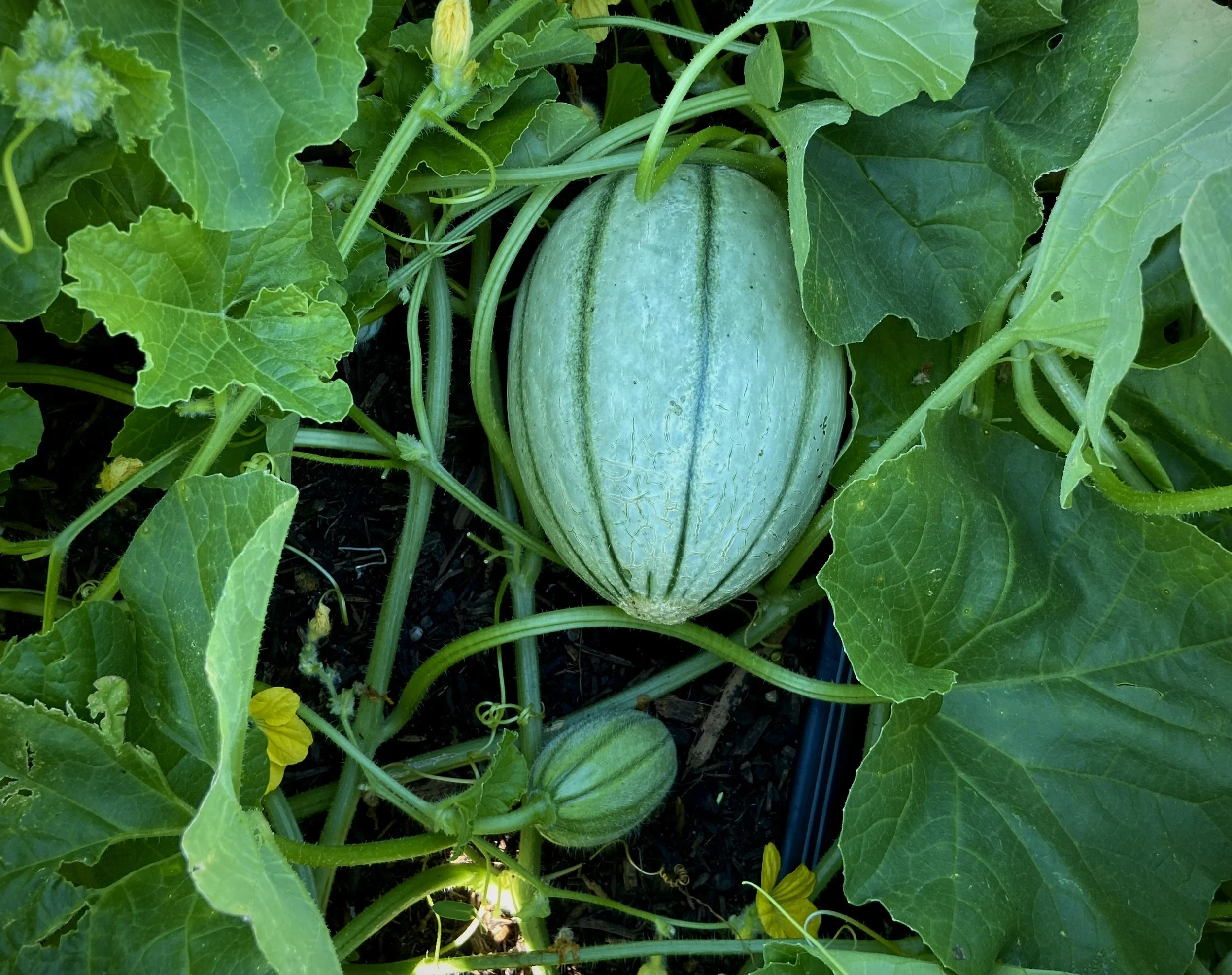
April is also when we begin shifting into the crops that thrive in heat rather than struggle against it. This month, we begin seeding okra, melons, and sweet potatoes. Watermelons, cantaloupes, and honeydew all benefit from warm soil and longer days. These crops prefer to be direct seeded once temperatures stabilize, allowing them to establish quickly without transplant shock.
Okra, in particular, thrives in the heat that challenges so many other vegetables. What can feel harsh for tomatoes becomes ideal for okra. Sweet potatoes follow a similar pattern. As the soil warms, slips establish quickly and begin spreading, setting the stage for strong summer growth.
April, then, becomes a month of both replacement and anticipation. We reset what struggled and seed what will carry us through the heat.
Growth is accelerating.
The soil is warming.
Momentum matters.
And in Zone 9A, April is when we move forward with confidence, planting not just for today, but for the long, hot months ahead.