March 2026
Meet a Family of the Garden…
We asked Marie to share a little about her experience with The Neighborhood Garden Project. In her own words:
“I came to The Neighborhood Garden Project simply wanting to learn how to grow plants, hoping to eventually start a small garden on my apartment patio. What I found was so much more than gardening tips. I found a space where I could slow down and reconnect with myself.
As I began to understand the full process of gardening, from preparing and nourishing the soil to planting seeds and tending them daily, I realized how much intention and patience it takes to grow food. Watching something move from seed to harvest reminded me that growth cannot be rushed and that what we feed consistently will eventually flourish.
While learning about the different parts of the garden and how they work together, it deepened the inner work I was already doing within myself. Gardening showed me that emotional growth happens much like cultivating a plant. It requires steady attention, honesty about what needs care, and the willingness to trust that progress is happening even when nothing is visible on the surface.
Tending to the garden helped me appreciate my stillness and presence in a new way. I know there is still so much more to learn, both about gardening and about myself, as I continue to grow alongside the seeds I plant.”
The Power of Restraint
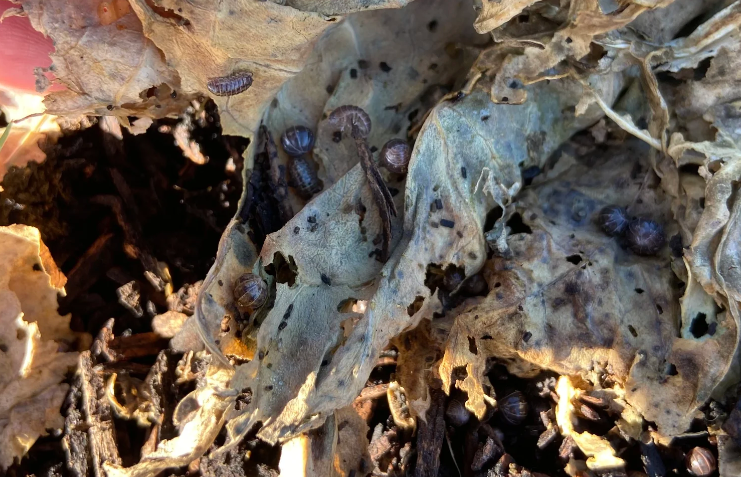
There was a moment in the garden that stopped us, not because something new happened, but because nothing was done. We left the residue. Old cauliflower leaves stayed where they fell. Roots remained in the soil. Moisture stayed covered. There was no rush to clean the bed or make it productive again. And in that restraint, life responded. Fungi moved in quietly. Pill bugs gathered in surprising numbers. Birds began moving through the beds with confidence and purpose. Nutrients started cycling and structure began forming. The future was being prepared without instruction. The garden did not need help. It needed permission.
That moment exposes how conditioned we are to intervene. We often equate stewardship with action, responsibility with control, and faithfulness with constant motion. If something looks unfinished, we assume it is failing. If something feels uncomfortable, we assume it must be fixed. But the garden reveals a different truth. Life is not fragile. It is responsive. When interference stops, coherence begins. Real need carries its own signal. No one has to convince pill bugs to show up when decay is present, and no one has to market protein availability to birds. When the condition exists, response happens. When it no longer exists, the response fades. Nothing has to be forced.
Standing in that reality raises harder questions about how we talk about needs, especially in church and nonprofit spaces. We often hear that there are endless urgent needs that require immediate mobilization, funding, and programming. Yet in the garden, real need does not require advertisement or persuasion. It simply draws the response it needs. Often the deeper issue is not a shortage of helpers, but a shortage of willingness to participate in the formation that real solutions require. Relief without participation does not resolve need. It displaces it. The pressure that might invite growth or responsibility is removed, and dependency quietly takes its place.
The garden operates differently. It does not rush to fix every discomfort or reorganize itself to maintain relevance. If the condition is not present, nothing happens. Some things we call needs are actually signals of misalignment, and resolving them would require allowing something to end. Restraint can feel irresponsible in a culture that equates movement with value, but restraint is not neglect. It is attentiveness without control. The garden did not need help. It needed permission. And perhaps that is the quiet invitation it offers to our organizations and our faith communities: not to do less out of apathy, but to interfere less out of trust, allowing what is real to draw what it truly needs.
The Work Beneath the Spears
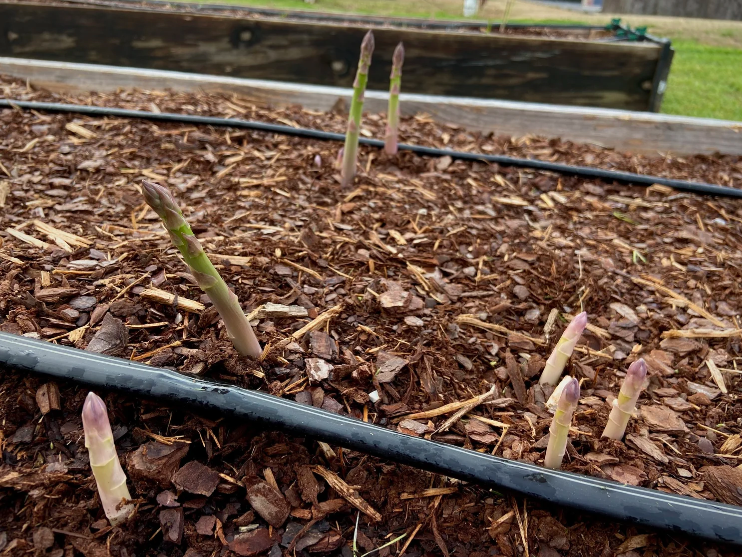
This is our fourth year harvesting from the same asparagus crowns we planted four years ago. When we first placed those bare roots in the soil, we barely touched them for several seasons. We let them root, build, and establish something underground that no one could see. Now each spring the asparagus erupts. For about six weeks we harvest thick green spears rising from soil that looked empty days before. Then we stop. For the remaining forty-four weeks the plant grows tall ferns, gathers sunlight, stores energy, and eventually rests again. Six weeks of visible return. Forty-four weeks of invisible work.
The spears are not the work. They are the overflow of last year’s work. When we harvest in spring, we are eating stored sunlight gathered during the fern season the summer before. Those tall feathery stalks that looked unproductive were actually building the carbohydrates stored in the crown underground. If we harvest too long, the spears grow thinner the following year. Continuous output would weaken the plant and eventually kill it. Rest is not optional. It is structural.
Asparagus is clear about what it is. It does not attempt to produce year-round. It grows when conditions align, stores when reserves need rebuilding, and rests when the season turns. And it does not exist alone. While asparagus rests, other crops produce. Contribution rotates across the garden so that no single plant must carry the entire burden. The asparagus thrives for decades precisely because it does not try to be everything.
Humans often forget this. We stretch ourselves wide, trying to be steady for everyone, useful everywhere, and constantly productive. But like a plant denied its fern season, continual output eventually drains our reserves. Strength is built through protected seasons of rooting, storing, and resting. The lesson from the asparagus bed is simple. Six weeks of spears only exist because forty-four weeks were given to building the roots.
March in the Garden
March in Zone 9A Houston is when the garden begins to lean forward. The hesitation of winter starts giving way to momentum as soil temperatures gradually rise and daylight becomes strong enough to support real growth. Cool-season crops that carried us through winter often enter their final productive stretch, while preparations for warm-season planting begin to take shape. The air may feel like spring on many days, but the garden still responds primarily to soil warmth and stable nighttime temperatures rather than a few warm afternoons.
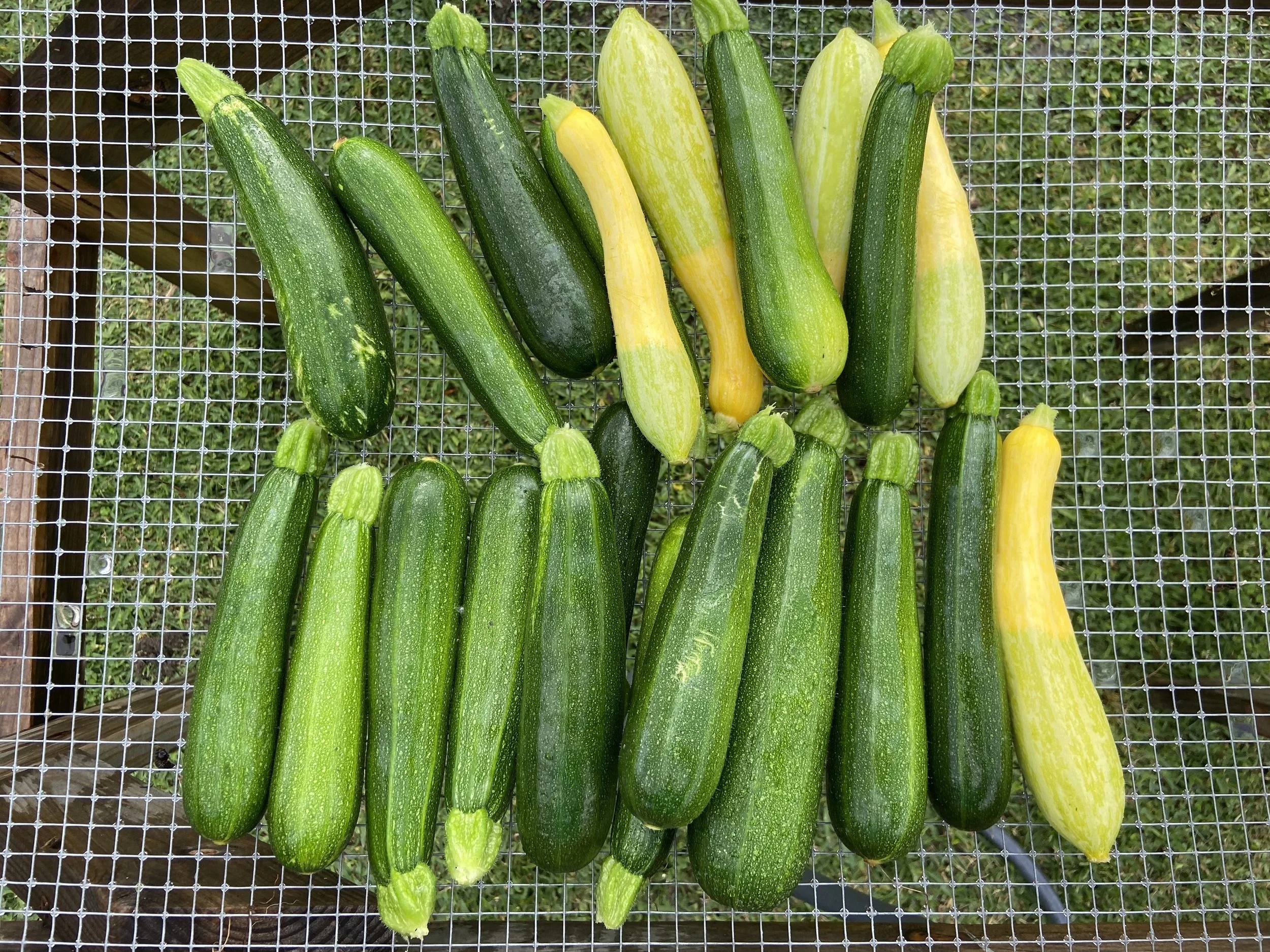
Many of the warm-season crops have already been seeded in trays, waiting for their moment. Squash, zucchini, and cucumbers are developing their first true leaves in protected spaces, building root systems that will allow them to transition quickly once conditions in the beds are right. Starting them this way allows us to stay ready. When soil temperatures and nighttime forecasts align, those seedlings can be transplanted into the garden without losing valuable growing time.
March is a month of watchfulness and timing. Houston’s spring rarely unfolds slowly. Once conditions settle, growth accelerates quickly, and the window between cool-season production and early summer heat can close faster than expected. Gardeners pay close attention to the forecast, soil warmth, and plant readiness so that transplanting can happen at the right moment rather than simply the earliest one.
What makes March unique is the sense of anticipation running through the entire garden. Seedlings are forming roots in trays, soil life is becoming more active, pollinators begin reappearing, and the landscape shifts steadily toward abundance. Much of the work is still quiet preparation, but the direction has clearly changed. The garden is no longer simply waiting. It is preparing to move.