When Funding Protects Vocation
Why We Refuse to Fragment Our Work to Survive
By Josh Singleton | Founder, serving as Lead Cultivator, The Neighborhood Garden Project
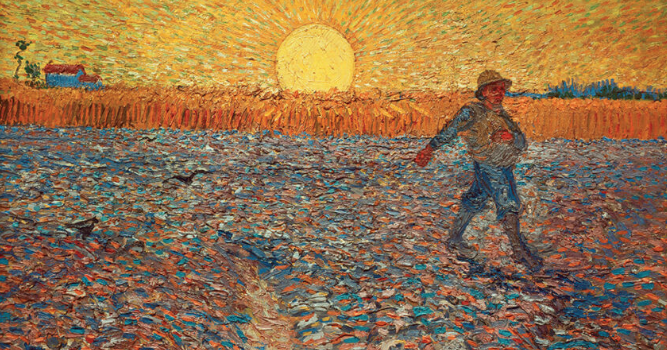
Henri Nouwen once wrote that fundraising is not primarily about money, but about faithfulness to one’s calling. He described moments when people offered him financial support not so he could do more, but so he could be more faithful. They wanted him to write, to pray, to stop scattering himself. Their giving was not fuel for expansion. It was protection against division.
That insight names something most people never experience. Funding that does not demand more of you, but instead guards what you were called to do.
At The Neighborhood Garden Project, this truth has not arrived as theory. It has been taught to us by soil, seasons, people, and limits. Money is real. It matters. But divided attention is costly, and it quietly erodes the very work funding is meant to sustain.
Our desire around fundraising is simple, and it is demanding. We long for the vision and lived wealth of the garden to be so clear that individuals and foundations do not want us thinking about money, but freed from it. Not because money is unimportant, but because vocation is.
The garden teaches this without argument.
You cannot rush it.
You cannot multitask inside it.
You cannot extract from it without consequence.
Soil responds to presence, patience, and fidelity. If your attention is divided, the garden reflects it back to you. If your posture is aligned, life responds.
Over time, we began to recognize that the garden holds wealth long before funding ever arrives. Time shared without agenda. Attention that is not divided. Meals eaten slowly together. Relationships that are not optimized for outcome. Space where people are not projects and no one is performing competence.
This is real wealth.
It is also costly to protect.
One of the quiet shifts that has happened for us is this: the garden has never truly been a place “for the needy.” It is a place for people. People who give a great deal. People who carry responsibility. People who lead, decide, support, and serve. People who are often strong for others and rarely given permission to simply arrive as themselves.
Much of the world wakes up to striving. Work harder. Stay relevant. Don’t fall behind. This is not a personal failure. It is cultural formation. From an early age, we are taught that if we do not strive, we disappear. So when we speak of funding that protects vocation, it sounds impossible, even irresponsible.
But that is only because we have normalized division.
The problem is not work.
The problem is work divorced from trust.
Most funding models quietly assume that leaders must fragment themselves to survive. To toggle endlessly between vision and justification. To carry both the work and the anxiety of resourcing it. Over time, this becomes praised as responsibility. But the cost is cumulative. The work grows thinner. The people doing it grow tired. The center does not hold.
Henri named something different. He suggested that true fundraising deepens vocation rather than diluting it. That it calls leaders to greater faithfulness, not greater activity. That money, at its best, exists to guard the work, not compete with it.
In his own experience, people told him, “We will give so that you can be more faithful to your calling.” They did not want access. They did not want control. They wanted his attention undivided.
This is the posture we are choosing.
We are not interested in funding that requires us to be everywhere, explain everything, or divide our days endlessly. We are interested in relationships where those who give want us rooted. Present. Undistracted. Faithful to the slow, human work of cultivation.
At its best, funding says, stay here.
Stay in the soil.
Stay with the people.
Stay with the work that cannot be rushed.
This is not idealism. It is ordering.
When money is rightly ordered, it becomes a boundary rather than a demand. It protects time. It protects presence. It protects vocation. It says, you do not need to fragment yourself to survive.
This kind of funding feels impossible in a culture built on striving. And that is precisely the point. The Kingdom has always felt impossible to systems organized around fear. Jesus did not offer people better hustle. He offered them rest before results. That is why He was constantly misunderstood.
The garden becomes proof that this is not fantasy.
You cannot outwork a seed.
You cannot negotiate with a season.
You cannot scale life without tending it.
The garden forms people out of striving not by instruction, but by reality. It exposes illusion gently but firmly. It rewards presence. It reveals that trust is not passive, it is practiced.
This is why wealth must be expanded beyond money.
Wealth is time that is not rushed.
Wealth is attention that is not divided.
Wealth is shared meals without agenda.
Wealth is space where no one is being evaluated.
Wealth is the ability to host life without controlling it.
This is the wealth the garden stewards every day.
And it is the same wealth we have experienced in relationship with thoughtful individuals and foundations who have offered not just finances, but time, trust, presence, and shared table. That shared wealth has made us ask a different question.
What if funding did not just support work outwardly, but restored the people carrying it? What if foundations and institutions, which give constantly to others, were also invited into spaces where they could receive without responsibility?
This is not a program. It is not formation as an initiative. It is simply a door held open.
The garden does not exist to fix people. It exists to let people be human again. When money joins this work, it joins as one form of fruit among many. It follows life rather than driving it. It frees time instead of consuming it.
We know this posture will not resonate with everyone. Most people want provision without re-ordering. They want God to help them succeed inside striving, not dismantle it. That is okay. The narrow way has always been narrow.
We will tell the truth about what we are called to do and trust God with the rest.
That means we will not distort the work to secure funding. We will not divide our attention to appear sustainable. We will not trade vocation for velocity.
If money is going to be part of this, it must serve fidelity, not compete with it.
This is the kind of relationship we are cultivating.
Not because it is efficient.
Not because it is safer.
But because it is faithful.