The Wisdom of the Prairie Edge
What happens when we slow down long enough to listen
By Josh Singleton | Founder, serving as Lead Cultivator, The Neighborhood Garden Project
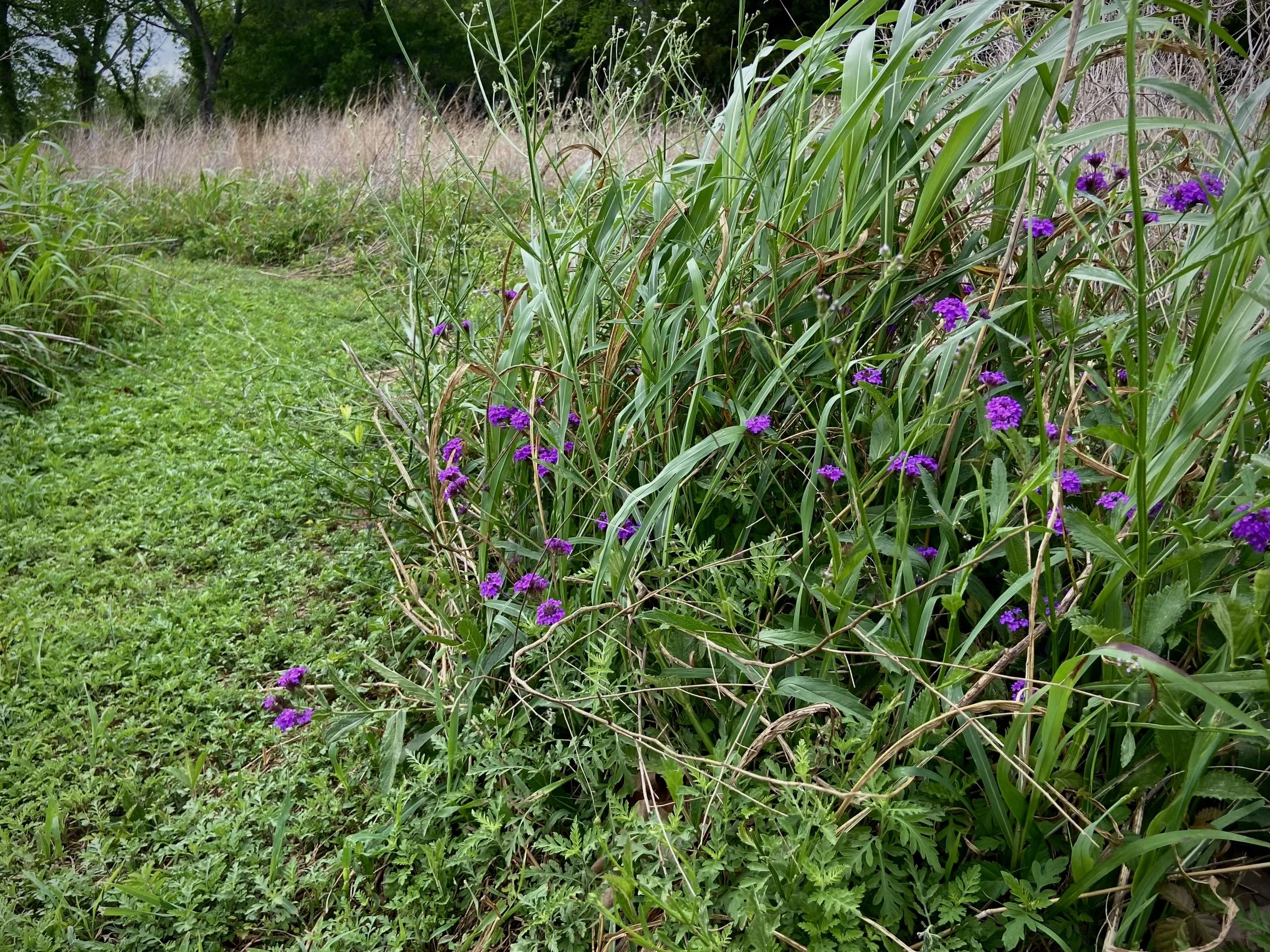
There is something quiet happening along the prairie edge.
It would be easy to miss.
At first glance, it just looks like tall grass leaning into a mowed path. Purple flowers scattered along the side. A place you walk past without much thought.
But when you slow down, the prairie begins to speak.
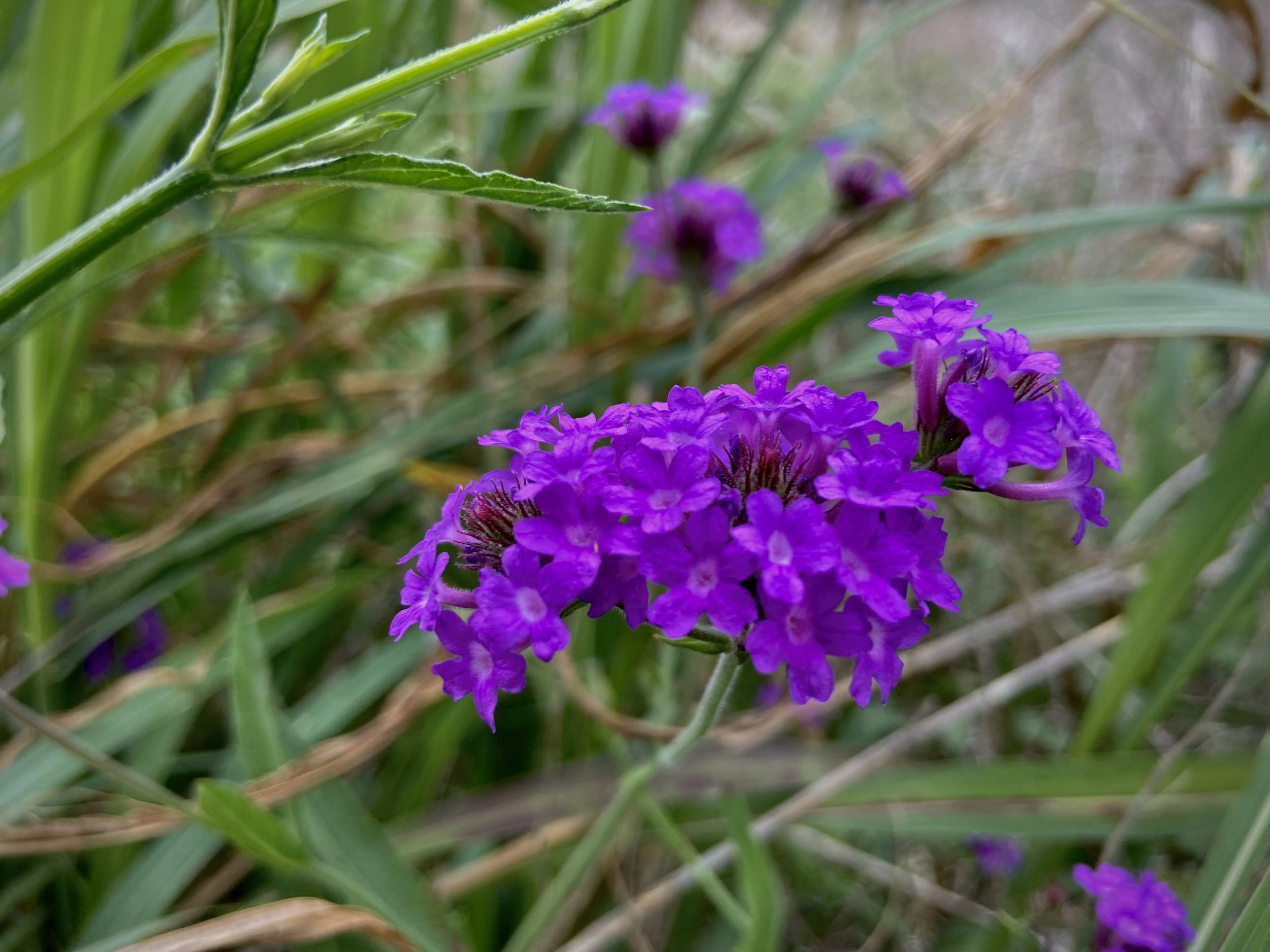
The purple flowers are not trying to dominate the space. They rise gently above the grasses, airy and open, allowing light to pass through. They do not compete aggressively. They coexist. They occupy their space without crowding others.
The grasses lean but do not collapse. Their roots hold the soil together below the surface while their blades create structure above it. Beneath them, smaller plants fill in the gaps, quietly stabilizing the ground.
Nothing here is rushed.
Nothing is forced.
Everything is responding.
The path itself is part of the story. It is not separate from the prairie. It is part of the prairie. Each time someone walks it, the ground is lightly disturbed. Seeds are carried. Soil is shifted. New life is given opportunity.
Movement creates life.
Not control.
Not planning.
Not force.
Just presence.
The prairie edge reveals something we often forget about how life actually functions.
Life thrives at the edges.
Where two worlds meet.
Where structure and freedom coexist.
Where wildness and intention hold hands.
This is where diversity increases.
This is where resilience forms.
This is where life multiplies.
Culture, however, tends to move away from edges. We prefer control. We want clean lines. We want defined spaces. We mow everything evenly. We remove what looks messy. We eliminate transition.
But in doing so, we often eliminate life.
The prairie does the opposite.
It allows complexity.
It welcomes transition.
It trusts the process.
And slowly, life responds.
The purple flowers did not arrive because someone planned them. They arrived because conditions allowed them. The grasses did not coordinate their growth. They responded to soil, light, and season.
Everything is listening.
And everything is responding.
This is how life functions.
And it raises a quiet question for us as a culture.
What would happen if we slowed down long enough to listen?
What if instead of forcing outcomes, we created conditions?
What if instead of controlling growth, we stewarded space?
What if instead of rushing toward results, we paid attention to roots?
The prairie edge suggests something simple.
Life already knows what to do.
It does not need to be forced.
It needs to be allowed.
The path along the prairie is not just a walkway. It is a relationship. It is a conversation between human movement and natural response. The more it is walked, the more alive it becomes.
This is true for people too.
When we slow down and walk with one another, life begins to emerge. Not because we forced it, but because we created space for it.
The prairie does not measure success by speed. It measures success by presence. By resilience. By diversity. By quiet strength beneath the surface.
Culture often celebrates what is loud and immediate. The prairie celebrates what is patient and enduring.
And over time, the prairie sustains.
Because roots grow deeper than noise.
Because resilience grows slower than excitement.
Because life unfolds in rhythm, not urgency.
Along the prairie edge, the purple flowers continue to rise. The grasses continue to lean. The path continues to invite.
Nothing is rushed.
Nothing is forced.
Everything is alive.
And if we slow down long enough, we begin to realize that the prairie is not just revealing how nature functions.
It is revealing how we were meant to function, too.