The Threshold Is Everywhere
Why proximity does not guarantee presence
By Josh Singleton | Founder, serving as Lead Cultivator, The Neighborhood Garden Project
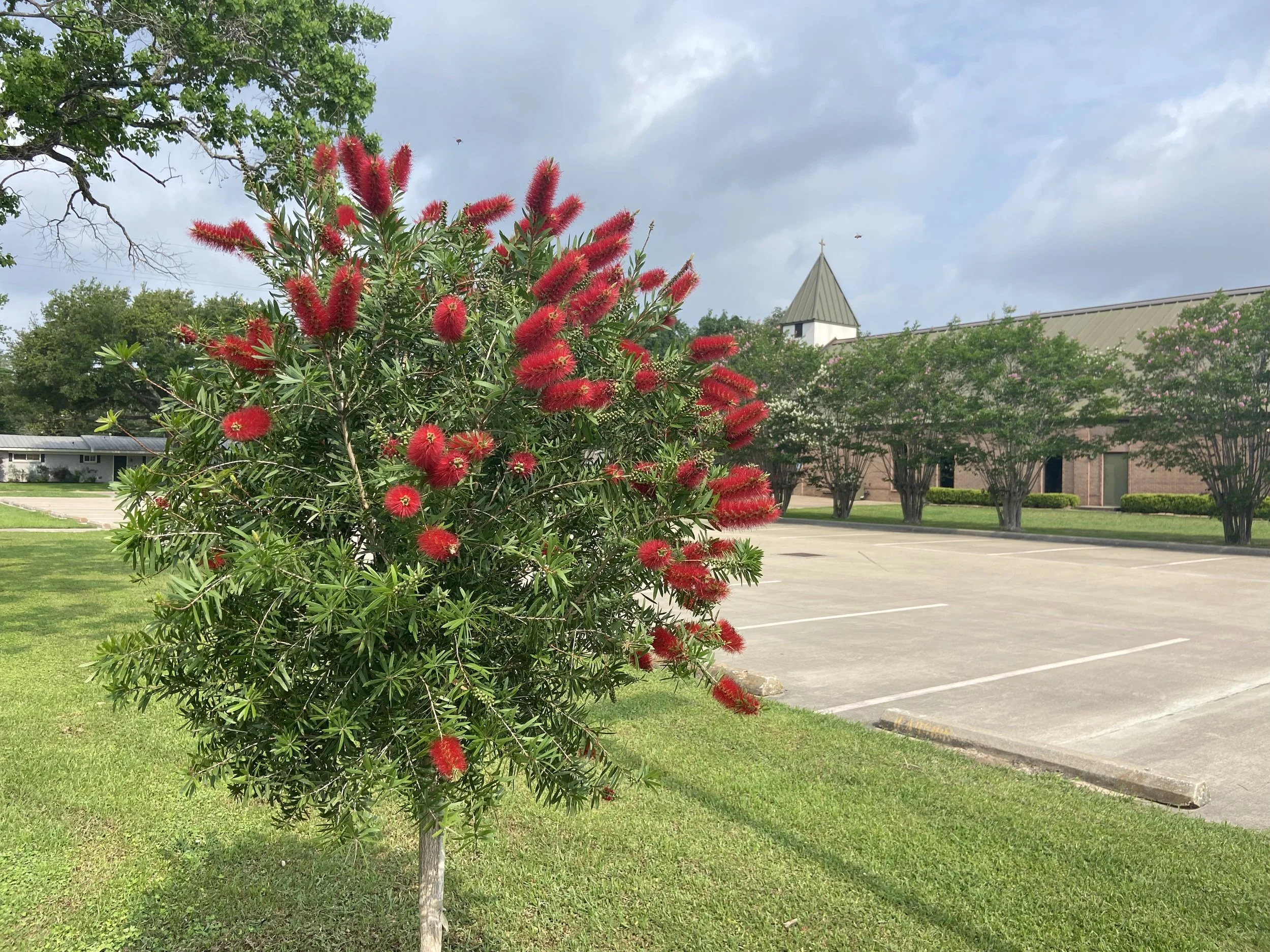
There is a tendency to locate the threshold in a specific place.
At the church, it is easy to see. The garden is visible. It sits within reach. People pass it regularly, and yet most do not enter. Because of that proximity, the distance becomes more noticeable. It can feel like something is missing.
But the threshold is not created by proximity. It is revealed by it.
The same threshold exists beyond the church. In the broader community, it is less visible—but no less present. Many have never entered the garden. Not because they are unwelcome, and not because they are uninterested, but because they are not yet aware of it, or have not felt drawn toward it.
At a distance, the threshold appears as absence. Up close, it appears as hesitation.
There is another layer to this. Even among those who enter, most do not return.
They step in, look around, and experience the space briefly. Then they leave. Not out of rejection. Not because something was lacking. But because crossing the threshold once is not the same as being ready to remain.
This is where misunderstanding begins.
A visit becomes interest. A lack of return becomes disengagement. And so, the instinct is to respond—to invite, to follow up, to create a pathway back.
This is not wrong. It is how most organizations are formed to operate. A first encounter is something to build on.
But the threshold does not function that way.
Crossing it once does not indicate readiness to remain. And when that moment is extended too quickly—interpreted, acted upon, or built into something more—it begins to change the nature of the space itself.
There is a cost to this.
When a brief visit is treated as the beginning of something that should continue, a subtle burden is introduced. The person who entered is now expected, in some way, to return—to deepen, to engage, to become part of something.
At the same time, the organization carries its own burden. If people do not return, it is quietly interpreted as failure. Something did not connect. Something did not work. Something needs to be adjusted.
But the threshold does not operate within that framework.
A person can encounter a place without being meant to remain within it. And a space can be faithfully held without needing to retain those who pass through it.
To enter the garden is not simply to step onto the land. It is to step into a different rhythm—a slower one, a quieter one, one not organized around outcome or expectation.
For some, that feels unfamiliar. For others, unnecessary. For many, it is something they do not yet know they are looking for.
This is why the garden is not built around invitation. It is not hidden, but it is not promoted. It is not exclusive, but it is not positioned to attract.
It remains.
In the garden, a different posture is held. A first visit is allowed to remain what it is—uninterpreted, unextended, unclaimed. There is no effort to draw someone further in, and no expectation that they will return.
Value is not determined by continuation.
Presence, even briefly, is not something to capture. It is something to allow.
There is a deeper assumption beneath all of this.
We have been formed to believe that if something is meaningful, it will be recognized immediately—and once recognized, retained. That those who enter will stay. That those who experience something will want more. That what is good will be held onto.
Over time, this assumption has shaped how many organizations function. A first encounter becomes something to build on. A return becomes something to secure. A lack of continuation becomes something to question.
The garden does not operate from that assumption. It does not expect recognition in that way, and it does not measure its life by who stays.
There is a different trust being held.
That the life of a person is not defined by their interaction with this space. That whatever has brought them here has been at work long before they arrived—and will continue long after they leave.
The garden does not begin that work. And it does not need to complete it.
It simply becomes one place among many where something may be noticed, even briefly.
Because of this, there is no need to hold onto those who enter. What is real does not need to be retained.
It will return—if and when it is ready.
For many organizations, this way of holding a space feels unfamiliar—sometimes even uncomfortable.
Much of organizational life is shaped by the need to demonstrate impact: to measure engagement, to show that something is working, to ensure what is offered is being received and sustained. Within that framework, a first visit becomes something to build on, and a lack of return becomes something to resolve.
The garden does not operate within that structure.
It is not measured by participation. It is not evaluated by retention. And it is not shaped around producing visible outcomes.
This does not make it less intentional. But it does make it different.
Rather than asking, Is this working? the garden asks something else:
What is being held here—and is it being held faithfully?
There is also a different approach to how this work is resourced.
Much of the nonprofit sector spreads resources across many efforts in order to extend reach. The garden is resourced through concentration. Time, attention, and care are given consistently to one place.
Hours are held—undivided, unrushed, returned to again and again.
This depth is not always visible. A person may enter briefly without realizing what has made that moment possible: the steadiness of the space, the clarity of its rhythm, the absence of expectation.
All of this is the result of something already given, not in response to their presence, but long before it.
There is a deeper trust at the center of this work.
That what is needed is already present within the person—not because it has been developed here, but because it has been given. A person’s story is not something to be leveraged. It is not a pathway to engagement or a means of extending the work.
Instead, there is a trust that each person is already being formed.
Because of that, there is no need to draw someone further than they are ready to go. No need to hold onto them to justify what is being done.
The work does not depend on their story. And their story does not depend on the work.
Over time, this creates a different kind of relationship. The organization becomes less central—not absent, but secondary.
What remains primary is the person, and the life they are being led into—whether that unfolds within the garden, or far beyond it.
In this way, the garden does not gather people around itself.
It allows people to continue becoming who they already are.
What is real is not always what is visible. It is not determined by participation, response, or continuity.
What is real does not need to be produced. It emerges, endures, and remains—even when it is not being reinforced.
In the garden, what is real is seen in what is held over time: in the land being cared for, in the presence that does not need to be maintained, in relationships that form without direction.
And, occasionally, in the quiet return of someone who was never asked to come back.
What is real does not need to be proven.
It proves itself by remaining.
Over time, something else happens.
People begin to notice. Some return. Most do not.
And yet, even a single return carries a different weight—because return is not driven by invitation, but by recognition.
The threshold remains. But it is not static.
It shifts, person by person. Sometimes it holds someone at a distance. Sometimes it allows a brief crossing. And sometimes, over time, it becomes something that can be lived within.
What appears as distance is not always separation. Sometimes it is simply the space required for recognition.
And so the garden does not attempt to remove the threshold.
It does not measure who enters or who returns.
It holds the space on both sides of it.
There is one more thing to notice.
The threshold is not only something others experience. It remains present for those who tend the garden as well.
Crossing it does not become automatic.
Each time, there is still a choice—to slow down, to step into a different rhythm, to release what could be carried in.
In this way, no one stands outside the threshold.
Not those who pass by.
Not those who enter briefly.
And not those who remain.
It continues to be met.
Again and again.
And perhaps that is part of what keeps the space real.
That it is not something we move beyond.
But something we continue to cross.