The Steward in the Garden
Cultivating the space between wilderness and control
By Josh Singleton | Founder, serving as Lead Cultivator, The Neighborhood Garden Project
Over the years, one question comes up again and again.
“Why don’t you use volunteers?”
It is a fair question.
Most gardens operate that way. A group gathers on a weekend, beds are weeded, mulch is spread, and the space slowly moves forward through the help of whoever happens to be available.
There is nothing wrong with that.
But the gardens we are tending were never designed to operate that way.
From the beginning, each garden has had a Garden Steward.
A real human being who remains present in the garden.
Not someone coordinating projects.
Not someone managing volunteers.
A steward.
Someone who knows the soil.
Someone who names the plants and understands their rhythms.
Someone who recognizes the people who return week after week.
That posture did not come from a strategic plan or an organizational model.
It grew out of my own formation with God in the garden.
For more than twenty years, the garden was the place where God quietly shaped my life. Day after day, season after season, the soil became a classroom. The rhythms of planting, waiting, pruning, and harvesting slowly revealed something deeper about how life actually grows.
The garden was never just producing vegetables.
It was forming a human being.
Over time something became unmistakably clear.
Gardens flourish when someone remains present.
Not just occasionally.
Consistently.
Someone who understands the rhythms of the soil and notices the subtle changes that happen over time. Someone who knows when a bed holds water longer than expected after a rain. Someone who can see the difference between a plant that is thriving and one that is quietly struggling.
The steward does not simply observe the garden.
They know it.
They know the soil.
They know the plants by name.
They know the seasons of the land.
That kind of knowing only develops through relationship.
But that knowing is not for the steward alone.
It exists so that anyone who arrives willing to participate can enter the life of the garden with very little friction.
People are not summoned to the garden.
They are drawn to it.
And when they arrive, the space is already being faithfully tended.
Beds are cared for. Pathways are clear. Plants are healthy. The rhythms of the garden are already moving.
Because of that steady care, someone new does not have to fight through disorder or confusion to begin participating. They can step into the life of the garden almost immediately.
The steward has already done the quiet work of holding the middle ground.
Their knowing allows others to settle into the garden more naturally.
With fewer adjustments.
Less hesitation.
And a clearer invitation to simply begin.
Many of us have experienced what happens when that steady presence is missing.
A community garden initiative begins with real excitement. A group gathers, the vision is shared, beds are built, soil is turned, and seeds go in the ground. For a while the early energy carries everything forward.
Often the work begins with a handful of retired folks who finally have the time to help get something started. They show up faithfully at first, and the garden begins to take shape.
But over time something subtle begins to shift.
Retirement, after all, is not a job. It is a season meant for rest, travel, family, and flexibility. Gradually people begin showing up a little less often. The routines that held the garden together loosen.
Without anyone intending it, the responsibility slowly settles onto the shoulders of one person in the group, usually the most dedicated one.
For a while they carry it.
They water more often. They pull weeds others did not notice. They try to keep the beds alive.
Then summer arrives.
The heat intensifies. The weeds grow faster than expected. The work required to keep the garden thriving becomes heavier than one person can reasonably carry.
Eventually the beds begin to struggle.
A few plants survive. Others fade. The pathways fill in. By late summer the garden that once held so much promise sits quiet and fallow.
No one meant for it to happen.
The desire was there.
But the quiet reality of cultivation had never surfaced.
A garden needs enough freedom for life to grow naturally, but enough attention for that life to be guided and cared for.
Too much control and the garden becomes rigid.
Too little attention and it slowly slips back into wilderness.
Cultivation lives somewhere in between.
And that middle ground does not hold itself.
It requires a human presence that returns again and again.
The more time I spent in the garden, the more obvious it became that this same pattern was already written into the beginning of the story.
The opening pages of Genesis begin in a garden.
Before cities, before institutions, before systems, there was land, plants, animals, and a human being placed in the middle of it.
The instruction given to that human was simple.
Work it.
Keep it.
Cultivate it.
From the beginning, the garden was never meant to be left completely alone.
It was also never meant to be forced into rigid control.
Left unattended, land eventually returns to wilderness.
Forced too tightly, life becomes mechanical and fragile.
Cultivation lives in the middle.
And cultivation requires a human.
That is what the Garden Steward is within these gardens.
Someone who remains.
Someone participants encounter when they walk through the gate.
They might be showing someone where the carrots are growing. They might be turning compost, watering seedlings, or simply sitting at a table talking with someone who needed to slow down for a moment.
Most of the work does not look dramatic.
But over time we realized that presence itself was doing something important.
The steward quietly holds the middle ground between two extremes that shape much of modern life.
On one side is wilderness, where things are left unattended.
On the other side is cultural control, where systems attempt to manage every outcome.
The garden lives somewhere between those two places.
And the steward holds that space.
Over time something else became clear.
Holding that middle ground was never meant to rest on one person alone.
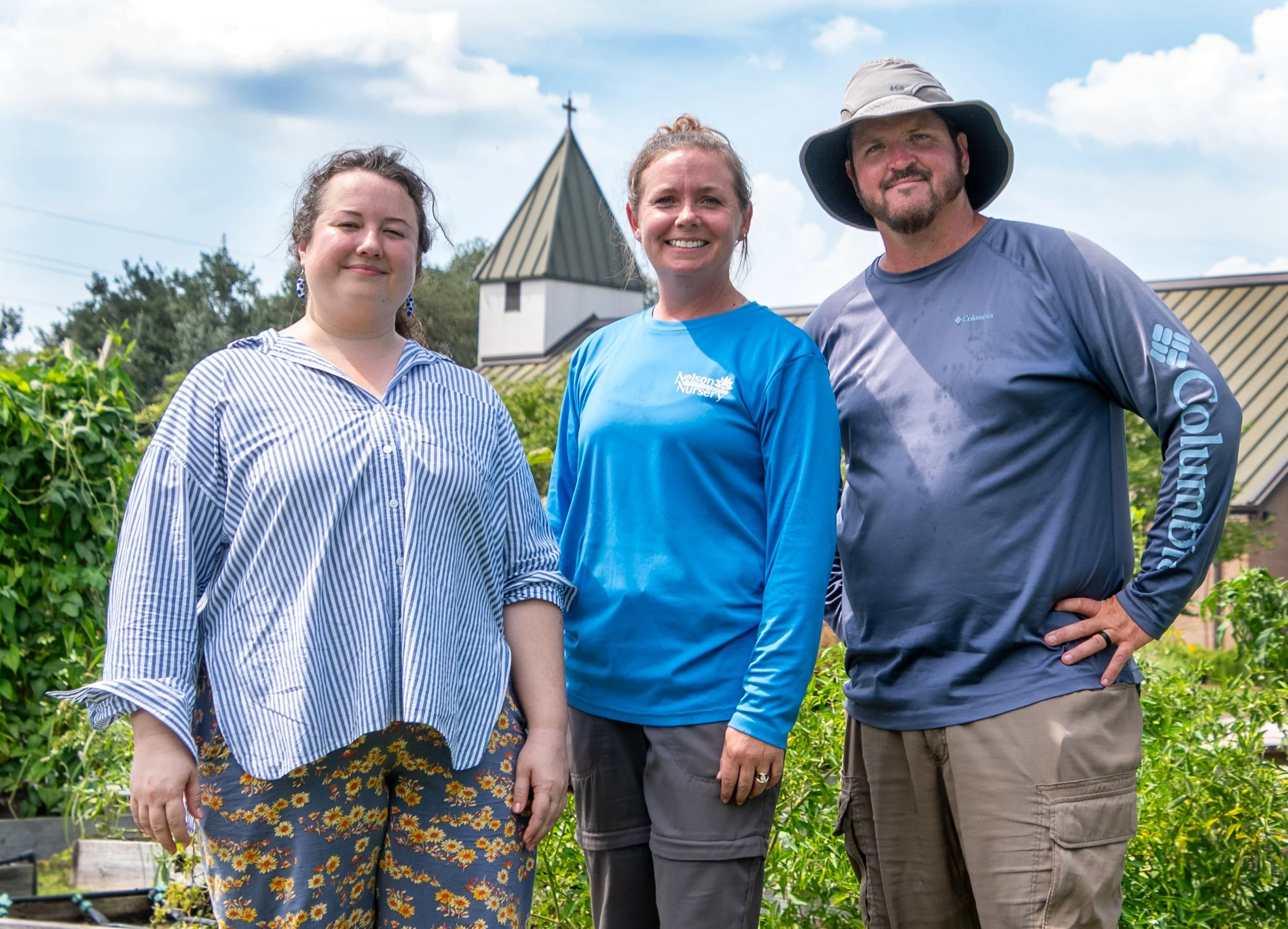
In our work, that responsibility is shared by a small group we simply call The Braid.
Like strands woven together, each person carries a different part of the stewardship while remaining connected to the same posture of cultivation.
What is remarkable is that none of us were formed in the same place.
My own formation in the garden took shape over more than twenty years in Dallas. Long before the first garden of this project existed, the soil had already become a place where God was shaping my life and teaching me how cultivation actually works.
Kayla’s story began right here in Katy, where she grew up. For more than fifteen years she has been working with soil, learning the rhythms of planting, tending, and returning to the garden season after season. Long before she ever stepped into the role she now carries at St. Paul’s, the garden had already been forming her.
Lizzie’s relationship with gardening developed in a different way. It appeared on and off through the years, but it deepened significantly during the COVID years while she was studying at Yale Divinity School in Connecticut. During that time the garden became a place of grounding, reflection, and cultivation for her life as well.
Three different places.
Three different paths into the soil.
And yet when we found ourselves working together, something was immediately recognizable.
The same understanding of the middle ground.
What is also worth saying is that none of this came through resumes or job searches.
From the beginning, The Neighborhood Garden Project has never operated that way.
We never sat down to review credentials or try to recruit the right people.
Instead, we simply paid attention to what God was already preparing.
Over time, the people who had been quietly formed by the garden began to reveal themselves.
They showed up.
They remained.
And through that steady presence it became obvious what they carried.
We hold that middle ground fiercely.
Not as a philosophy.
As something we have lived.
Kayla tends the first garden at St. Paul’s in Katy, the place where this work first took root. Day after day she walks the beds, cares for the soil, and walks alongside the people who are drawn into the life of the garden there.
I spend most of my time holding the second garden at Emmanuel, continuing the same rhythm of cultivation in a different place.
And Lizzie carries a unique role between those spaces. As our church liaison and cultivator, she helps the church see the garden and the garden see the church. She walks gently between those worlds, helping each recognize what God is growing in the other.
Together we hold the middle ground.
Some days that means tending soil.
Some days it means listening.
Some days it simply means remaining present long enough for life to reveal what it is trying to become.
This is also why the role of Garden Steward is a paid position.
Not because the garden needs a job.
Because cultivation deserves consistency.
A garden changes when someone returns again and again.
So do people.
None of that can be rushed.
And none of it happens through rotating labor.
It happens through presence.
When we look back at the beginning of the story, this does not feel unusual.
God placed a human in the garden and gave them a responsibility.
Cultivate what has been entrusted to you.
And when someone faithfully holds that middle ground, something beautiful begins to happen.
Life grows.
In the soil.
And in the people who return to it.