The Risk of Being Alive
On the Cost of Holding Space for Collective Formation
By Josh Singleton | Founder, serving as Lead Cultivator, The Neighborhood Garden Project
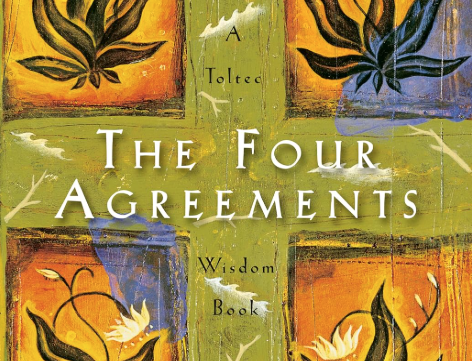
I am reading The Four Agreements by Don Miguel Ruiz for the first time, and one passage stopped me cold:
“That is why humans resist life. To be alive is the biggest fear humans have. Death is not the biggest fear we have; our biggest fear is taking the risk to be alive—the risk to be alive and express what we really are…”
What struck me was not the boldness of the statement, but its accuracy. It named something I am already living, personally and collectively.
Ruiz describes how, through domestication, we learn to live according to other people’s demands. We form an image of perfection in order to be accepted, especially by those whose approval mattered most early on. We try to become good enough for that image, only to discover we never truly fit it. The image is not real, and yet we organize our lives around it anyway.
That is the risk of being alive. Not dying, but stepping out from under that image.
I am discovering that much of what I once thought was fear of failure or loss was actually fear of exposure. Fear of no longer performing goodness. Fear of being seen without the protective scaffolding of expectations. Fear of living without borrowed validation.
This matters not only on a personal level, but at a collective one.
It is one thing to do this work privately, tucked away, where the cost is mostly internal. It is a very different responsibility to steward a shared space where others feel safe enough to stop performing and start telling the truth. Collective formation requires protection. Not control, but integrity. Not speed, but discernment.
The Garden Project exists to hold that kind of space.
And that is precisely where tension arises. The work is often evaluated through outside-in formation frameworks. Structure, clarity, outcomes, metrics. These are not wrong, but they are downstream. They measure fruit without understanding roots. They assess movement without accounting for what is being unlearned first.
Outside-in formation emphasizes behavior, compliance, and visible alignment. Scripture is frequently read through that same lens. Obedience before identity. Fruit without soil. Results without proximity.
But the Scriptures themselves tell a slower story.
Jesus formed people by walking with them. The disciples misunderstood repeatedly, not because they were failures, but because formation takes time. Their confusion was not disqualifying. It was diagnostic. Even now, those same passages are often used to justify pressure rather than patience, as though formation should resolve faster than it ever did in the Gospels.
Inside-out formation reads Scripture as cultivation, not correction.
This is where Ruiz’s insight cuts deepest. The image of perfection we are trained to satisfy is not neutral. It strips dignity quietly, over time. It teaches people to trade aliveness for acceptance. To survive instead of inhabit their lives.
What is happening here is a reorientation into dignity.
Not dignity granted by approval or usefulness, but dignity reclaimed. Value that no longer needs to be validated because it is no longer negotiated. This is not self-esteem. It is restored coherence. A person remembering who they are beneath the layers of adaptation.
Only this kind of formation can restore what was taken.
Scripture names it plainly: “I will restore to you the years that the locust has eaten” (Book of Joel). Locusts do not destroy fields in a moment. They strip capacity slowly. Restoration, then, cannot be rushed. It must happen at the root.
This is why protecting the integrity of the space matters. When people are first relearning their worth apart from performance, they are tender. Measurement without alignment sends them back into hiding. Evaluation without discernment rebuilds the very systems that taught them to perform in the first place.
But when dignity is restored, something irreversible happens.
People stop reaching for validation. They stop needing permission to be alive. And when that happens collectively, the yeast moves. Quietly. Faithfully. Through proximity and time. Not engineered to scale, but impossible to contain.
Ruiz is right. Being alive is the risk.
But creating a space where others are safe enough to take that risk together is the greater cost. If that space is protected, what rises from it will move far beyond what can be measured.
This is the only way the locusts lose their claim.