The Pressure That Reveals the Threshold
A reflection from lived experience, holy tension, and the joy that made space for us all
By Josh Singleton | Founder, and serving as Lead Cultivator, The Neighborhood Garden Project
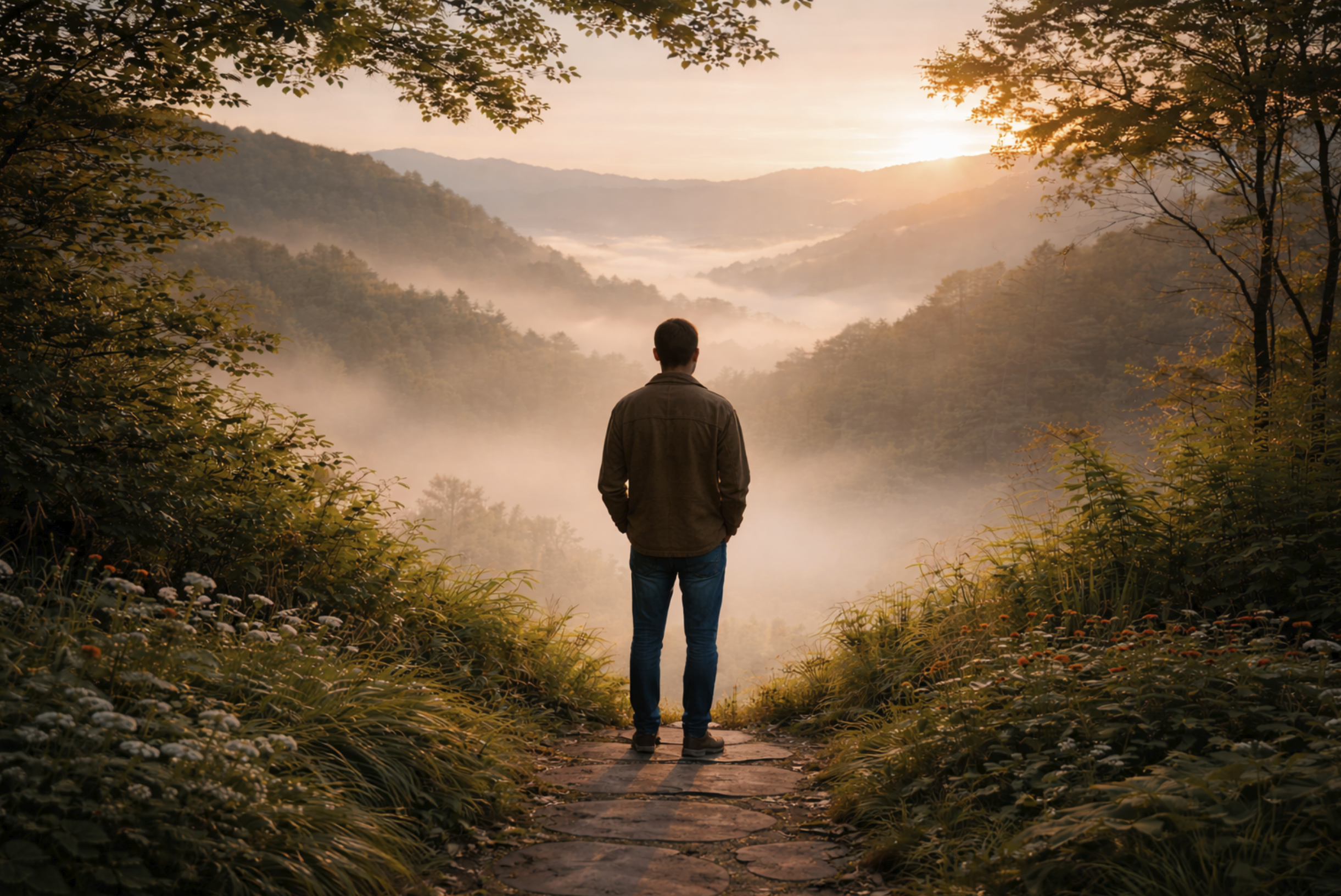
There is a kind of pressure that most of us know well. It is loud, constant, and familiar. It pushes from the outside and rewards motion. Stay busy. Stay useful. Stay visible. Stay ahead. This pressure feels like life itself because it is woven into nearly every system we inhabit. Work, church, family, even service-oriented spaces often run on it. As long as we are moving, producing, or contributing, we feel temporarily safe. Tired, yes. Disconnected, often. But intact.
For most of my life, I assumed this pressure was simply the cost of being human. Something neutral at best, necessary at worst. Something to endure, manage, or outrun.
But over time, standing in the garden and walking slowly with people, something else began to surface. A different kind of pressure. One that did not come from demand or urgency. One that only appeared when those things were removed.
It showed up when rest came before work.
When presence was offered instead of performance.
When no one was being evaluated or measured.
When usefulness was no longer the price of belonging.
And what surprised me most was this.
That was the pressure that sent people running.
Not because too much was being asked of them, but because nothing was.
When cultural pressure falls away, another pressure rises from within. It is quieter and harder to name. It is the pressure of exposure. The pressure of standing without armor. Without accomplishment to hide behind. Without productivity to explain who you are.
In that space, things surface. Desires long buried under busyness. Fears that motion once managed. Grief, insecurity, and longing that productivity had kept at bay. There is nothing to fix in that moment. Nothing to optimize. Nothing to perform. There is only truth.
And for many people, that truth feels unbearable.
I have watched this happen again and again. People arrive drawn by the simplicity, the openness, the lack of pressure. They say they want rest. They say they want presence. They say they want something real. But when the space actually holds them still long enough for honesty to surface, something tightens. Eventually, they leave.
Rarely does anyone say why.
It is almost never many things that stop them. It is usually one thin thing. One attachment that cannot survive stillness. One fear that productivity had been masking. One identity that depends on being needed, admired, or in control. When performance is removed, that thin thing is exposed.
Rest reveals what work was hiding.
Alignment exposes what activity was covering.
Presence makes visible what productivity was protecting.
That moment is not failure.
It is not resistance.
It is a threshold.
Standing there, you can feel it. Life and death both visible at the same time. Not physical death, but the quieter kind. The death of a false self. The death of safety rooted in control. The death of identities built on performance rather than truth. And on the other side, life. Not louder life. Not faster life. But truer life. Life rooted in alignment rather than survival.
Standing at that edge is holy ground.
Over time, I realized that Jesus lived in this space constantly. Not only bringing others to this edge, but crossing it Himself.
The story of the rich young ruler no longer reads to me like a lesson. It reads like a moment I have stood inside many times.
A man runs up to Jesus. He is urgent, sincere, and respectful. He kneels. He asks what sounds like the right question. “Good Teacher, what must I do to inherit eternal life?” It is a question shaped by performance. By effort. By the assumption that life is earned through correct action.
Jesus slows the moment down. He reframes the ground beneath the question. Goodness is not a metric. Life is not a transaction. He names the commandments, not to trap the man, but to let him speak honestly from within the system he already knows.
“All these I have kept since my youth.”
The text does not allow us to dismiss him. He has done well. He is disciplined, faithful, sincere. He has succeeded inside the structure he was given.
And then comes the line that religion often rushes past.
Jesus looks at him and loves him.
What follows is not judgment. It is love that refuses to collude with illusion.
“One thing you lack. Go, sell all you have, give to the poor, and come, follow me.”
This is not about money. It never was. It is about the one thin thing holding the man together. The structure that gave him identity, coherence, and safety. Jesus is not asking him to add something spiritual. He is asking him to let something die.
The man’s face falls. He does not argue. He does not negotiate. He walks away grieving.
This is not rebellion.
This is sorrow at the edge of death.
And Jesus lets him go.
This is the moment religion has never known how to hold. Because if this moment is allowed to remain intact, discipleship becomes uncontrollable. It cannot be systematized. It cannot be scaled. It cannot be reduced to agreement or behavior modification. So slowly, religion learned how to live around the threshold instead of standing at it.
The story became about wealth instead of identity.
The invitation became an exception instead of a pattern.
The cost was relocated somewhere safer.
But Jesus never dulled the edge.
And the reason He never pushed anyone through a threshold was not indifference. It was experience.
Jesus crossed the narrowest threshold first.
The cross was not merely something Jesus endured. It was something He crossed. A passage. A willing surrender at the edge between life and death. Scripture tells us that for the joy set before Him, He endured the cross. That joy was not relief from suffering or escape from pain. Gethsemane makes that impossible. His body recoiled. His will trembled. He named the cost honestly. “Let this cup pass from me.”
This was exposure.
This was pressure.
This was holy tension fully felt.
And still, He chose alignment. “Not my will, but yours be done.”
The joy set before Him was not postponed until after the cross. It was present in the choosing. It was the fullness of alignment with the Father. The deep, embodied joy of being exactly where love required Him to be, without fracture between will, identity, and obedience.
The joy was completing the crossing He alone could make.
The joy was carrying humanity through a threshold no one else could cross first.
The joy was knowing that the way would no longer depend on human strength or clarity.
Because Jesus crossed first, margin was created.
This is everything.
Margin for misunderstanding.
Margin for fear.
Margin for slowness.
Margin for those who would turn back and later return.
Not because truth became flexible, but because the crossing was complete. The narrowness was real, but it was no longer exclusive. The work that had to be done was done first, in His own body, will, and obedience.
Because of that, pressure no longer needs to coerce.
Tension no longer needs to threaten.
What remains is invitation.
Somewhere along the way, I realized the tension I once interpreted as negative was not negative at all. It was formative. There came a moment when tension stopped feeling like danger and started feeling like information. Like shaping. Like the quiet pressure that forms rather than fractures.
Formative tension lives in the margin.
The margin exists because Jesus crossed first. It is not the absence of weight. It is the presence of space. Space where fear does not have to decide. Space where misunderstanding is not fatal. Space where growth is allowed to be slow and real.
The garden has taught me this better than any system ever could. Seeds do not sprout unless they are buried. Roots deepen only when the surface quiets. Pruning always looks like loss before it looks like life. Soil that never rests becomes compacted. Pressure builds with nowhere to go. But rested soil can receive pressure. It can hold weight. It can host transformation.
People are no different.
When rest comes before work, when presence replaces performance, when alignment is invited instead of enforced, what has been hidden rises to the surface. That moment is not the end. It is the crossing.
To stand at this threshold with others, between heaven and earth, between life and death, is an honor. Not because the outcomes are dramatic, but because the ground is holy. This work feels weighty because it is real. I am not convincing anyone to choose life. I am making life visible. I am holding space without coercion. I am trusting that what is revealed is exactly what needs healing.
Some will walk away. Others will step through. Both outcomes tell the truth.
The threshold remains.
The margin holds.
The tension forms.
And because Jesus crossed first, I am learning to stand here with open hands rather than clenched fists. Not frantic. Not afraid. Faithful.
That is enough.