The Four Movements That Govern The Neighborhood Garden Project
A Genesis Pattern You Can Walk Through
By Josh Singleton | Founder, and serving as Lead Cultivator, The Neighborhood Garden Project
For a long time, I sensed that Genesis 1–4 held a key to healthy, rhythmic life that we have largely overlooked. At first, it was not something I could teach or defend. It was something I could feel. A sense that the way we were living and leading was misaligned with how life actually grows.
As we slowed down and read these chapters carefully, that intuition opened into far more than I expected. Genesis is not simply explaining how the world began. It is revealing how anything alive is meant to be sustained. It describes a rhythm that predates institutions, economies, and leadership models.
At The Neighborhood Garden Project, this rhythm is not theoretical. It is visible. It can be walked. It can be tested with your hands in the soil and your feet on the paths.
Genesis reveals four movements that govern healthy life.
Before anything is formed, God hovers.
Before anything is filled, God brings light.
Before anything is expanded, God sets boundaries.
Before any day begins, God establishes rest.
These movements shape how the garden is stewarded, and they quietly confront how most leaders have been taught to lead.
1. Presence Before Structure
What Unworked Soil Reveals About Trust, Control, and Leadership Anxiety
“The Spirit of God was hovering over the waters.”
The first thing Genesis shows us is restraint. God does not rush to organize chaos. He does not immediately assign function. He does not demand productivity.
He stays.
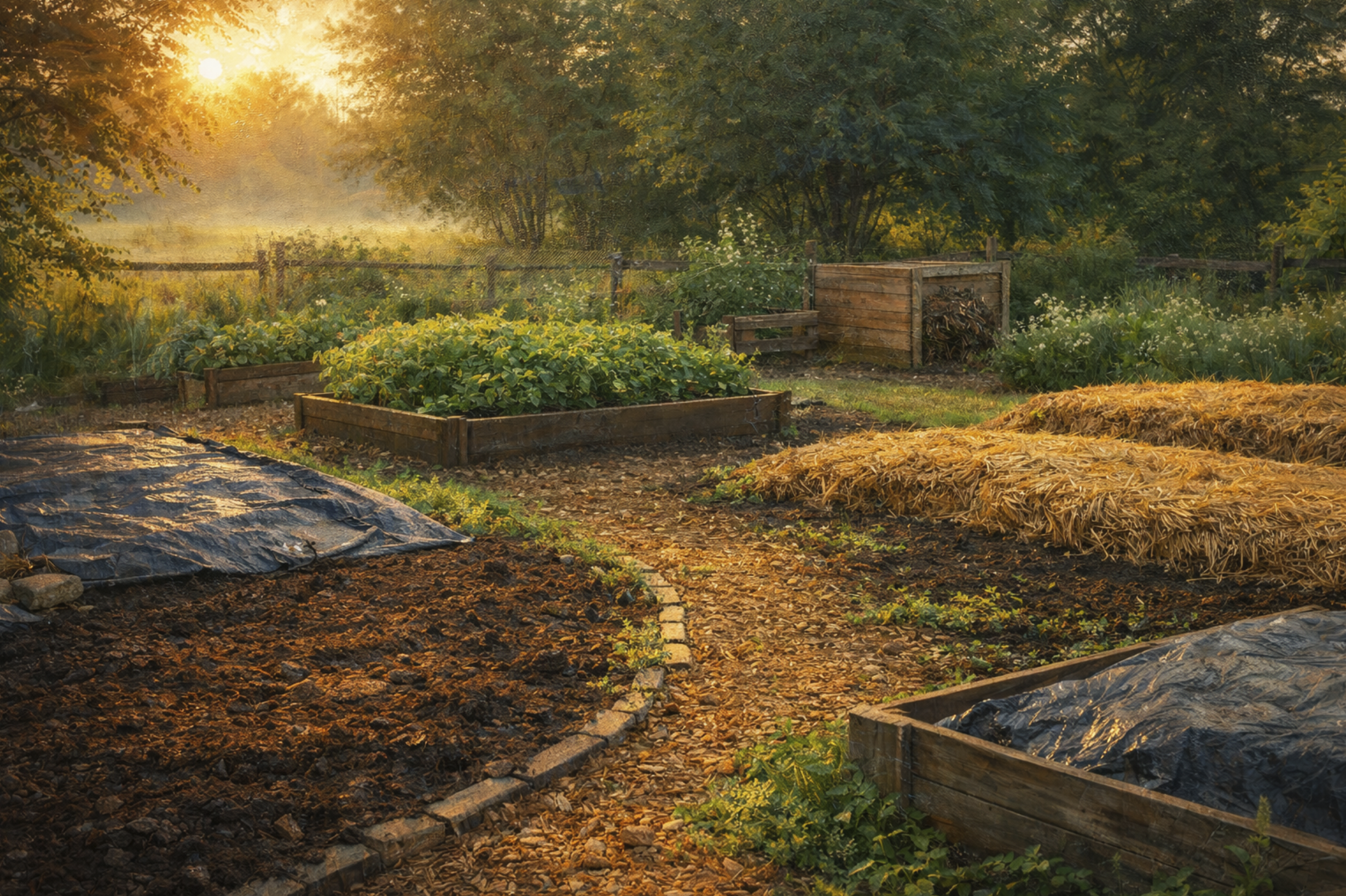
In the garden, this looks like soil that has been prepared but not planted. Beds that are shaped but left empty. Compost that has been turned and then allowed to rest. To someone unfamiliar with gardening, this feels inefficient. It can even feel irresponsible.
But gardeners know better.
Soil needs time to stabilize. Microbial life needs space to recover. Moisture needs to equalize. If seeds are planted too soon, they fail. If structure is imposed before readiness, life collapses under the weight.
This is hovering made visible.
At TNGP, this same posture governs how people are welcomed. Newcomers are not immediately assigned tasks. Leaders are not immediately recruited. No one is rushed into usefulness. People are allowed to be present in the space without being evaluated.
This alone exposes something deep for many executive directors. Most leaders have not experienced presence without expectation in years. Their value has been tied to output for so long that stillness feels threatening.
The garden quietly asks questions leaders rarely let surface:
What am I afraid will happen if I stop directing?
Where have I confused control with care?
What structures am I maintaining that were built too early?
Presence reveals whether leadership is rooted in trust or anxiety. The soil never lies.
2. Clarity Before Filling
What Sunlight, Spacing, and Honest Visibility Teach Us About Organizational Truth
“God said, ‘Let there be light.’”
Light does not add anything to the garden. It exposes what is already there.
In full sunlight, everything becomes visible. Areas that stay wet too long. Places where soil is compacted. Plants that are crowded. Pests that thrive in hidden corners.
You cannot fix what you cannot see.
At The Neighborhood Garden Project, nothing is hidden behind performative order. Empty beds are visible. Resting beds are obvious. Thriving areas and struggling areas exist side by side without explanation or excuse.
This visibility creates clarity without blame.
For nonprofit leaders, this can be deeply unsettling. Many organizations are structured to hide struggle. Busyness becomes camouflage. Over-programming becomes a way to avoid naming misalignment. Activity replaces honesty.
The garden does not allow that.
Standing in it, leaders begin to feel the weight of unasked questions:
Where am I filling space simply to avoid discomfort?
What areas of my organization are overcrowded and gasping for air?
What truths have been buried under constant motion?
Clarity does not come from more meetings or more metrics. It comes from light. Light reduces wasted energy because it removes the need to manage appearances.
In the garden, clarity feels like relief. You no longer have to pretend something is healthy if it is not. You simply respond to what is real.
3. Boundaries Before Expansion
Why Edges, Paths, and Limits Are the Difference Between Flourishing and Collapse
God gathers the waters so that land can appear. He creates edges.
In the garden, boundaries are unmistakable. Beds are defined. Paths are clear. Plants are spaced intentionally. Crops are rotated. Some areas are left untouched.
Without these boundaries, the garden does not flourish. Plants compete. Disease spreads. Nutrients are depleted. What looks abundant becomes fragile.
More growth does not equal more life.
At TNGP, boundaries are visible everywhere. Not everything is planted. Not every request is honored. Not every person stays. This is not because we are selective. It is because we are honest about capacity.
For leaders, this is often the most confronting movement. Many executive directors are operating without boundaries because they are afraid of what saying no might cost them. Funding. Approval. Relevance. Momentum.
Walking the garden brings different questions into the body:
Where have I expanded faster than our people can breathe?
Who is paying the hidden cost of our growth?
What am I afraid will collapse if I stop saying yes?
Boundaries are not barriers. They are containers that allow life to circulate instead of being drained. The healthiest parts of the garden are not the most crowded. They are the most balanced.
4. Rest Before Productivity
What Covered Beds and Fallow Space Reveal About Faith and Control
“There was evening, and there was morning.”
Rest is not a pause after creation. It is part of the pattern from the beginning.
In the garden, rest is visible. Beds are covered. Fields lie fallow. Growth pauses. This is not neglect. It is trust made tangible.
Covered soil holds moisture. Suppresses weeds. Rebuilds microbial life. What looks inactive is actually repairing itself.
At TNGP, rest is not hidden. You can see where nothing is happening. You can see seasons honored. You can see restraint practiced.
For nonprofit leaders, this is often where grief surfaces. Many organizations have never rested. Everything is always active. Every season looks the same. Exhaustion has been normalized and even spiritualized.
The garden does not rush to reassure. It simply asks:
What am I afraid will fall apart if I stop?
When did urgency replace discernment?
What parts of my organization are exhausted but still being extracted from?
Rest exposes where trust has been replaced by control. It also reveals how much unnecessary suffering leaders have been carrying.
Freed Up, Poured Out, Die Empty
What a Healthy Garden Does Without Being Told
In a healthy garden, nothing hoards because nothing has to. Nutrients move continuously through the system. What is taken up by one plant is released back into the soil through roots, leaves, stems, and eventually decay. Growth is never an endpoint. It is a phase in a larger cycle. Plants grow, they fruit, they release, and they return. Life is not possessed. It is participated in.
This is not idealism. It is observable reality. You can see it in compost breaking down. You can feel it in soil that becomes darker and more alive after a season of growth. What is received is always meant to move. When it stops moving, the system suffers.
No plant is anxious about the future because the system itself is trustworthy. A tomato plant does not cling to fruit in fear that next season may not come. A bed does not attempt to produce year-round to prove its worth. There is no stockpiling out of insecurity, no frantic extraction to guarantee tomorrow. Each season gives what it is designed to give, and then it releases.
This is where the phrase we use internally at The Neighborhood Garden Project comes from. Freed Up, Poured Out, Die Empty.
It is not a command we place on people. It is a description of what happens when life is aligned. When presence is honored, clarity is allowed, boundaries are respected, and rest is protected, capacity becomes available. People are freed up not because they have more control, but because they are no longer operating from fear. They are poured out not through overextension, but through right timing. They die empty not because they were depleted, but because they were faithful to the season they were given.
In the garden, giving does not lead to burnout because giving is never disconnected from replenishment. Cycles are completed. Growth gives way to rest. Rest makes room for renewal. The garden does not exhaust itself trying to be everything at once. It trusts the order of things.
What God designed for the here and now is not survival until some distant future, nor accumulation in case provision fails. It is faithful release in season. It is a willingness to spend what has been given when it is meant to be spent. A garden that dies empty does not leave loss behind. It leaves richness. The soil is deeper. The life beneath the surface is stronger. What comes next is better because what came before was fully given.
This is not only how gardens thrive. It is how people and organizations were meant to live.
Walking This Pattern at The Neighborhood Garden Project
This is not a framework applied after growth. It is the ground we stand on.
Presence before structure is felt in unassigned time.
Clarity before filling is seen in honest visibility.
Boundaries before expansion are marked by edges and paths.
Rest before productivity is visible in covered soil.
Any leader can walk this pattern immediately. No training is required because the garden does not operate on theory. No permission is needed because life does not wait for approval to grow.
This is not a framework you study first and apply later. It is something you step into and feel working on you in real time.
When a leader enters a living system like this garden, something begins to loosen almost immediately. The nervous system slows. The constant internal narration about what should be happening quiets down. The body recognizes what the mind has forgotten. This is what healthy growth feels like. Not rushed. Not frantic. Not forced.
In the garden, no one is asking you to perform leadership. No one is waiting for a decision. No one needs a solution from you. You are simply invited to notice.
You notice soil that is not being extracted from.
You notice beds that are intentionally empty.
You notice growth happening without your input.
You notice rest that is not justified or explained.
And slowly, often uncomfortably, a realization settles in. Much of what you have been carrying was never required.
Many executive directors arrive exhausted not because the work is wrong, but because they have been leading against the grain of life for too long. They have been overriding presence with urgency, clarity with activity, boundaries with accommodation, and rest with control.
The garden does not correct you. It does not confront you verbally. It simply keeps growing without your permission. And that is where the questions begin to surface, not as accusations, but as invitations.
What if I have been doing too much that life never asked for?
What if my exhaustion is not a badge of faithfulness, but a signal of misalignment?
What if the work could continue even if I slowed down?
What if trust produces more fruit than pressure ever did?
Sometimes the most faithful thing a leader can do is not push forward, but stop long enough to remember. Remember what it feels like to be part of a system where growth is not demanded, but allowed. Where boundaries are not defended, but assumed. Where rest is not earned, but expected.
The garden does not ask leaders to quit their work. It asks them to relearn how life actually grows so they can lead from alignment rather than anxiety.
When leaders leave this space, they often carry less certainty, but more clarity. Less urgency, but more trust. Less control, but more peace.
That is not accidental. That is formation.
And it is available now, not after another training, not after the next funding cycle, not after everything calms down.
Right now.