The Line Between Control and Life
What I Saw While Walking Through the Prairie
By Josh Singleton | Founder, serving as Lead Cultivator, The Neighborhood Garden Project
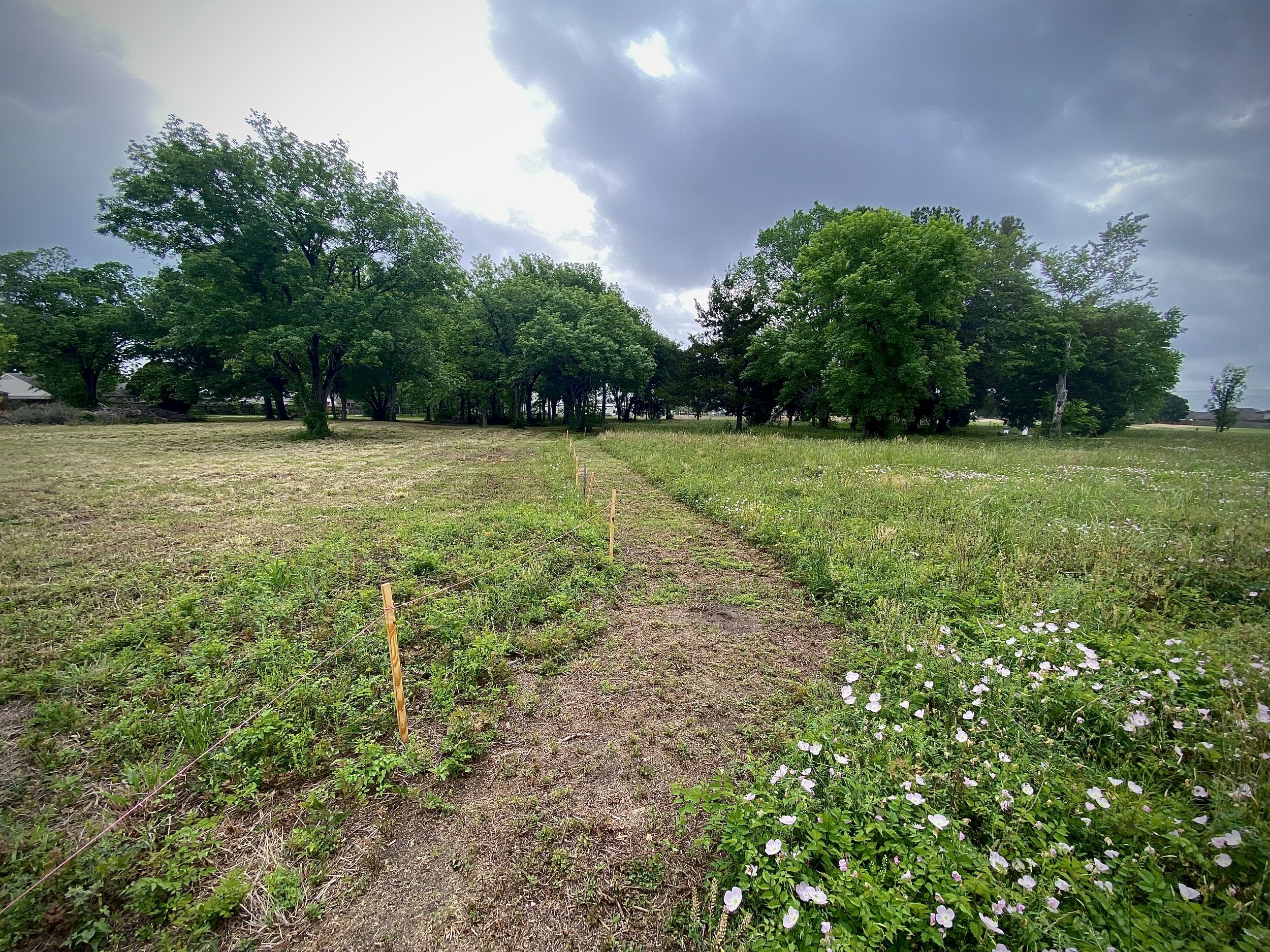
I was walking through the prairie.
There had been tension building.
Conversation around mowing more of the prairie.
Conversation around what it should look like.
Conversation around order, control, and expectations.
I wasn’t walking to find anything.
I was just walking.
And then I reached the edge.
On the left, the field had been mowed.
Uniform. Predictable. Controlled.
On the right, the prairie stood alive.
Wildflowers. Bees. Diversity. Movement.
And right down the middle…
a simple string line.
Two worlds, side by side.
And suddenly, it became clear.
This wasn’t just prairie versus mowed grass.
This was two ways of organizing life.
One Way Organizes Through Control
One side was uniform.
Predictable.
Managed.
Nothing looked wrong.
But something was missing.
Very little diversity.
Very little movement.
Very little emergence.
Everything was controlled.
Everything was consistent.
This is one way of organizing life.
It values:
Predictability
Uniformity
Efficiency
Appearance
Measurable outcomes
And there is nothing inherently wrong with this.
But when everything is controlled, something subtle happens.
Life has less room to emerge.
One Way Organizes Through Life
The prairie functioned differently.
Different plant heights.
Different bloom times.
Different insects.
Different movement.
Everything working together.
No central planner.
No management structure.
No meeting.
Just life responding to life.
Bees were pollinating.
Insects were cycling nutrients.
Animals were fertilizing soil.
Plants were stabilizing the ground.
Everything working.
Not because it was forced.
But because it was allowed.
This is another way of organizing life.
It doesn’t eliminate variability.
It depends on it.
It doesn’t force outcomes.
It cultivates conditions.
What I Saw Inside the Prairie
As I kept walking, I began noticing what was inside.
Bees covered in pollen.
Tiny insects working quietly.
Queen Anne’s lace offering dozens of landing pads.
Thistles protecting delicate growth.
Milkweed emerging.
Animal movement cycling nutrients.
Layer upon layer of life.
None of it forced.
None of it managed.
None of it engineered.
Just life responding to life.
And then I felt the weight of it.
Not just beauty.
Not just ecology.
Something deeper.
This wasn’t just a prairie.
This was a picture of how life itself can function.
And then, quietly, clearly, I sensed God say:
“This is what the world could look like, be like, function like.”
And everything settled.
Because the tension wasn’t really about mowing.
It was about two ways of organizing life.
The Paradox
The prairie didn’t appear because I did more.
It appeared because I did less.
I stopped mowing.
I created margin.
I cultivated the edges.
And life returned.
That’s the paradox.
The most powerful work often looks like doing nothing.
But it isn’t nothing.
It’s restraint.
It’s patience.
It’s trust.
It’s cultivation.
And when those conditions are present, life fills the center.
The Invitation
What if communities functioned like this?
What if leadership functioned like this?
What if culture functioned like this?
Not forced.
Not controlled.
Not engineered.
But alive.
I was just walking through the prairie.
But what I saw felt bigger than the prairie itself.
Two ways of organizing life.
Standing quietly beside one another.
And right down the middle…
a simple line.
Not a line of competition.
Not a line of right and wrong.
Just a quiet invitation.
And maybe, just maybe…
this is what the world could look like.