Six Weeks of Spears
Stored Sunlight, Human Limits, Community, and the Authority to Rest
By Josh Singleton | Founder, serving as Lead Cultivator, The Neighborhood Garden Project
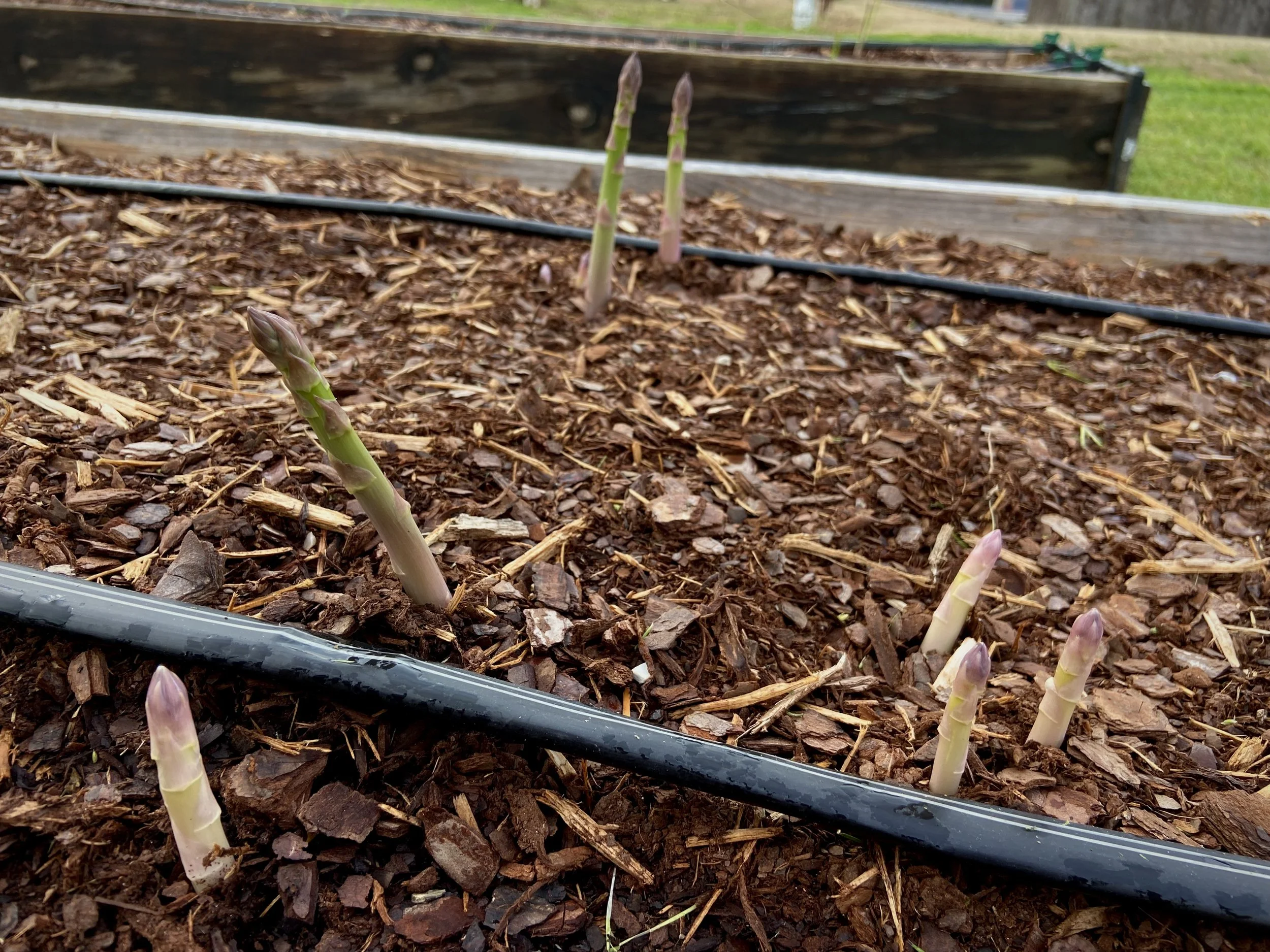
This is our fourth year harvesting from the same asparagus crowns we planted four years ago.
We remember placing those crowns into the soil. Bare roots. Fragile. Hidden. For the first three years, we barely touched them. We let them root. We let them build. We let them establish something underground that no one could see.
Now, in year four, every spring the asparagus erupts.
For about six weeks we harvest thick green spears that rise from soil that looked empty only days before. They are moist, pressurized, alive. We cut them, cook them, share them. The visible fruit feels immediate and generous.
Then we stop.
For the remaining forty-four weeks there are no spears. There are ferns in summer, tall and feathery, gathering light. There are golden stalks in fall. There is dormancy in winter. There is bare soil again.
Six weeks of visible return.
Forty-four weeks of invisible work.
And we do not complain about the process.
Because we planted the crowns. We have watched the years stack. We have seen what happens when the fern season is protected. We have seen what happens when harvest is restrained. Year four is stronger precisely because years one through three were honored.
The spears are not the work. They are the overflow of last year’s work.
When we harvest now, we are eating stored sunlight. The plant is not living off that morning’s rays. It is drawing from carbohydrates stored in the crown during last summer’s fern season. Those tall ferns that looked unproductive were actually solar panels. They were building this year’s harvest underground.
Spring is spending season.
Summer is charging season.
Fall is storage.
Winter is conservation.
If we harvest too long, the spears get thinner next year. If we keep cutting past the plant’s capacity, the crown weakens. Continuous output would eventually kill it. Rest is not optional. It is structural.
Clarity invites rest.
Asparagus knows exactly what it is. It does not attempt to spear year-round. It does not apologize for dormancy. It follows internal thresholds and environmental cues. It moves when conditions align. It stops when reserves thin. It rests when the season turns.
Unapologetically.
But asparagus is not alone in the garden.
While it rests in winter, other crops are growing. While it charges in summer, okra thrives. While it offers spears in spring, strawberries ripen. The garden does not depend on one plant producing constantly. Contribution rotates. Capacity overlaps. Strength is distributed.
The asparagus maximizes its role precisely because it does not try to be everything.
Its restraint protects its longevity. Its clarity strengthens the whole. Because it honors its rhythm, it can contribute for decades from the same crowns planted years ago.
Healthy community works the same way.
Not everyone produces at once. Not everyone rests at once. No single member carries the entire burden. Each contributes fully within their season and within their design.
Humans often try to be everything to everyone.
We are formed in systems where belonging is tied to usefulness. If we are needed, we feel secure. If we are indispensable, we feel safe. So we stretch wide. We become the steady one for everyone, the capable one for everyone, the strong one for everyone.
It feels generous. Sometimes it is. But often underneath it is fear.
Breadth without boundary drains reserves.
Depth within boundary builds them.
When a person gains clarity about who they are, they become capable. Reliable. Others lean. Demand increases. But clarity about purpose is not the same as clarity about capacity.
So they keep cutting spears.
They keep saying yes. They keep producing. They keep performing. Internally, reserves begin to thin.
It is true that humans burn fuel daily. Physical energy depletes. Emotional bandwidth drains. Cognitive focus wanes. But there are two kinds of fuel.
There is immediate fuel, food, sleep, daily rhythms. And there are structural reserves, identity clarity, nervous system stability, emotional security, spiritual grounding, deep relational roots.
Daily fuel keeps you moving. Structural reserves determine how strong you are over time.
When someone lives only on daily adrenaline without rebuilding structural reserves, they resemble an asparagus bed denied its fern season. They can keep producing for a while. But output thins. Joy narrows. Creativity fades. Patience shortens. Recovery takes longer each year.
The plant teaches something clean.
Stop harvesting when the spears thin.
For a human, thinning spears might look like work that once felt alive now feeling heavy. Conversations that once energized now draining. Ideas that once flowed now stalling. A subtle resentment forming beneath responsibility. These are not moral failures. They are feedback.
Nothing in a healthy ecosystem tries to be everything. Tomatoes do not try to be asparagus. Bees do not try to be soil microbes. Each organism has a defined role. Its power comes from specificity, not universality.
Trying to be everything to everyone is often anxiety-driven.
Being fully present for a few is alignment-driven.
The asparagus thrives in year four because it did not try to fruit in year one. It honored its establishment season. It honored its fern season. It honored its dormancy. It contributed fully when the time came, and it rested fully when the time passed.
Permission to rest does not come from culture. It comes from alignment with design. Plants do not apologize for dormancy. Soil does not defend its need for recovery.
We planted those crowns four years ago. We trusted a process that required patience. Now we harvest strength that was built quietly.
Six weeks of spears. Forty-four weeks of rooting.
The power is not in constant output. It is in protected reserves within a distributed community, built patiently over years.
The spears will come.
But only if the roots were allowed to deepen in peace, season after season, year after year.