Just Outside the Walls
Where abundance is forming while we keep asking for more
By Josh Singleton | Founder, serving as Lead Cultivator, The Neighborhood Garden Project
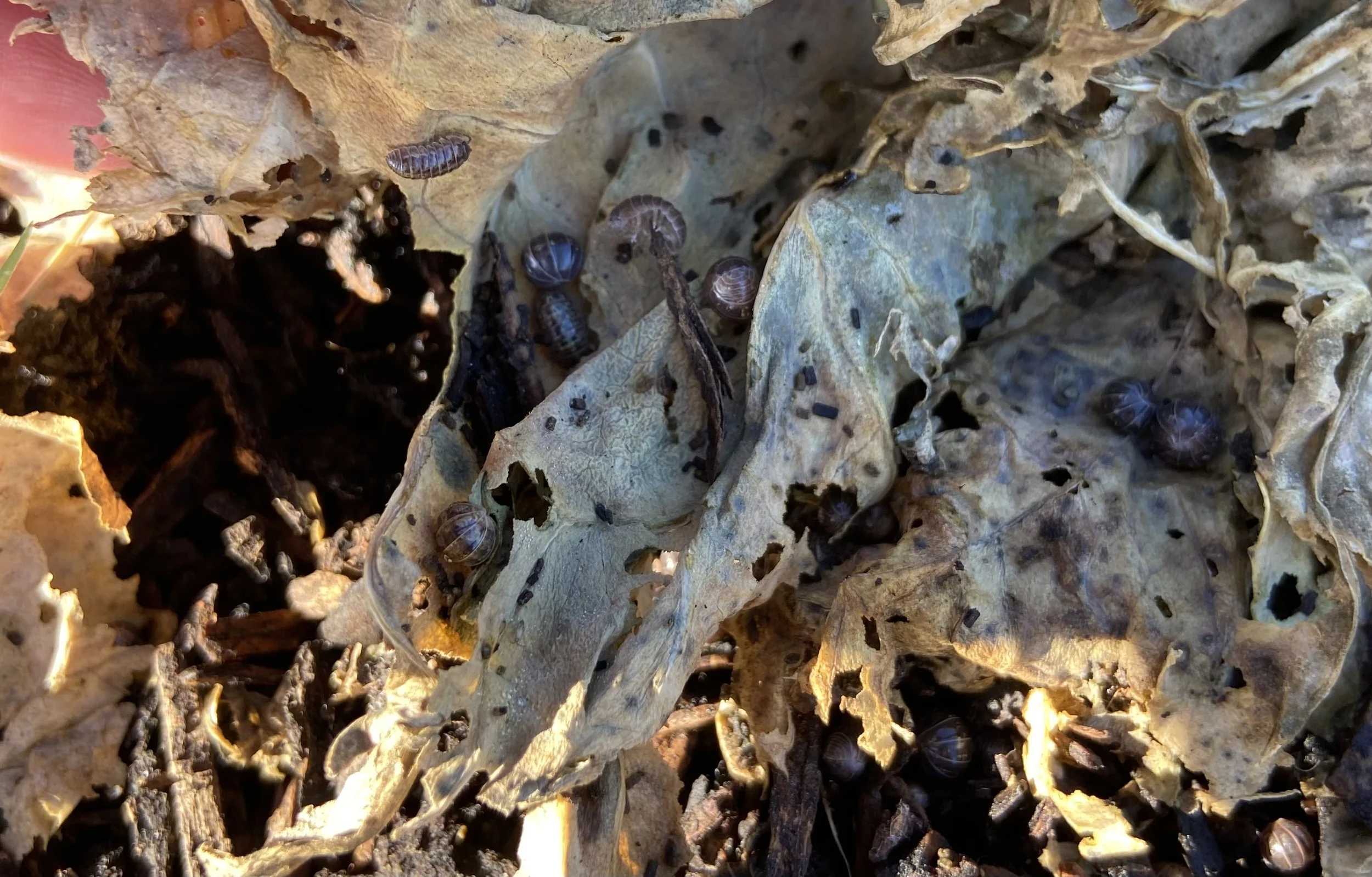
There was a moment in the garden that stopped me, not because something new happened, but because nothing was done. We left the residue. Old cauliflower leaves stayed where they fell. Roots stayed in the soil. Moisture stayed covered. There was no rush to clean the bed, no urgency to make it productive again, no impulse to improve what already existed. And in that restraint, life responded. Fungi moved in quietly. Pill bugs gathered in numbers that felt startling. Birds began moving through the beds with confidence and purpose. Nutrients started cycling. Structure began forming. The future was being prepared without instruction. The garden did not need help. It needed permission.
That sentence keeps returning to me because it exposes how deeply conditioned we are to intervene. We have learned to equate stewardship with action, responsibility with control, faithfulness with constant motion. If something looks unfinished, we assume it is failing. If something feels uncomfortable, we assume it must be fixed. But the garden reveals a different truth. Life is not fragile. It is responsive. It does not wait for us to manage it into existence. It waits for us to stop interrupting the processes that already know what to do. When interference ceases, coherence appears.
What strikes me most is the honesty of the garden. It does not exaggerate need. It does not perform scarcity. It does not manufacture urgency. It responds only to what is actually present. When decay exists, decomposers arrive. When movement concentrates, birds follow. When food diminishes, populations disperse. Nothing lingers beyond its purpose. Nothing overbuilds. Nothing insists on permanence. The system remains healthy precisely because it refuses false urgency and allows each phase to complete its work.
That honesty throws a sharp light on how we talk about needs, especially in church and nonprofit spaces. I hear it constantly. There are so many needs. Urgent needs. Expanding needs. Needs that require immediate mobilization, funding, staffing, and programming. The language itself creates momentum. But standing in the garden, watching how real need functions, a harder question begins to surface. If something must be constantly advertised, explained, and defended in order to survive, is it truly a need. Or is it a structure that no longer carries life on its own.
In the garden, real need carries its own signal. No one has to convince the pill bugs to show up. No one has to market protein availability to birds. No one has to sustain engagement through reminders, incentives, or guilt. When the condition exists, response happens. When it no longer exists, the response fades. There is no shame in departure. There is no panic when numbers drop. Resolution is allowed. Completion is trusted. The system does not confuse presence with permanence.
This is where the pattern in human systems becomes clearer and more uncomfortable. Often, the one naming the need is unwilling to be part of the solution. Not unwilling in a moral sense, but unwilling to enter the formation that resolution would require. They want relief without participation. And when we intervene too quickly simply because a need has been spoken, we unintentionally collude with that unwillingness. We absorb the cost. We carry the burden. We offload responsibility onto people and structures that were never meant to hold it.
Relief without participation does not resolve need. It displaces it. The pressure that should have invited ownership, adaptation, or change is removed. Formation is bypassed. Dependency is trained. The need becomes externalized and permanent, something that must always be met by someone else. In the garden, this kind of bypass never happens. No organism can outsource its own transformation. If a plant exhausts the soil, it cannot ask another species to regenerate on its behalf. It must change, rest, or decline. The system refuses rescue because rescue would interrupt growth.
This reframes the familiar phrase that there are many needs but few who are willing. The issue is not a shortage of helpers. It is a misunderstanding of what willingness reveals. In living systems, willingness is diagnostic. It tells us whether a need is real, ripe, and properly located. When no one gathers, the system does not escalate urgency. It listens. It allows absence to speak. Silence becomes information rather than a problem to fix.
Church and nonprofit culture often misreads this signal. We interpret the lack of willingness as apathy or failure, so we respond with more messaging, more urgency, more calls to action. Compassion becomes synonymous with immediate relief. But immediate relief, when detached from participation, often freezes people in place. It keeps them from engaging the very processes that would restore dignity, agency, and alignment. The system stays busy, but nothing resolves.
This is where the contrast with the church becomes difficult to ignore. Inside the building, people move through familiar rhythms. Songs are sung about abundance. Prayers are offered for provision, renewal, and transformation. Outside the walls, abundance is unlocking through restraint. Soil is forming. Food webs are stabilizing. Bodies are being fed, not metaphorically, but literally. The garden is doing theology without language. It is telling the truth without requiring agreement or explanation.
The tension is not that people gather inside. The tension is that institutional life has trained us to look past the places where provision often takes shape. Faith has been abstracted upward and inward, while incarnation continues downward and outward. We pray for movement while bypassing the conditions that allow movement to occur. We ask God to send what has already been placed within reach, waiting for permission rather than granting it.
The garden does not mobilize to meet every expressed need. It does not rush to fix discomfort. It does not reorganize itself to maintain relevance. If a condition is not present, nothing happens. And that may be the most uncomfortable lesson of all. Some things we call needs are actually signals of misalignment. Some demands persist only because resolving them would require letting something end. The garden will not respond to those. It cannot be coerced into sustaining what no longer belongs.
This has profound implications for funding and daily operations in mission-driven work. We often organize around anxiety, building systems that keep people busy responding to perceived shortages. But the garden suggests a different posture. What if provision does not respond to desperation, but to clarity. What if resources arrive not when urgency is amplified, but when interference is reduced. What if many of the things we strain to sustain are already trying to complete their cycle.
Restraint feels irresponsible in a culture trained to equate movement with value. It costs us the sense of importance that comes from fixing, managing, and rescuing. It asks us to wait long enough for truth to reveal itself. But restraint is not neglect. It is attentiveness without control. It is faith expressed through patience rather than pressure.
The garden did not need help. It needed permission. Permission for a phase to finish. Permission for organisms to arrive and leave. Permission for abundance to show itself without being claimed. That permission unlocked more life than any intervention could have produced.
Perhaps this is the invitation the garden is quietly offering to the church and to our organizations. Not to do less out of apathy, but to interfere less out of trust. To let what is real draw what it needs. To allow completion instead of constant mobilization. To believe that abundance is not something we manufacture, but something that responds when we finally stop getting in the way.
This is not a rejection of responsibility. It is a redefinition of faithfulness. And it is unfolding, patiently and honestly, just outside the walls.