Not Closing the Gate, Redirecting the Flow of Life
Three years of discernment between institutional rhythms and formational communities
By Josh Singleton | Founder, serving as Lead Cultivator, The Neighborhood Garden Project
Over the past three years, we have been narrowing. Not because we want to do less, but because we want to facilitate more life. This narrowing has not come from strategy meetings or long range planning. It has come from paying attention. Watching what is alive. Noticing what is not. And responding one aligning choice at a time.
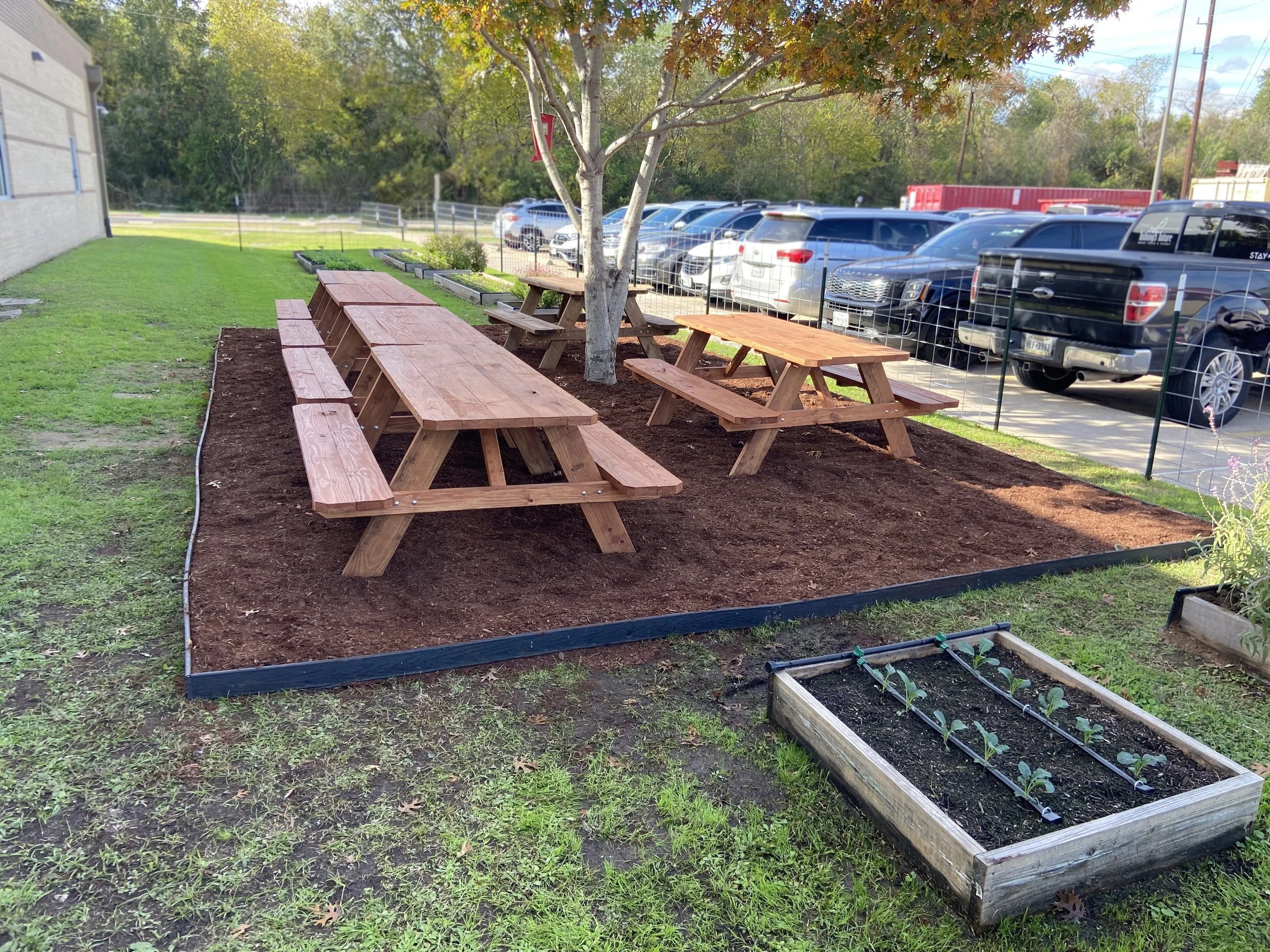
Recently, that narrowing led us to step away from two school gardens we built and maintained. On paper, this could look like contraction. In reality, it felt like alignment. After sending the emails to transition ownership, something unexpected happened. Our world got lighter.
That lightness revealed something deeper. A part of me had quietly died. Not dramatically. Not painfully. Just quietly. It was the part of me that used to fabricate life. The part that saw empty space and felt responsible to fill it. The part that created activity to make something appear alive. Over time, that way of thinking has slowly been dying, and with each aligning decision, something more honest has taken its place.
The Difference Between Activity and Life
There was a time when I saw potential and moved quickly. I saw opportunity and built. I saw empty space and made something happen. That posture helped get things started, and I am grateful for it. But over time, I began to see the difference between creating activity and responding to life.
Activity can be built.
Life has to emerge.
Once you begin to see that difference, it changes how you make decisions. You stop asking how to create movement and start asking where movement is already happening. You stop trying to manufacture outcomes and begin paying attention to what is forming naturally.
This shift is subtle, but it changes everything.
The Urgency of Letting Go
Formational communities must respond to life. That means they must also respond to the absence of life. And that requires something that can feel uncomfortable at first. Urgency.
Not urgency to build.
Urgency to let go.
Dead activity quietly drains formation. It pulls attention, energy, and stewardship away from what is actually alive. It creates the illusion of impact while quietly preventing deeper growth elsewhere.
This is why letting go matters. And not just eventually. Promptly.
Because the longer we hold onto what is not alive, the longer we delay investing in what is.
Formational communities must remain responsive. Not rigid. Not committed to structures simply because they exist. But attentive, flexible, and willing to release when life is not forming.
Letting go is not failure.
Letting go is stewardship.
When Programs Mask Dead Space
Programs can create activity. They can create attendance, schedules, photos, and metrics. But they do not necessarily create ownership, return, relationship, or formation. Programs fill silence. But silence tells the truth.
When there are no programs, you begin to see what is actually alive. You begin to see who returns. You begin to see who cares. And sometimes, you begin to see that nothing is moving at all.
This is what happened with the school gardens. Without programs, the space remained mostly quiet. And that quiet brought clarity. Not frustration. Not disappointment. Just clarity.
One garden showed very little relational movement. The other showed more movement, but it had already shifted into institutional stewardship. A teacher had taken ownership. Maintenance crews were maintaining walkways. The rhythm had formed without us.
In both cases, the role we once held was no longer needed.
And once that became clear, the faithful response was not to hold on. It was to let go.
Institutional Rhythms and Formational Communities
This experience clarified something else. There is a difference between institutional rhythms and formational communities.
Schools operate within institutional rhythms. They have schedules, security, designated ownership, and structured participation. These rhythms are necessary for institutions to function. But formational communities operate differently. They grow through presence, proximity, voluntary return, and shared ownership over time.
Neither is right or wrong. They are simply different.
Over time, it became clear that the school gardens were functioning within institutional rhythms, not formational ones. And that realization brought freedom.
Because our larger community gardens already exist in close proximity to these schools. We are not closing the gate. We are redirecting the flow of life. Students, teachers, and families still have access. The invitation remains open. The opportunity is still there. But instead of forcing formation inside institutional structures, we are allowing formation to happen where it naturally grows.
Life Multiplies Where It Is Allowed
At the same time we were discerning the school gardens, something else was happening.
At our Emmanuel location, we stopped mowing a small prairie area. There were no programs. No recruitment. No structured effort. Just observation, patience, and restraint.
What began as roughly half an acre slowly expanded.
Half an acre became one acre.
One acre became two.
Two acres became 3.15 acres.
Life multiplied.
Purple vervain returned.
Asters appeared.
Dewberries spread.
Native grasses strengthened.
Pollinators increased.
We weren’t doing more.
We were doing less.
We weren’t creating life.
We were allowing it.
This contrast clarified everything.
At the school gardens, we were building and maintaining, and little life formed.
At Emmanuel, we stepped back, and life expanded six fold.
Life multiplies when you stop forcing it.
Entrusting What Was Built
Stepping away from the school gardens was not abandonment. It was entrusting.
We built the beds. Installed irrigation. Created infrastructure. Made space. And then we stepped back. Sometimes the most faithful thing you can do is get out of the way. Either life emerges, or it does not. Both outcomes are helpful.
This is what it looks like to move from building to stewarding, and eventually, to entrusting.
This decision did not happen quickly. It unfolded slowly over three years of watching, listening, and paying attention. We weren’t reacting to a moment. We were responding to a pattern.
Over time, it became clear where life was forming and where it was not. And once that clarity emerged, the faithful response was not to hold on longer. It was to let go.
And when we did, something unexpected happened. Things became lighter.
Not because we were doing less, but because we were carrying less that was not ours to carry. This is one of the quiet gifts of formation. When you begin responding to life instead of fabricating it, unnecessary weight begins to fall away.
A part of me had quietly died along the way. Not dramatically. Not painfully. Just quietly. It was the part that once felt responsible to create life. The part that filled empty space simply because it was empty. The part that believed movement had to be manufactured.
Over time, that way of thinking began to fade. And something more honest took its place.
Because narrowing is not about doing less. It is about removing what is not alive so you can fully invest in what is.
This is why formational communities must remain responsive. They must be willing to let go, and sometimes with urgency. Dead activity quietly drains formation. It pulls energy away from what is alive. It creates the illusion of movement while slowing real growth.
Letting go is not failure.
Letting go is stewardship.
And often, the most faithful decisions are not the ones where we build more, but the ones where we release what is no longer alive.
Not closing the gate.
But redirecting the flow of life.