Leaves Without Fruit
What plant science reveals about fruit, overflow, and the quiet warning behind a fruitless life
By Josh Singleton | Founder, serving as Lead Cultivator, The Neighborhood Garden Project
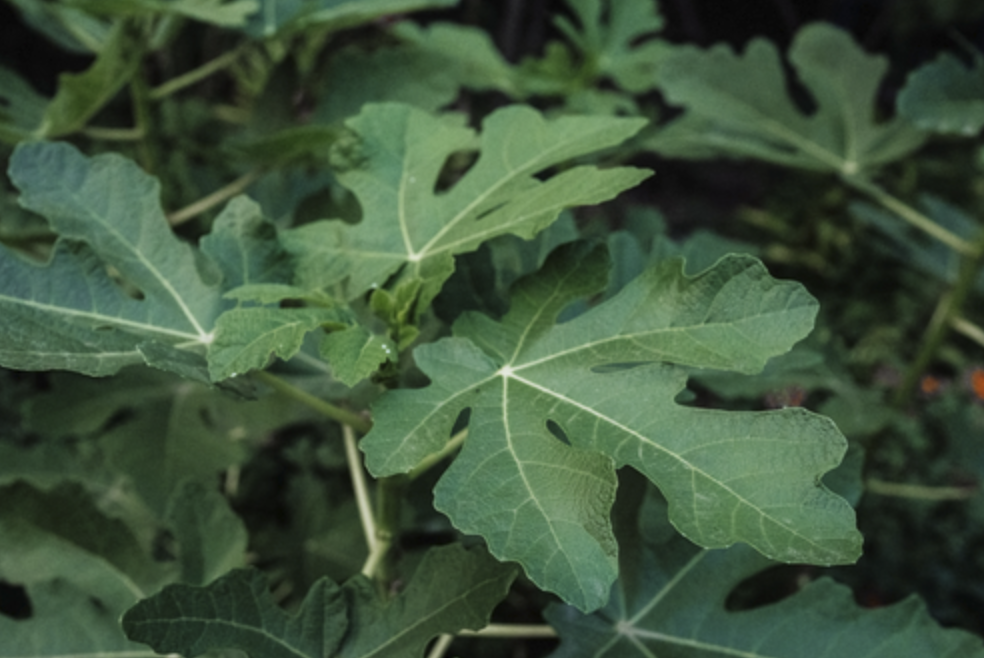
Plants operate with remarkable honesty. They cannot pretend. They cannot perform. They simply respond to the conditions around them and the resources available within them. Because of this, plant biology often reveals patterns about life that are both simple and profound.
One of the most basic distinctions in plant science is the difference between vegetative growth and reproductive growth. Vegetative growth refers to the production of leaves, stems, and structural expansion. Reproductive growth refers to the production of flowers and fruit. Both processes require energy, but they occur under different internal and environmental conditions.
When a plant has access to abundant nitrogen in the soil, it typically invests that energy into vegetative growth. Nitrogen is a primary driver of leaf and stem development. With high nitrogen availability, plants grow lush foliage, expand their canopy, and appear vibrant and vigorous. Gardeners often see this when fertilizers are too nitrogen heavy or when soils are overly rich in nitrogen sources. Leaves enlarge, stems stretch, and the plant becomes visually impressive.
But fruit often does not appear.
This is because fruit production requires something different than leaf production. For a plant to move from vegetative growth into reproductive growth, several conditions must come into balance. The root system must be established enough to support the plant’s energy needs. Nutrients must shift toward phosphorus and potassium rather than being dominated by nitrogen. The plant must receive the correct light cycles and seasonal cues. Pollination must occur. Most importantly, the plant must accumulate enough energy reserves to move beyond survival and structural growth.
Fruit production is costly for the plant.
Producing fruit requires energy that could otherwise remain in the leaves or stems. A plant only enters this stage when it has gathered more life than it needs for itself. When its internal systems are balanced and strong, the plant begins to direct that excess life outward.
Fruit is overflow.
And fruit is not designed primarily for the plant itself. In biological terms, fruit is a distribution system. It is the plant’s strategy for spreading seeds and multiplying life beyond its own location. The sugars and nutrients in fruit attract birds, mammals, insects, and humans. These creatures consume the fruit and carry the seeds elsewhere, allowing new life to emerge in new places. Fruit feeds the surrounding ecosystem while simultaneously extending the life of the plant into the future.
But when a plant’s internal system is out of balance, vegetative growth can continue indefinitely without fruit ever appearing. Leaves can continue expanding. The plant can continue looking vigorous. Yet the deeper purpose of the plant is never fulfilled.
The plant looks alive, but it is not reproducing life.
This is not a small detail within an ecosystem. When fruit fails to appear, the effects ripple outward.
Birds that depend on fruit for seasonal food lose a source of nourishment. Insects that rely on flowers and fruiting structures lose habitat and nutrition. Animals that depend on fruiting plants for energy during migration or breeding seasons are forced to travel farther or compete more intensely for food. Seeds that would normally disperse into new locations never move outward, meaning new plants never emerge in surrounding soil.
A fruitless plant does not just affect itself. It interrupts the entire web of life around it.
The ecosystem becomes poorer because the overflow never arrived.
This creates a deeper question that gardeners understand well. When a fruit tree never produces fruit, does the failure reflect the design of the tree or the conditions surrounding it?
The answer is almost always the same.
The design is not the problem.
Something in the environment is misaligned.
The soil may be unbalanced.
The roots may be restricted.
Nutrients may be skewed toward leaf production rather than reproductive growth.
Pollination may be missing.
Stress may be preventing the plant from moving beyond survival.
The absence of fruit rarely points to a flaw in the designer. It usually reveals that the system surrounding the plant is no longer supporting the plant’s original design.
This biological reality sits quietly behind one of the more puzzling moments recorded in the Gospel of Mark.
Seeing in the distance a fig tree in leaf, he went to find out if it had any fruit.
When he reached it, he found nothing but leaves.
— Mark 11:13
For those unfamiliar with fig ecology, the moment can seem confusing. The passage even notes that it was not the main season for figs. But people in that region understood something important about fig trees. Figs often produce small early fruit before or alongside the leaves. When a fig tree displays a canopy of leaves, it signals that early figs should be present.
The leaves are the announcement that fruit should exist.
So when Jesus approached the tree, the leaves were signaling something that was not actually there.
The tree appeared productive from a distance. But up close it was only producing leaves.
Immediately after this moment, Jesus enters the Temple and overturns the tables of the money changers. The two scenes are intentionally placed together in the narrative. The fig tree becomes a living illustration of what was happening within the religious system.
The Temple had leaves.
It had structure, ritual, authority, and constant religious activity. From the outside the system looked vibrant and alive. But when people came looking for the fruit of God’s kingdom—mercy, justice, restoration, and access to God—the fruit was largely missing.
The leaves were there.
The fruit was not.
The irony is difficult to ignore. The very communities teaching about righteousness had built systems that produced leaves instead of fruit. The warnings about fruit were spoken regularly, yet the systems themselves had become environments that produced appearance rather than overflow.
And just like in the natural ecosystem, the cost of that misalignment was not limited to the system itself.
When fruit disappears, communities go hungry.
People searching for mercy encounter performance instead.
People searching for restoration encounter structure.
People searching for belonging encounter hierarchy.
People searching for life encounter leaves.
The ecosystem around the system begins to weaken.
Jesus had already explained the principle clearly in the Gospel of Matthew.
You will recognize them by their fruit.
— Matthew 7:16
Recognition is not based on language, knowledge, or activity. Those things can produce leaves. The true indicator of life is fruit.
Fruit is the outward expression of healthy internal life.
Fruit appears when roots are established, resources are balanced, and the life within something becomes abundant enough to overflow beyond itself.
And fruit never exists for the plant alone.
Fruit feeds the life around it. It nourishes the ecosystem. It carries seeds into new places where life can begin again.
The soil repeats this pattern every season.
Leaves are easy to grow.
Fruit only appears when life within a system becomes aligned, healthy, and abundant enough to give something away.
When that alignment disappears, the cost is rarely visible at first. Leaves can remain for a long time. Structures can remain impressive. Activity can continue.
But the ecosystem slowly begins to starve.
The soil never forgets that pattern.
And neither does the Kingdom.