December 2025 Newsletter
Reflection of 2025…
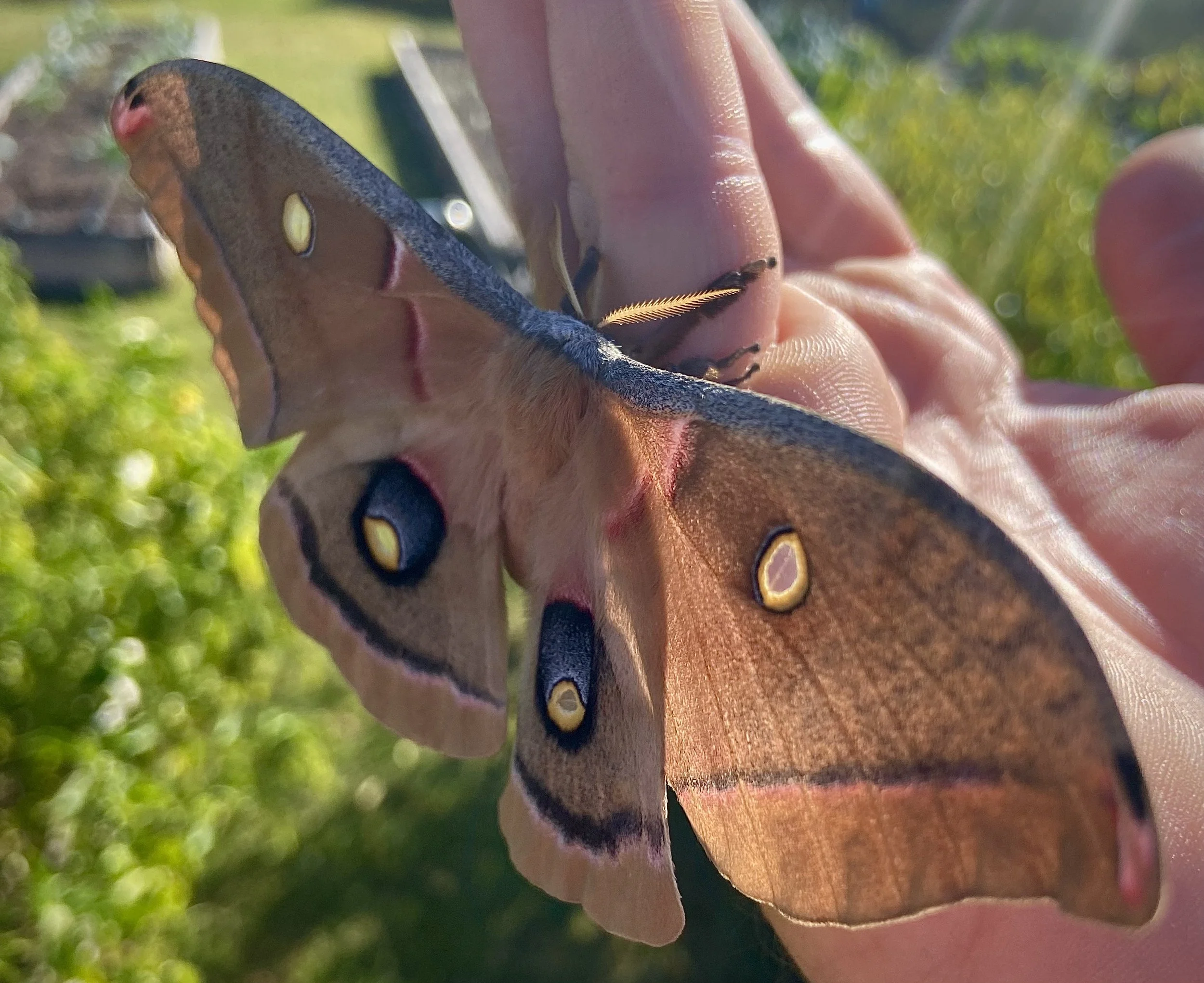
This year has felt like tending soil that has been forming long before we arrived. Nothing rushed. Nothing forced. Every month brought a new layer to the surface. Places in us that still needed alignment. People who were ready to take a small but real step into becoming. Plots that needed time to rest before they could carry more life. If there is a single word for 2025, it is rooted.
The Neighborhood Garden Project grows through presence, not pressure. The work slows us down enough to notice who God is sending. It shows us who is simply passing through and who is willing to stay. It teaches us to invest in the few who return instead of chasing the many who do not. It keeps us grounded within the boundaries of our assignment. As the year unfolded, our filters sharpened our vision and our soil grew deeper. The assignment God entrusted to us has become clearer.
We witnessed garden plots rest under tarps and learned again that rest is preparation. We witnessed people return week after week with stories they did not yet know how to articulate. We witnessed veterans and co-stewards settle into rhythms that brought peace back into their lives. We witnessed curious neighbors discover that a garden plot holds something more than vegetables. We witnessed kids running down the paths between plots with joy. We witnessed the soil speak, and every time it did, it confirmed what God has been building from the inside out.
We also experienced new clarity about what belongs in our hands and what does not. There were no major doors that closed this year. Nothing felt like loss. Instead, God expanded our team in both number and depth. We grew from one to three, with others being cultivated even though they are not officially part of the team yet. That growth created margin inside the work. With margin came clearer eyes. Conversations sharpened our realm. Discernment grew. What was ours to carry and what was not became easy to see. Nothing was removed. God simply revealed the path that was already there.
Through it all, God’s hand remained steady. Many days were quiet. Many moments were hidden. But hidden soil is where the Kingdom grows best.
Looking Ahead to 2026
We are not entering the new year in a hurry. We are entering it like gardeners who understand what God does with rested soil. Slow. Steady. Present. The foundations for growth are healthy. The rhythms are clear. The work ahead feels less like expansion and more like rising.
If 2025 was rooted, 2026 will rise as Jesus described the Kingdom. Yeast placed in dough. Quiet. Unseen. Working its way through everything until the whole dough is transformed. Not loud. Not forceful. Not striving. Simply rooted.
This is the rise we anticipate…
More clarity. Our rhythms continue to narrow. We know what to carry and what to release.
New stewards. Seeds have been forming in people who have walked with us. They are ready for deeper responsibility and deeper becoming.
A stronger Board. Wisdom and unity are forming. We are ready to build on the foundation God has aligned.
A visible rise in what has been hidden. Rested soil never stays hidden. Tarped plots look still until the moment they are uncovered. Then life moves.
More stories. Real stories. Stories of formation and rest. Stories shaped by God’s presence in simple, faithful soil work.
Most of all, we anticipate joy. Joy is the natural fruit of alignment. When the work comes from rest, and the rhythm comes from God, the harvest is joy.
We are grateful. For every co-steward who returned. For every prayer whispered in a plot. For every child who planted a seed and watched life emerge. For every person who stayed long enough to become different than when they arrived. We are grateful for the trials that have shaped, clarified, and strengthened our roots. We are thankful for those who contributed the resources they have been entrusted with, trusting the work and believing in what God is cultivating here. Every gift, every presence, and every act of faith has become part of the roots beneath us.
Thank you for walking with us through a year of rooting. Thank you for trusting the slow way.
The soil is rested.
The yeast is in the dough.
God is already ahead of us.
2026 will rise in His timing, and when it does, we will see the fruit together.
Meet a Family of the Garden…
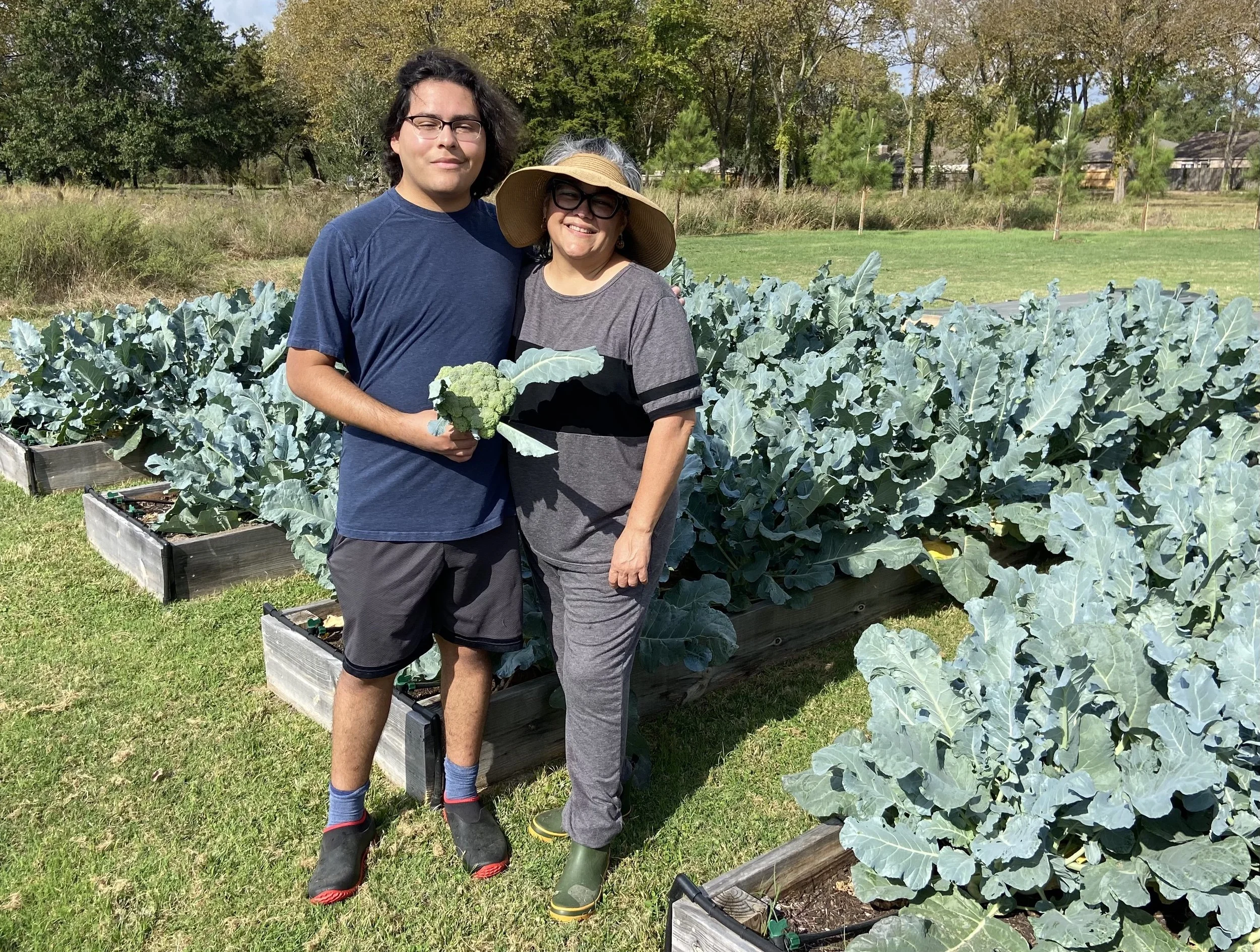
Gardening wasn’t initially a hobby for Reece and Alma Soto; despite their love for it, their journey with nature first began out of necessity.
August 2017 marked the month Hurricane Harvey hit the Houston area. Like many families, the Soto family was displaced, without a home for over eight months. The damage was especially present in their backyard – grass destroyed, soil littered with debris. To this day, they still find shards of glass! Disheartened, Reece and Alma realized it was a blessing in disguise: this was their opportunity to truly give their backyard some much-needed TLC and turn it into the garden they had always dreamed of.
They learned a lot over the years as they gardened, becoming more aware of the plants, the life that exists around them. Thanks to one of their neighbors who also gardens, Reece and Alma learned about The Neighborhood Garden Project.
It wasn’t just the gardens themselves that drew Reece and Alma to want to learn and participate; it was the community and what they learned both about nature and themselves. Each visit taught them something new, and they both love seeing the parallels that exist between us as people and nature.
In the same way seeds rest, waiting for their moment to grow, Reece and Alma realized that they, too, had seeds in their life that were now starting to sprout. For them, it's been about learning to cultivate areas in their life that nature is revealing to them every day.
Wildlife is Returning

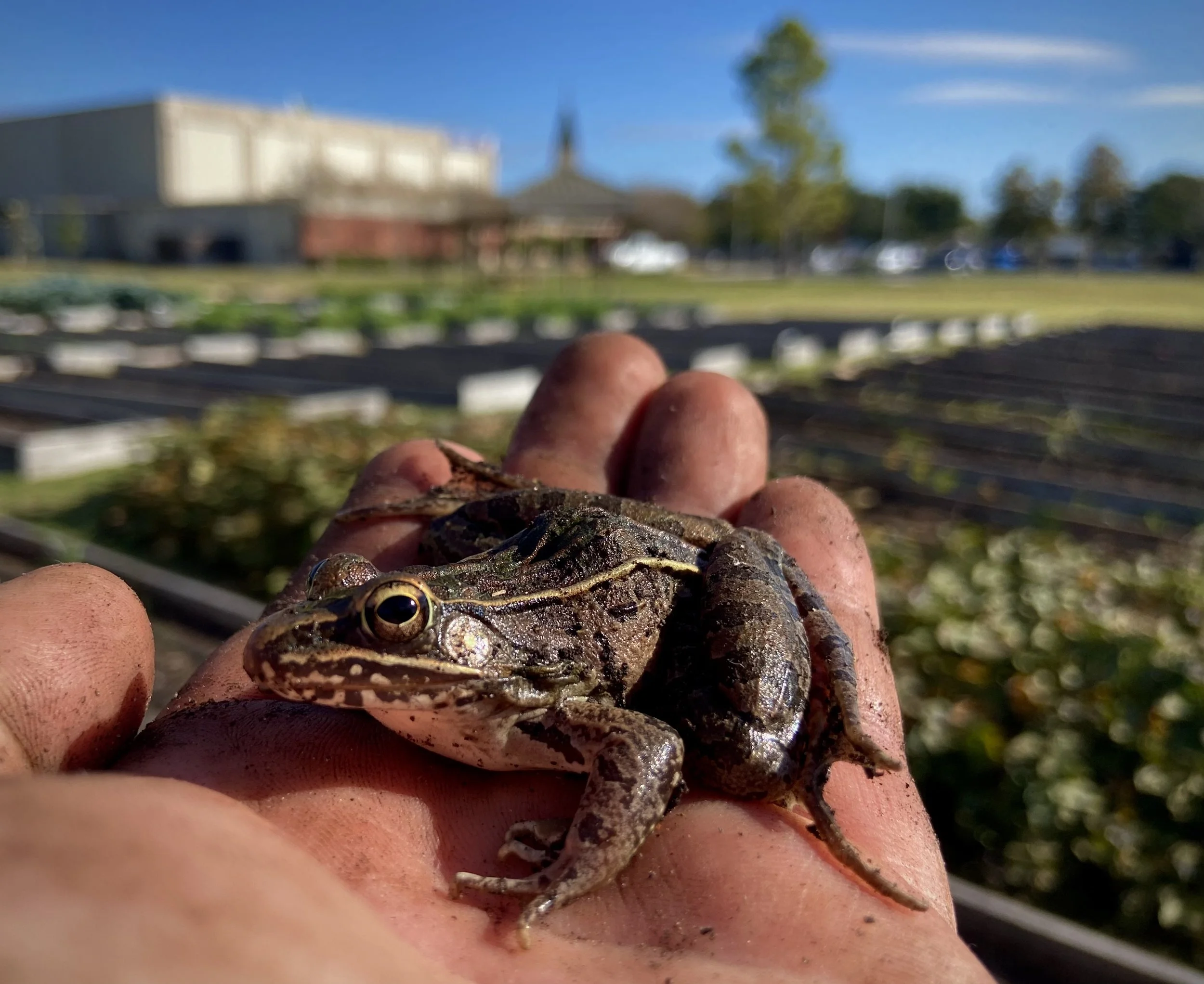
Life is returning to the second garden location, and it’s doing so quietly, almost shyly, the way something long-hidden emerges only when it finally feels safe again. We are not forcing a garden here. We are partnering with the land, agreeing with it, and asking a different kind of question. Not “What do you want to be?” but “What have you always been?” The land is not trying to become something new. It is remembering itself. It is recovering what time, pressure, and misuse tried to bury.
The small field mouse tucked into the corner of the garden bed is part of that remembering. Its presence says more than we ever could. Creatures only settle into corners like that when the land is no longer tense, when the soil begins to soften, when habitat forms again. It’s a sign that the ecosystem is stitching itself back together. A mouse doesn’t linger in a place that feels unstable or disrupted. It steps out only when human presence shifts from threat to alignment. Its wide eyes in the garden bed tell us, “The land is breathing again.”
And then the frog — resting in my hands, dirt on both of us, like two creatures shaped by the same story. Frogs only appear where the water is clean, where chemicals aren’t leaching through roots, where the micro-world below the soil is alive and functioning. A frog showing up in the raised beds is an ecological testimony. It tells me the soil is waking up. It tells me the water is healthy. It tells me the land recognizes us as a friend, not a taker. Amphibians are truth-tellers. They only return when the land has healed enough to sustain delicate life.
This is what happens when we steward instead of control, when we show up slowly, listen deeply, and let the land speak first. What we our seeing is not new possibility — it is ancient design resurfacing. The land is revealing what it has held within itself all along: seedbanks waiting for the right moment, pollinators searching for corridors, small creatures seeking refuge. These early arrivals are the prophets of restoration. They show up before the eye sees transformation and long before the structures look complete. They arrive because the atmosphere has shifted from extraction to agreement.
What’s unfolding here is not random wildlife. It is the land trusting again. It is creation responding to someone who moves at the pace of design, not the pace of demand. The raised beds may draw visitors, but it is the quiet edges — the corner of the garden bed, the soil, the prairie, the hidden places — where the real story is unfolding. The land is stepping out of hiding, not becoming something new but revealing what it has carried all along. Now that it feels safe, it is finally coming out again.
Broccoli: A Harvest That Arrives Right on Time
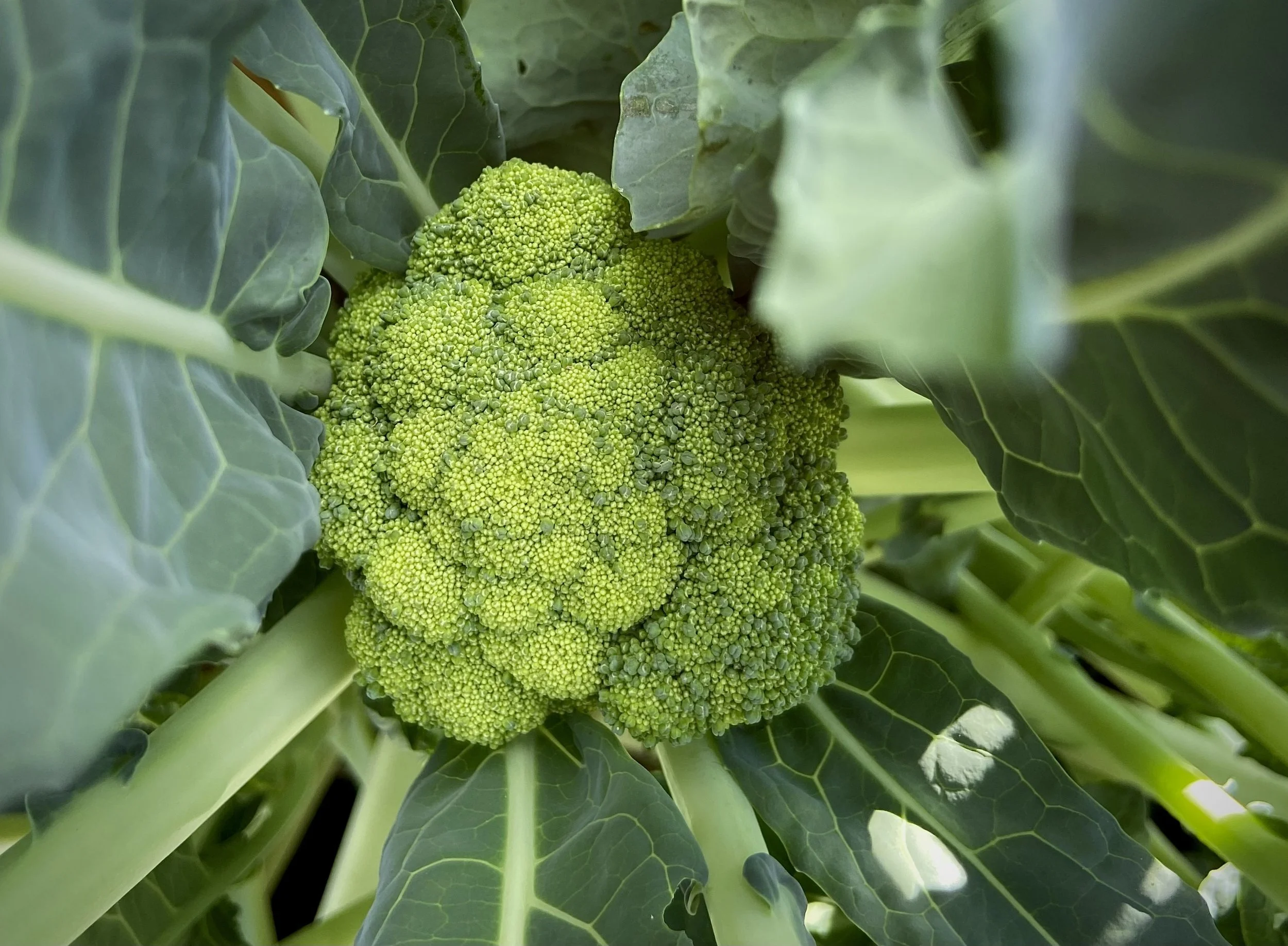
Broccoli is one of the quiet anchors of our fall garden. We put it in the ground in early September, long before most people are thinking about Thanksgiving. The heat is still heavy, the soil is warm, and everything feels like summer, but this is when broccoli begins its slow and steady work. The plants settle their roots, stretch out their leaves, and wait for the cooler nights that signal their season. By late November, the heads tighten and the florets firm up. What began in the heat becomes ready just in time for the Thanksgiving feast beside carrots and turnips. Broccoli grows patiently, hidden under broad leaves, and then almost overnight, it offers itself.
Growing broccoli close to home also brings quiet environmental strength. Most grocery store broccoli has been shipped across long distances, handled by cooling systems and packaging to keep it alive for the journey. When broccoli is harvested from the garden and taken only a short car ride home, the transportation cost becomes almost nothing. It also serves our land. As part of the brassica family, it supports soil structure and invites beneficial insects, becoming part of a living system instead of an isolated crop. It is harvested fresh, without preservatives or chemicals to make it travel well. What comes from our soil is simple, clean, and true to how it was grown.
Fresh broccoli is one of the most nourishing foods God designed. It carries vitamin C for immunity, vitamin K for strength, folate for healthy growth, and fiber for steady digestion and blood sugar. It also contains antioxidants that reduce inflammation and help the body cleanse. These nutrients start to fade the moment broccoli is picked. When it is grown locally and eaten soon after harvest, the body receives the fullness of what God placed in it.
Thanksgiving brings the whole rhythm together. A plate with broccoli, carrots, and turnips is not just food. It is the story of a season. Seeds planted in early September. Leaves grown through heat, rain, and cold fronts. Soil tended by co-stewards, garden managers, children, and neighbors. All of it moving quietly toward the day families gather. Local broccoli tastes different because it carries relationship. It grows in the same soil where people have breathed, healed, laughed, and become different than when they arrived. It reminds us that food is not separate from formation. God feeds us through the same ground He uses to shape us.