The Gardener Still Returns
Stewarding the conditions without possessing the outcome
By Josh Singleton | Founder, serving as Lead Cultivator, The Neighborhood Garden Project
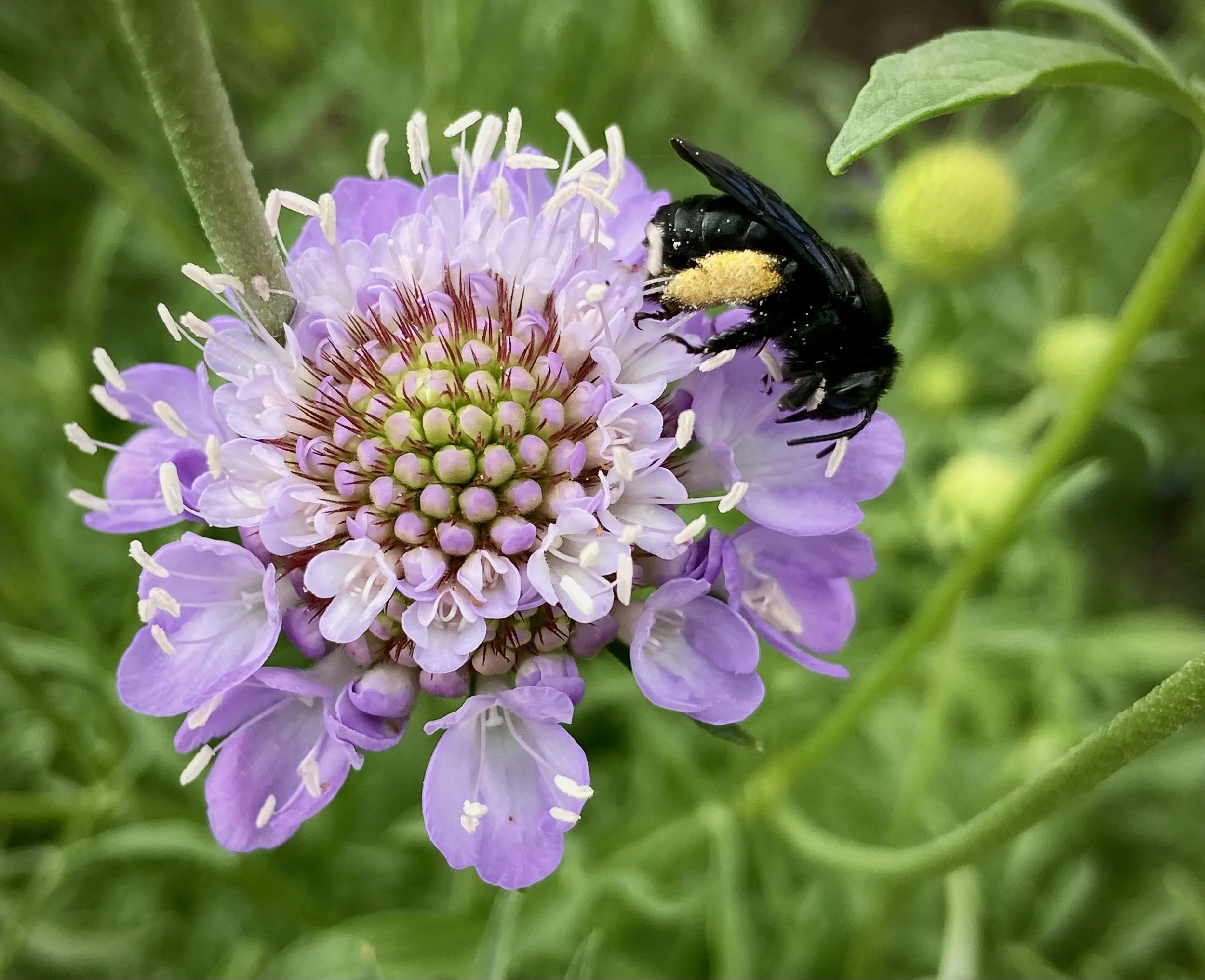
Gardens have a way of making responsibility feel obvious.
A plant wilts, so we water it. A tomato branch grows heavy, so we support it. Soil becomes compacted, so we cover it. Something begins eating the leaves, so we pay attention. There is work to do, and much of it matters.
But spend enough time in a garden and another truth begins to emerge: not everything happening there belongs to you.
You can prepare the soil, plant the seed, make water available, pay attention to sunlight and seasons, and notice when something is struggling. You can become remarkably good at creating conditions in which a plant is likely to flourish. But you cannot make a seed germinate. You cannot command a root to grow. You cannot determine what the season will bring.
The gardener has tremendous responsibility for the conditions surrounding life and remarkably little authority over what life ultimately does with them.
That boundary may be one of the clearest pictures of stewardship we have.
Steward the conditions. Surrender the outcome.
I am beginning to wonder how much of what we call responsibility is actually an attempt to control outcomes that were never ours to control.
We do this almost instinctively. If something matters to us, we want it to work. If someone has been entrusted to us, we want them to flourish. If someone depends upon us, we want them to be okay. Those desires aren't necessarily unhealthy. In many ways, they reveal that we care. The trouble begins when care quietly becomes responsibility for producing a particular result.
We learn to recognize good leadership by a growing organization, good parenting by successful children, good teaching by successful students, good nonprofit work by measurable impact, and good gardening by the harvest. Without realizing it, the outcome becomes evidence that we stewarded well.
And when the outcome doesn't arrive, we assume something went wrong.
Sometimes it did. Stewardship requires enough honesty to recognize when we neglected something entrusted to us or helped create conditions that were unhealthy. Surrender cannot become an excuse for poor stewardship.
But sometimes the conditions were faithfully tended and the outcome was simply never ours.
Stewardship is responsibility without possession of the outcome.
That distinction matters because surrender can easily sound like disengagement. If the outcome isn't mine, why care so much? Why return tomorrow? Why pay such close attention if I ultimately cannot determine what will happen?
The garden answers almost immediately.
A gardener cannot scatter seed onto compacted ground, refuse to water it, ignore it for three months, and call whatever happens surrender. Soil matters. Water matters. Sunlight matters. Timing matters. Observation matters. Our participation matters. Surrender does not remove responsibility; it brings responsibility into clearer focus.
My responsibility is not to guarantee the harvest. My responsibility is to observe honestly, understand what I have, cultivate healthy conditions, respond to what emerges, and participate faithfully in what has actually been entrusted to me.
Strangely, releasing the outcome doesn't make me less invested.
It makes me more attentive.
Last month, I wrote about a question that has increasingly shaped the way I see the world: What do we have?
Before assuming something is missing, look. Before building something new, observe. Before solving the problem, understand what is already present. Land carries history. People carry knowledge. Neighborhoods carry relationships. Organizations carry capacities. Families carry stories. Even places that appear empty are already participating in systems much older and more complicated than our plans for them.
Once we begin seeing what is actually here, another question naturally follows: What, among all of this, is mine to tend?
Receiving something does not give us authority over its future. Something can genuinely be entrusted to our care without becoming ours to control. Something can be ours to tend for a season without becoming ours to preserve forever.
For a long time, I thought cultivation mostly meant doing more. Build the beds. Improve the soil. Install irrigation. Plant more. Create better systems. Expand what works. Sometimes that is exactly what tending requires.
But the soil has slowly taught me that sometimes tending means doing less.
Sometimes the soil needs to remain covered rather than disturbed again. Sometimes a plant needs another week before we decide something is wrong. Sometimes an insect needs to be observed before it is eliminated. Sometimes the most faithful response to what we see is restraint.
Restraint is not indifference. To leave something alone thoughtfully, I first have to see it. I have to stay close enough to recognize the difference between something that needs intervention and something that simply needs time. That kind of restraint requires attention, perhaps even more attention than intervention does.
But the garden is not where this becomes most important.
People are.
Everywhere we go, we participate in the conditions of other people's lives.
We are parents and children, spouses and friends, neighbors and coworkers. We lead in some places and follow in others. We teach, serve, hire, volunteer, give advice, make decisions, participate in organizations, help people we love, and receive help ourselves. In almost every role we occupy, our presence contributes to the conditions around another person.
The questions we ask matter. The assumptions we carry matter. Whether someone is trusted matters. Whether there is room to fail matters. Whether someone is listened to before being corrected matters. Whether their abilities are noticed matters. Whether participation is genuinely invited matters. Whether expectations are clear matters.
These are conditions, although most of us probably aren't thinking about them that way.
We have inherited another way of seeing.
When we encounter a problem, a person, an organization, or a community, we tend to begin with some version of: Where should this go? Then we work backward. We identify the desired outcome, notice the gap between here and there, and create the strategy, program, curriculum, intervention, incentive, measurement, or process intended to close it.
This way of thinking is so normal that the alternative can feel almost irresponsible.
Imagine creating genuinely healthy conditions around another person—safety, trust, appropriate boundaries, meaningful participation, curiosity—and then allowing enough room for them to discover, respond, struggle, change direction, and perhaps arrive somewhere you didn't anticipate.
That can feel risky because we want to know where this is going.
Programs help us feel like we do.
Programs are not the problem. Structure can be useful. Curriculum can be useful. Strategy can be useful. Boundaries, expectations, and shared practices can be extraordinarily important. The question is what they are serving.
A curriculum can provide structure for learning, but it cannot make someone curious. A leadership program can offer tools, but it cannot make someone courageous. A community initiative can create opportunities for relationship, but it cannot make people belong. A parenting strategy can establish boundaries, but it cannot determine who a child becomes. A garden program can put someone beside soil, but it cannot make them care about it.
Perhaps we have learned to trust programs more readily than conditions because programs give us something living systems rarely do: the feeling that we know where this is going.
I recognize this pattern so easily because I have done it.
When we already know the outcome we want, observation can easily become evaluation. Listening can become diagnosis. Questions can become ways of leading someone toward an answer we already hold. Participation can be welcomed as long as it moves in the direction we imagined.
We can become so committed to someone's flourishing that we leave very little room for them to participate in what flourishing actually means.
We stop cultivating conditions around a person and begin trying to direct the person.
Cultivation begins somewhere else. It begins with the assumption that life is already present.
A person does not arrive empty, waiting for us to supply what is missing. They arrive carrying history, relationships, knowledge, abilities, wounds, questions, instincts, hopes, culture, memory, and experiences we may know very little about.
So perhaps the first work of cultivation is observation.
Who is actually here? What do they already carry? What are they noticing that I am not? Where is life already emerging? What conditions are helping that life become visible, and what conditions may be suppressing it?
Those questions require us to remain curious longer than may feel comfortable. They leave open the possibility that the person in front of us may not need what we assumed they needed. They also leave open the possibility that their participation may take us somewhere we did not anticipate.
And perhaps most difficult of all, they require us to leave room for discovery.
Not abandonment. Not "figure it out yourself." Cultivation stays close.
A good gardener observes, responds, protects what is vulnerable, provides support when it is needed, changes unhealthy conditions, and waits when waiting is appropriate. Cultivating conditions around people can require the same kind of presence: enough safety for someone to tell the truth, enough trust to risk participation, enough freedom to make meaningful choices, enough boundaries for those choices to matter, and enough relationship that discovery doesn't have to happen alone.
Cultivating conditions does not mean refusing to recognize what is healthy or harmful. A gardener still recognizes compacted soil, disease, drought, or something consuming a plant. Around people, we still tell the truth, establish boundaries, challenge what is harmful, and respond when the conditions themselves need to change. Surrendering control of another person's outcome does not require surrendering discernment.
And then we resist stealing the discovery from them.
Giving someone the answer is often faster. Telling someone what flourishing looks like is cleaner. Creating a pathway toward a predetermined destination is easier to measure. Discovery requires time, uncertainty, relationship, observation, and the humility to accept that someone may discover something we did not anticipate.
Maybe our obsession with outcomes reveals more than how much we value results.
Maybe it reveals how uncomfortable we have become with emergence.
Living things emerge. They respond. They adapt. They surprise us. Sometimes they struggle in conditions we thought were healthy. Sometimes they flourish somewhere we didn't expect. Sometimes they need something we didn't know to provide.
People are living beings.
This changes the question from How do I get this person where I believe they need to go? to What conditions am I helping create around this person while I am here?
That question travels almost everywhere because our lives continually intersect with the lives of others. Sometimes we participate in another person's conditions for decades. Sometimes only for a season. Sometimes it is one conversation.
We may have genuine responsibility within that moment without having responsibility for the person's entire story.
A teacher may tend something for one year. A leader for three. A neighbor for a season. A friend through a difficult chapter. A stranger may create a moment of dignity and never know what came from it.
Something can genuinely be ours to tend without being ours to possess.
Recognizing that boundary does not diminish responsibility. It heightens it.
If I cannot judge my stewardship only by the outcome, I have to look much more honestly at my participation. Was I paying attention? Did I listen before acting? Did I make room for participation? Did I tell the truth? Did I create safety where I could? Did I challenge when necessary? Did I allow agency? Did I respond to what was actually happening rather than what I wanted to be happening?
I own those things.
I own the decisions I make and the conditions those decisions help create. I own whether I observe carefully or move too quickly. I own whether I listen before assuming. I own whether I remain curious when something develops differently than I expected.
What I do not own is what another person ultimately does with any of it.
Accepting that boundary does not leave me asking, Then what's the point?
It does the opposite.
When I stop spending so much energy trying to secure a particular outcome, I become more available to what is actually happening. I can listen without immediately deciding what needs to be done. I can become interested in another person's response rather than threatened when it differs from mine. I can notice when the conditions need to change without assuming I have authority to determine exactly what should emerge from them.
Surrender does not pull us away from people. It allows us to become more present to them.
Less ownership of the outcome creates greater ownership of our participation.
The gardener has been quietly demonstrating this all along. The gardener still returns tomorrow. Still observes. Still learns. Still waters when water is needed. Still protects something vulnerable. Still changes the conditions when the signals call for it. The gardener does not become less engaged after accepting the limits of control.
The gardener becomes more attentive to what is actually theirs to tend.
Maybe this is stewardship in its right proportion: taking enormous responsibility for what has actually been entrusted to us while surrendering what was never ours to control.
We can care deeply without possessing. We can guide without deciding another person's destination. We can create healthy conditions without demanding a particular response. We can give people room to discover without abandoning them to discovery alone. We can release an outcome without releasing our responsibility.
And tomorrow, the gardener still returns.
Not because everything depends upon the gardener, and not because the gardener knows exactly what will grow.
The gardener returns because this moment is theirs to tend.
And life is worth tending.