The Edges of the Garden
Where resistance softens, and new generations take root in grace
By Josh Singleton | Founder and Lead Cultivator, The Neighborhood Garden Project
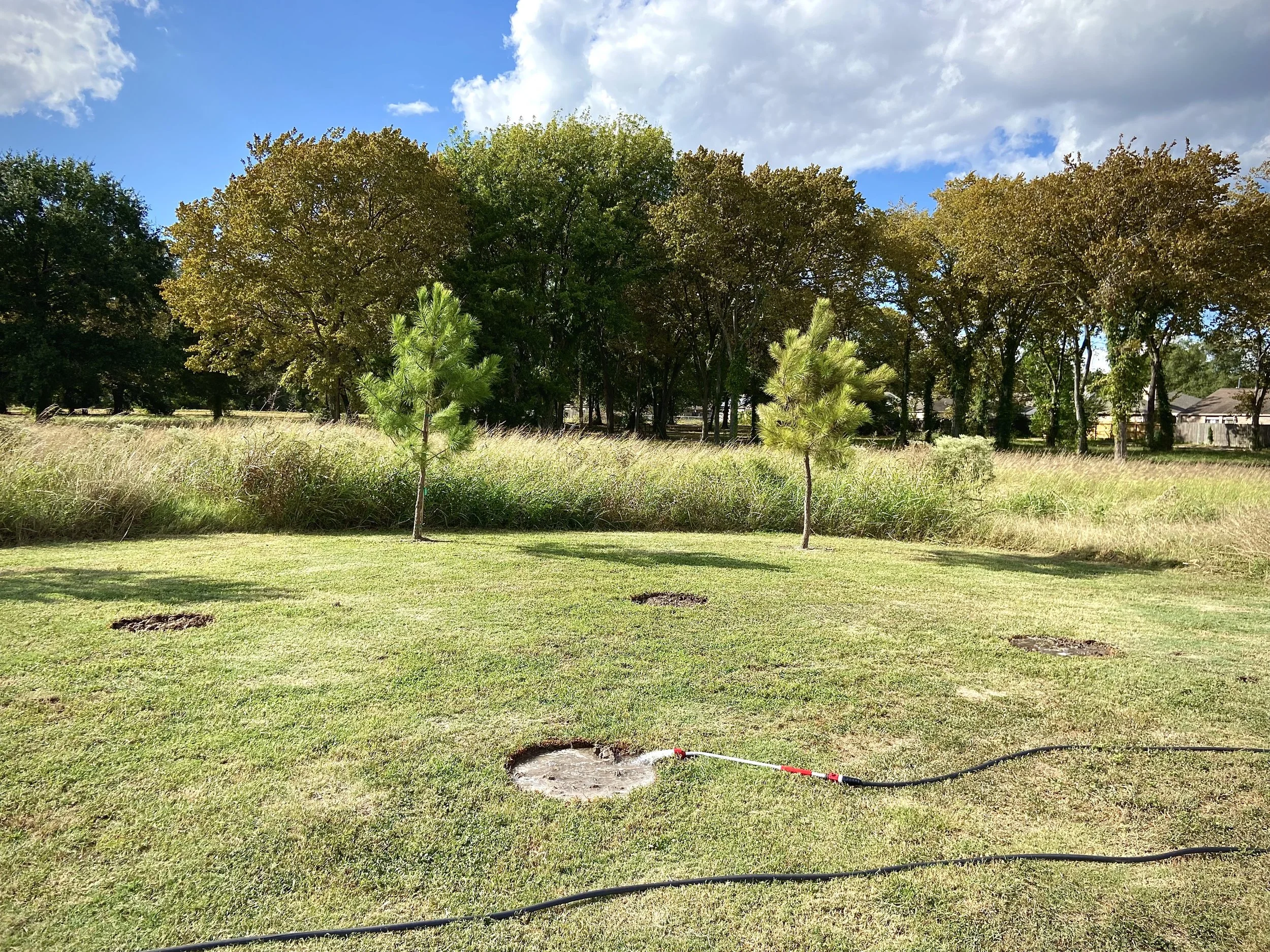
After months without rain, the soil around the garden turned to stone. What began as simple preparation for planting became something deeper — a moment of formation hidden in the work. The earth, the shovel, even the runoff all had something to say. God was teaching through resistance, revealing that love, like water, needs prepared ground to truly be received.
This past May, a group of Eagle Scouts planted the first young pines — straight, steady, and full of promise. Their fathers and leaders stood nearby, guiding them toward excellence, helping shape boys into men who finish what they start.
Now, the next set of trees will be planted by residents of the Harris County Leadership Academy — boys the same age, yet walking a different path. Many have grown up without steady male figures, their lives marked more by absence than guidance. Here, they’re being patiently led and supported by county staff who have chosen to invest their time and care in helping these young men take root and grow.
Before the residents from the Harris County Leadership Academy arrive to plant tomorrow, the ground had to be prepared. It hasn’t rained in what feels like months, and the soil was like concrete — resistant, unyielding, unwilling to give way easily. The work wasn’t about digging holes yet, but gently breaking the surface — just the top few inches — to create space where water could gather instead of flow off. The act was simple but intentional, forming small basins of mercy for an outpouring that could finally soak in.
As I stood there, shovel in hand, I couldn’t help but sense that this moment had been arranged — not by chance, but by love. It felt as though heaven had paused the rain on purpose, preparing both the soil and our hearts for what’s to come. The dryness wasn’t delay; it was alignment. God was inviting us — me and the boys who will plant tomorrow — to glimpse His way of preparing before He pours. What once looked like resistance now feels like revelation, a gentle reminder that His timing is always for formation, never for lack.
As I worked the shovel, I began to see differently. The hardened ground became more than dirt — it was a reflection of the hearts of these boys, thirsty since the day they entered the world. Each clang of metal against earth sent a reverberation through me, echoing the ache of hearts long deprived of tenderness.
When I first poured water on the surface, it ran off — flowing in its own laws, just as it was created to do. It moved downhill, honoring its design. And there I was, asking the water to change for me instead of recognizing what it was revealing in me. I wanted it to soak in without the slow work of preparation. The soil, in its honesty, exposed my own lack of formation. The problem wasn’t with the water or the soil — it was with my readiness. Creation was simply doing what it was made to do, inviting me to step into the same kind of obedience.
I used the spade shovel from the beginning, knowing the flat-end shovel would never achieve the results needed to hold water. The ground gave way to the shovel — the right shovel. The flat end of a square-point shovel leaves indentations and more scars, but a long, spaded shovel cuts clean and deep, creating channels for water to flow without tearing the soil apart. It’s the difference between force and formation — between blunt effort and the kind of love that goes beneath the surface.
That’s how God works, too. As our true Cultivator, He brings along those who carry the right tools — the right spirit, the right posture — to help hearts open. Not every tool belongs in every season, and we must learn to resist those who come swinging with edges sharpened by ego instead of love. The ground knows the difference, and so do hearts.
With each careful press, the water found new pathways downward, and what was once resistant began to receive. I realized how often we try to impart life-giving water without first preparing the soil — how often we speak truth or offer love without taking time to till the heart that’s meant to receive it. In our effort to keep life convenient, we often avoid the slow, uncomfortable work of walking with people through real transformation. What we call love in those moments isn’t really love at all — it’s a space we create to feel good about ourselves, a pat on the back that leaves the ground untouched. Flowing water looks generous, but it never soaks in. True love breaks the surface; it costs us comfort and convenience, but it’s the only love that brings lasting change.
Tomorrow, when the boys arrive, I’ll think of this — how God always prepares before He pours. His love is not rushed or careless; it’s precise, patient, and deeply relational. He doesn’t just want to place trees in the ground. He wants to soften the soil of hearts that have been hardened by life, to make space where living water can finally settle in.
The act of planting will be simple, but the meaning flows deep. Each tree will stand as a witness — not just to the work of our hands, but to the quiet preparation of a Father who still believes every heart can receive what He’s been pouring out all along.
Because God doesn’t measure worth by what we’ve achieved or by the damage we’ve caused. His love doesn’t fluctuate with performance or diminish in the absence of guidance. He looks deeper — into the intrinsic glory He placed within us from the beginning. The soil recognizes it. Creation welcomes it. Heaven still calls it good.
The edges of the garden will one day be shaded by tall pines, but the greater growth is already underway — in the hearts of the boys who will plant them, and in the God who never stopped seeing who they truly are. Here, at the edges, we are cultivating a place for generations to come — meeting future sons and daughters in spirit today, who we may never meet in person, but who will one day find rest in the shade of what is being planted now. We’re moving through our hardships and walking away from ambition to build a future that will outlive us — one rooted in presence, patience, and love strong enough to last generations.