Curiosity Is the Mechanism for Growth
Recovering the Childlike Way of Being Human
By Josh Singleton | Vision and Lead Cultivator, The Neighborhood Garden Project
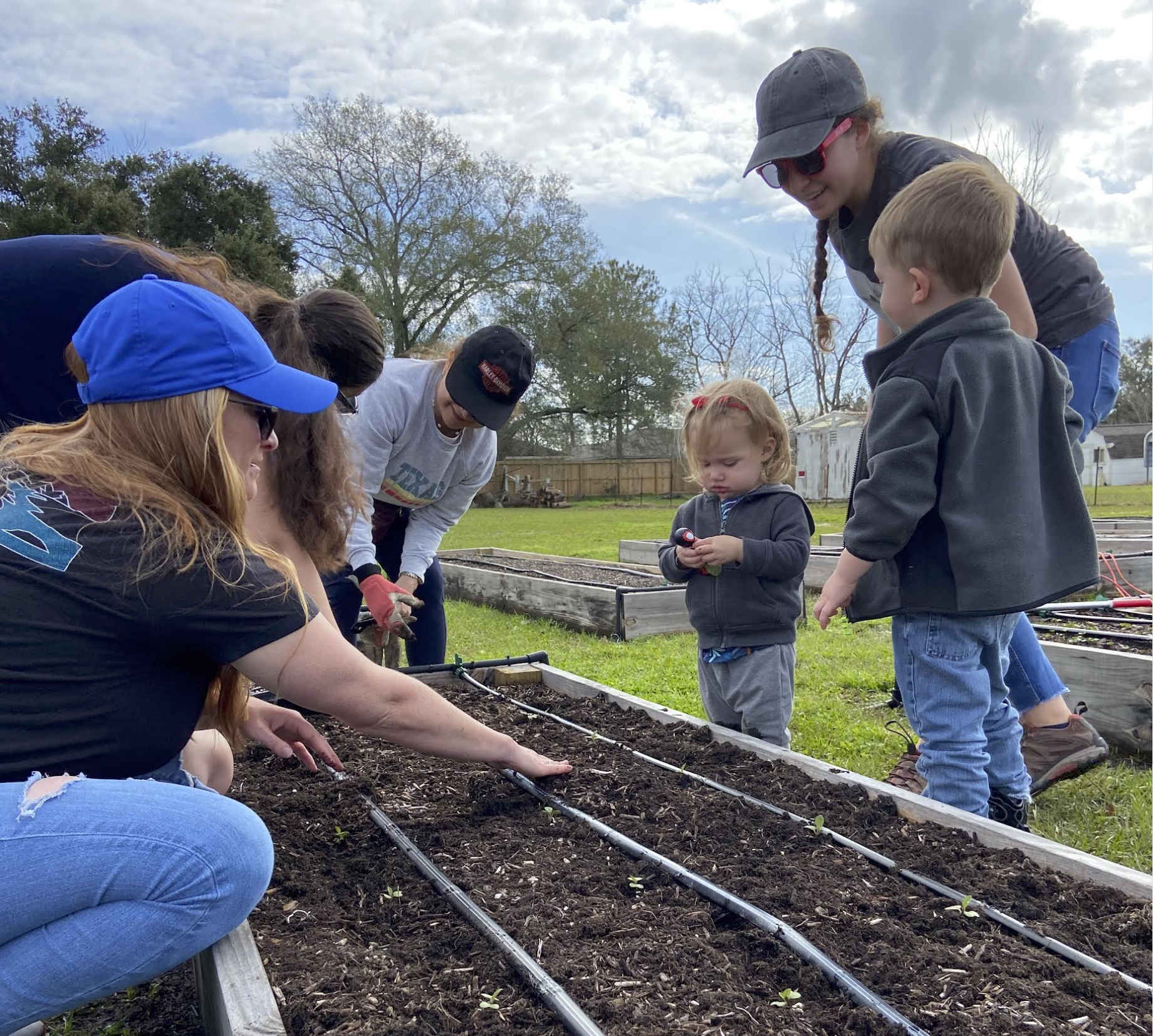
Most people imagine the garden as a place for plants to grow. But the longer we walk these rows, the more we see that the garden is a place for people to grow. Not through pressure or instruction, but through something far older and far more natural. Curiosity is the mechanism for growth in every living thing. It is how a seed pushes through the soil. It is how roots find water. It is how birds learn to fly and how children learn to walk. Curiosity is motion toward becoming.
This is the starting point of The Neighborhood Garden Project. It is also why we do not offer programming for any age. Programming may feel helpful, but it conditions people to wait for someone else to structure their growth. It trains them to look outward for direction rather than inward for willingness. The world has already shaped them that way. Work schedules, school systems, and cultural expectations have taught them that structure equals safety. Without a plan or a task list, most adults feel lost. Autonomy feels unstable because they have never been given the space to trust it.
Exploration has even become something of a luxury in our culture. People think they need plane tickets, time off, or expensive experiences in order to wonder again. We have turned curiosity into an event rather than a lifestyle. In the process, we have forgotten the wonder of the small things. We walk past beauty every day and do not see it. A beautiful life is already happening all around us, no matter where we stand. We do not need to go far to find it. We simply need to recover the part of ourselves that knows how to look.
So when someone steps into the garden for the first time, you can feel the tension in their body. They look for the next instruction. They wait for someone to tell them what to do. They wonder if they are doing it right. It is not because they are unwilling. It is because they have forgotten how to be human. And to be human, in God’s design, is to be childlike.
A child does not separate learning from living. A child does not need permission to explore. A child does not fear curiosity. A child does not perform to be accepted. They follow what captures their attention. They touch what is in front of them. They move without overthinking. They trust what God placed inside them. This is what it means to be human. This is the way we were created to engage the world.
But adulthood, shaped by survival and pressure, pushes that way of being underground. Curiosity becomes a threat to efficiency. Wonder becomes something people outgrow. Questions become signs of incompetence. People exchange instinct for instruction and freedom for structure. So when the garden gives them space instead of a schedule, it feels like standing on unfamiliar ground.
Then something beautiful begins to happen. After the initial discomfort, curiosity starts to rise again. Not the forced kind found in classrooms, but the organic curiosity of a child returning home. A bee moves past them and they pause. A leaf catches the light and they lean in. A question surfaces that has nothing to do with productivity and everything to do with wonder. They begin to notice the world again. They begin to notice themselves again.
And here is the part most people miss. We do teach. Teaching flows through relationships, not formalities. Because the work is highly relational, we spend most of our time one on one with people who are choosing to be here. No one is asked or solicited. No one is pressured to show up. When someone returns again and again, it is because something inside them is waking up. This intentional way of walking with people changes them. They begin to make strides in their understanding. They begin to transform. Many cannot articulate what is happening, but their bodies reveal the truth. Their shoulders drop. Their breath deepens. Their eyes lift. They feel seen for the first time in a long time.
And here is the paradox. People often ask if we offer gardening classes because they assume depth can only come through structure. Yet not everyone who asks actually shows up. And the ones who do often find themselves in a room that feels too formal, too crowded, and too unfamiliar to ask the questions they are truly curious about. They want to learn but they do not want to risk being exposed. They want depth but the format makes them feel small. So they sit quietly in a fabricated learning environment, reinforcing the very rhythm they are trying to break. The class promises knowledge but leaves their curiosity untouched.
There is another layer to that paradox. When gardening classes are offered, they almost always drift into entertainment. People come so they can say they came. It becomes something free to do on a Saturday morning. It becomes a pleasant outing rather than an invitation into formation. They spend an hour listening, take a few photos of the plants, collect a handout, and leave unchanged. The moment feels interesting, but curiosity never has the chance to root.
And many gardening experts, influencers, and self appointed gurus, shaped by ego or the desire to be needed, unknowingly perpetuate this same dynamic. They perform knowledge at the front of the room. Participants perform interest in their seats. Everyone leaves holding information but no one leaves feeling known. The deeper longing inside every person, the longing to be seen and guided, is still untouched.
And what is sad in all of this is how threatening this garden can feel to people who built their identity around expertise. Master Gardeners and garden gurus often do not know what to do with a place like this. The Garden Project is a space where your knowledge is not the point. Your expertise is not desired. Your presence is. And that alone deters most people who rely on expertise as their way of being seen.
Many arrive hoping their credentials will elevate them. But the garden does not bend to ego. It does not reward it. It does not create a stage for anyone to perform from. When someone’s identity is built on being the most knowledgeable person in the room, a place that values presence over expertise feels like a threat. Because if you remove the need to be needed, you reveal what a person is standing on.
The desire to elevate self, to improve a place by virtue of one’s expertise, is simply ego in its highest stage. It comes dressed as helpfulness but underneath is a need for worth. And the garden exposes that illusion immediately. Soil does not care who knows the most. Seasons cannot be controlled. Plants do not obey ego. The garden reveals posture long before it reveals skill.
And gardening cuts deeper than other fields of knowledge because it is tied to our human origin. Gardening is not a hobby. It is woven into the human story. The first breath, the first assignment, the first experience of God’s presence happened in a garden. So when someone’s identity is wrapped in gardening expertise, it touches something ancient inside them. This is why people either soften here or harden here. The garden exposes what is true. Other fields allow people to hide behind intellect. Gardening does not. It reaches deeper, past knowledge and into identity.
This is where the work becomes holy. The team within The Neighborhood Garden Project is not learning to step aside so the Garden Project can move forward. We are learning to step aside so people can move forward in the assignment God placed on their life. The Garden Project is not the destination. It is the launching pad. It is the soil where God uncovers callings that institutions call unrealistic, where gifts that workplaces ignore begin to breathe, and where capacities that the world sees as a threat to the machine finally find space to grow.
And yes, some of those assignments may include helping carry the Garden Project forward. But that is never the expectation. Those people are revealed naturally through willingness and return. They rise not because we choose them but because God reveals them in the open handedness of the environment. The Garden Project does not create leaders. It uncovers them.
This is why we hold everything lightly. We expect people to outgrow us. We expect them to carry assignments far beyond these garden beds. Some will stay and steward this work with us. Others will be sent into entirely different fields. Both are success in the Kingdom. Because the Garden Project is not the ceiling. It is the seedbed. People are the seeds. God brings the increase.
Curiosity is not just interest. It is not entertainment. It is not escape. Curiosity is motion. It is the first movement of the soul toward what it was created to become. Everything God designed carries this inner pull. A seed rises because something inside it wants the light. That wanting is curiosity in motion. It is becoming.
When curiosity awakens in a person, it signals that something inside them is shifting. The old survival patterns loosen. Fear softens. Control weakens. Curiosity invites them to step into unfamiliar ground, and that step is the beginning of becoming.
This is why programming was never our path. Growth here does not come from scheduled activities. It comes from presence, relationship, and curiosity that moves at the pace of willingness.
Children do not need programs here. They need room to explore. Adults do not need programs either. They need the freedom to slow down without feeling like they are failing. The garden provides the soil and the environment. God provides the curiosity and the growth.
Curiosity leads people to return without being asked. Curiosity awakens identity and agency. Curiosity breaks the lie that life is only found in distant or expensive places. Curiosity reconnects us to the instincts we were born with but learned to silence. It shows us that a beautiful life is not waiting somewhere far away. It is already unfolding right here. In the small movements. In the daily rhythms. In the things we stopped noticing.
The Garden Project is not a place to consume activities. It is a place to recover humanity. It is a place to become childlike again so real growth can take root. When people rediscover curiosity, they rediscover being human. And when they rediscover being human, they step back into the life they were created to live.
Because curiosity is the mechanism for growth. And when it awakens, everything begins to become again.