November 2025
Meet a New Board Member of TNGP…
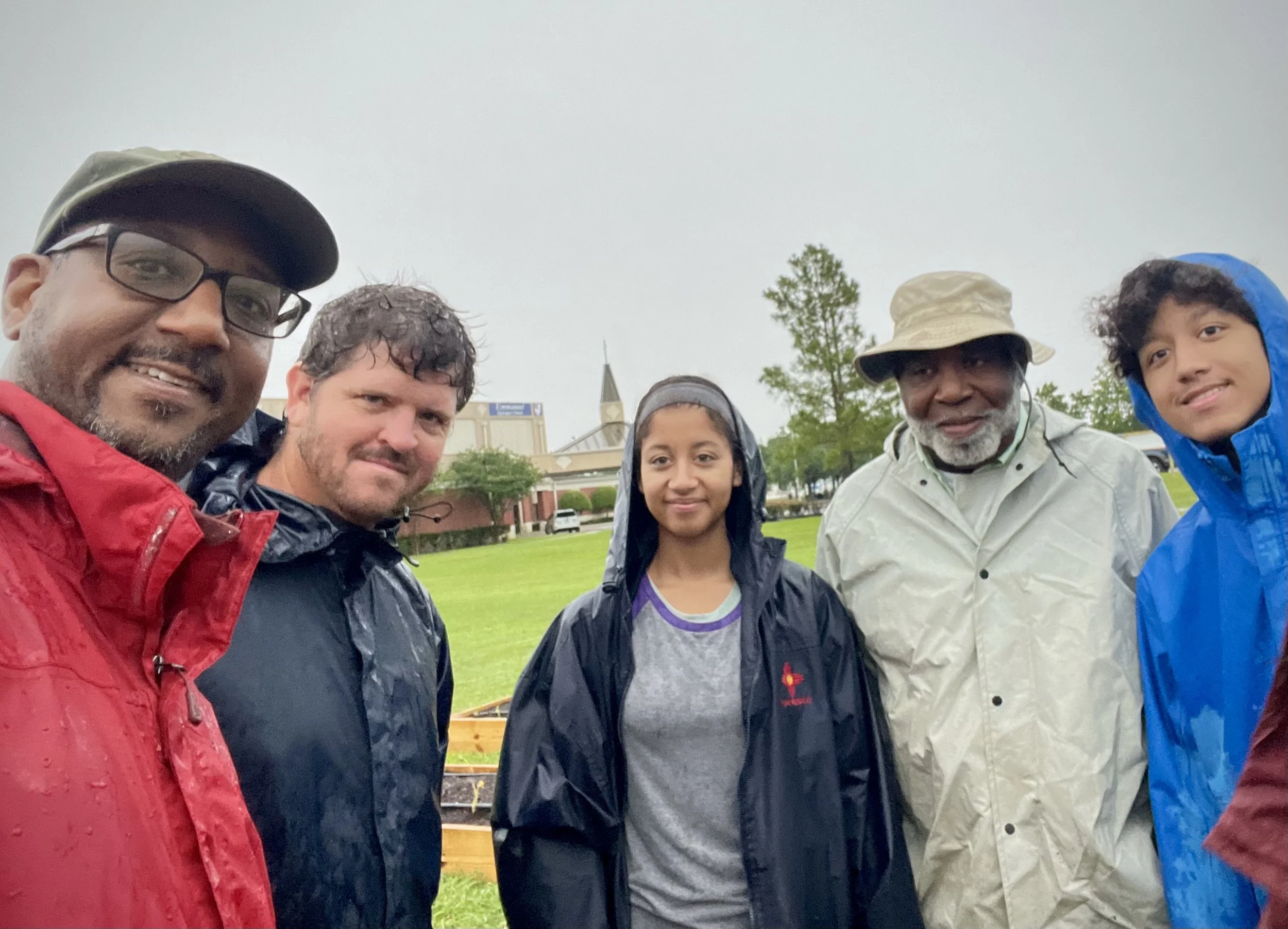
We’re excited to share that Christopher George has joined the Board of Directors of The Neighborhood Garden Project. Christopher is part of the Emmanuel Episcopal Church community, where our second garden site is rooted. That shared soil is where TNGP and Christopher first intersected—and where this partnership began to grow.
Our connection started through a series of Eagle Scout projects that helped get the garden off the ground at Emmanuel. The relationship deepened once Christopher established the bees there. With the pocket prairie in the middle, the bees in the back forty, and the garden nearby, we were already moving in rhythm together long before this opportunity arose. The space began to vibrate with life—a holy buzz of collaboration and care. Nourishment was flowing in both directions—between people, soil, and Spirit—and God revealed the necessity for Christopher to be part of this work.
Christopher often says, “We have to choose where to spend time, or life will spend it for us.” Over the past year and a half, his journey with TNGP has touched nearly every facet of his life. As he’s grown older and watched the world become more fragile, this work has proven itself as a tangible solution to many of the problems we face—socially, spiritually, and environmentally.
As Christopher grew more familiar with the mission of TNGP, he realized it was something he didn’t just want to support but needed to be part of on many levels. His decision to join the board reflects that conviction—to invest his time where formation, faith, and the soil of community meet.
We’re deeply grateful for Christopher’s presence, perspective, and steady heart for cultivation. His example reminds us that growth begins with a choice to show up—and that even small beginnings, like a few beehives in the back forty, can carry life-giving impact, pollinating far beyond what’s seen.
Goldenrod: A Sign of Healing and Wholeness
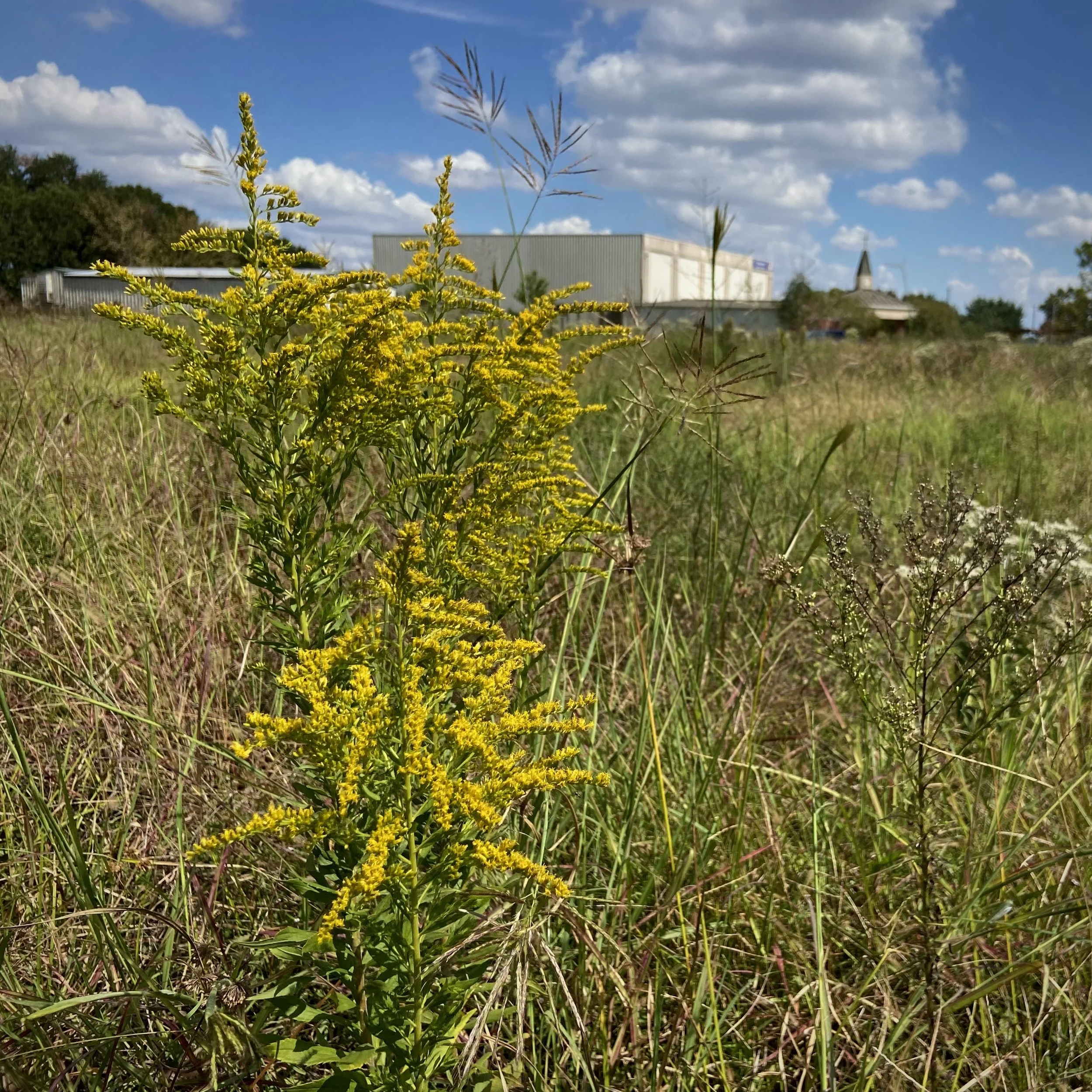
Goldenrod (Solidago spp.) has begun revealing itself in the pocket prairie at Emmanuel—a quiet, golden signal that the land is healing. By stopping the regular mowing and allowing space for native growth, we’ve given creation permission to express what was already waiting beneath the surface. Goldenrod didn’t appear because we planted it; it appeared because we paused. It rose in its time, reminding us that restoration begins when we allow the earth to rest.
Native to Texas and much of North America, goldenrod has always been a plant of renewal. Its name, from the Latin Solidago, means “to make whole.” For centuries, it’s been used medicinally to support kidney and urinary health, reduce inflammation, and strengthen the immune system—its healing work extending from soil to body. In the prairie, those same qualities are mirrored ecologically: goldenrod’s deep roots stabilize the soil, improve water flow, and hold nutrients that feed the life around it.
What’s most powerful is how this prairie growth complements the cultivated garden nearby. Goldenrod draws pollinators—bees, butterflies, and beneficial insects—that move freely between the prairie and the garden, carrying life from one to the other. Its underground root systems build soil networks that help retain water and nutrients across the shared landscape. This is a communion of shared provision and resources, where the prairie and the garden exchange what each has in abundance.
In this way, goldenrod becomes a symbol of right relationship—between wildness and cultivation, rest and labor, Creator and creation. It reminds us that the health of one space is tied to the flourishing of the other, and that true restoration happens not through control, but through cooperation.
Rooted in Purpose: Planting Trees and Growing Together at Emmanuel
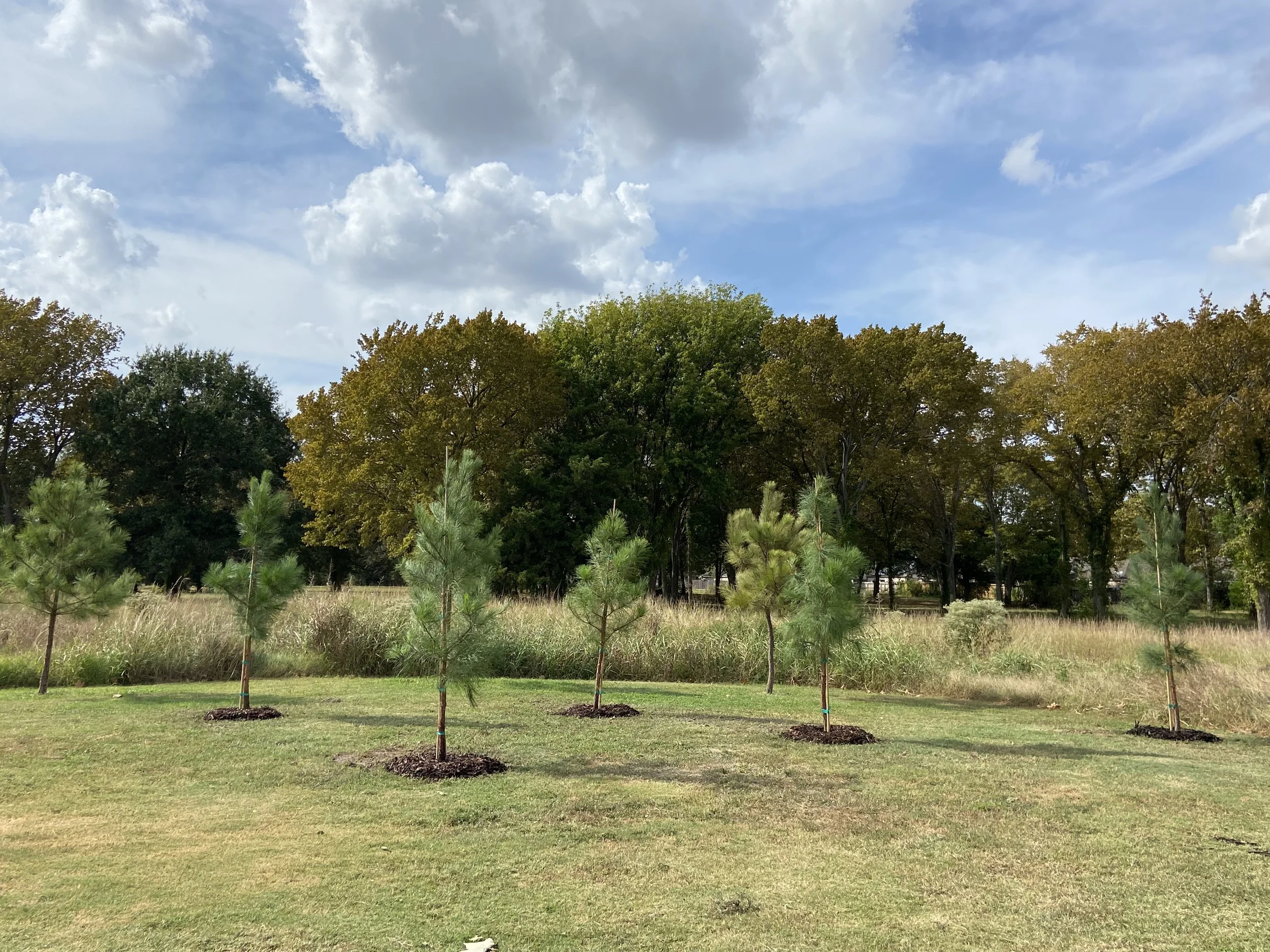
In late October, we planted eleven new trees at Emmanuel with the Residents of the Harris County Leadership Academy—five Loblolly Pines, four Shumard Oaks, one Mexican White Oak, and one Mexican Sycamore. Working side by side, we talked about how planting trees is a lot like growing as people. You don’t have to wait until you have it all figured out to make a difference. Even as seedlings, these trees were already nourishing the soil, supporting insects, and giving life to their surroundings.
Each species was chosen for its ability to strengthen the ecosystem and serve the long-term vision of the garden. The pines will offer year-round shelter and color, while the oaks and sycamore will one day provide shade and stability for generations to come. Their roots will help prevent erosion, hold water in the ground, and improve the overall health of the soil. As they grow, their capacity will increase, but their purpose—to give life—remains the same.
The planting was also an opportunity for the residents to see how their own lives mirror this process. Growth doesn’t happen overnight, and it doesn’t wait for perfect conditions. It begins right where you are, with what you have. These young men gave their time, energy, and care to something that will outlast all of us, and in doing so, they left a mark that will continue to grow long after the day’s work ended.
For the garden project at Emmanuel, these new trees mark another step in building a healthy, lasting ecosystem. For the residents, it was a hands-on reminder that we’re all capable of contributing to renewal now—not someday, but today—by simply doing what we were created to do.
What’s Ready in the Garden
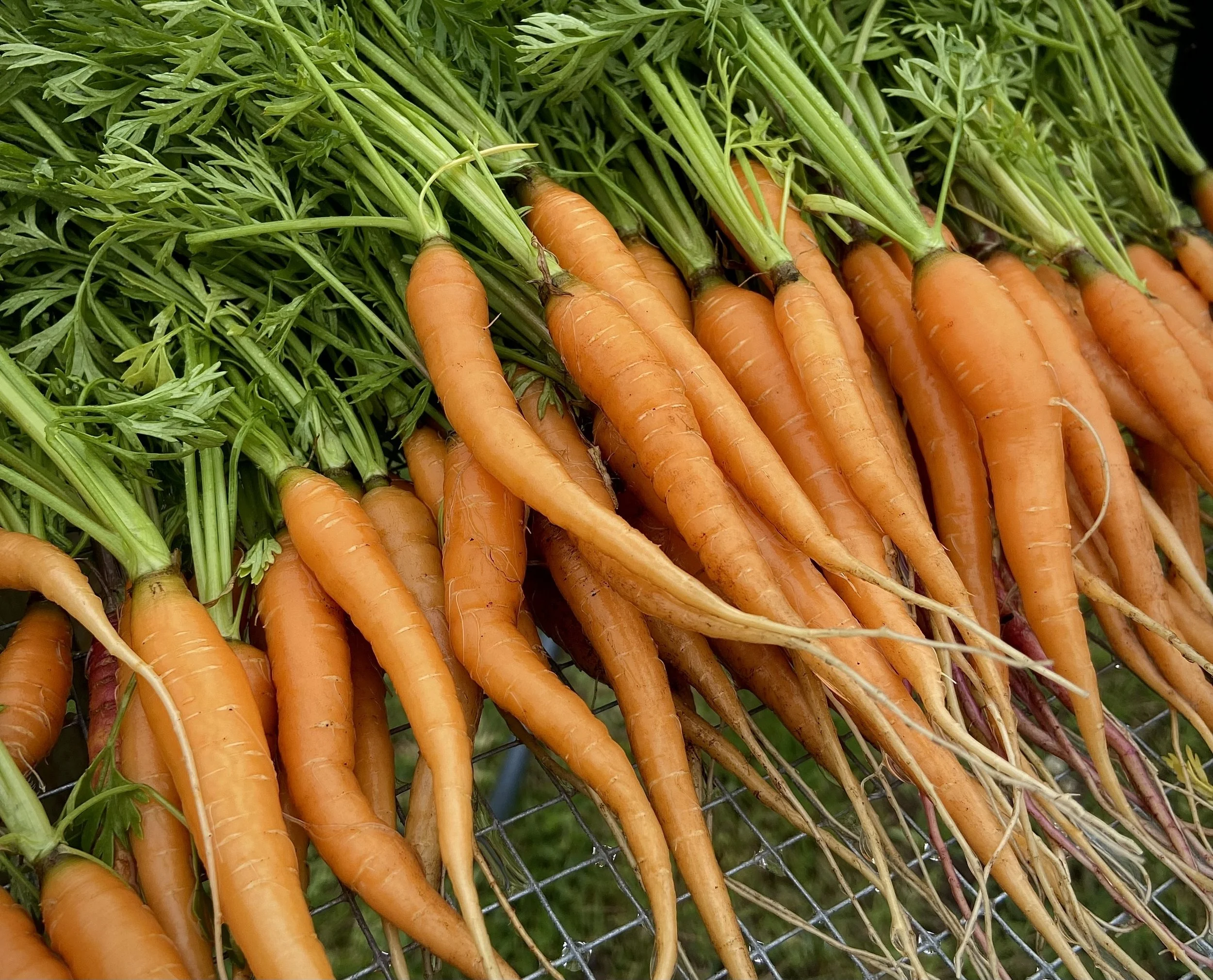
As the heat of summer fades and the air begins to steady, the garden shifts its rhythm. The soil cools, the light softens, and growth slows just enough for deep nourishment to take root. This is the season when turnips, carrots, radishes, mustard greens, kale, and both snow and snap peas come into their own — crops made for balance, restoration, and transition.
Each of these vegetables offers something unique to carry us between the intensity of summer and the stillness of winter. Turnips and carrots grow deep, drawing minerals like potassium, calcium, and magnesium from the soil — replenishing what our bodies have spent in the heat of longer days. Radishes act as natural detoxifiers, supporting digestion and liver health, gently clearing what no longer serves.
Above ground, mustard greens and kale provide a concentrated source of vitamins A, C, and K — powerful allies for the immune system during the months when our bodies adjust to cooler air and shorter light. Their natural bitterness signals to the body that it’s time to reset and restore, awakening metabolism and circulation that often slow with the season’s change.
Meanwhile, snow and snap peas offer plant-based protein and fiber, supporting steady energy when daylight wanes. They’re also nitrogen fixers, feeding the soil as they feed us — a reminder that in every season, the garden’s design works in both directions.
Together, these crops act as a bridge — connecting the vitality of summer with the quiet renewal of spring. They root us in rhythm, showing that nourishment is not only about what’s harvested, but about how creation provides exactly what’s needed, exactly when it’s needed.